Parent Teacher Meetings That Actually Work: A Digital-First Approach for 2025
In this article
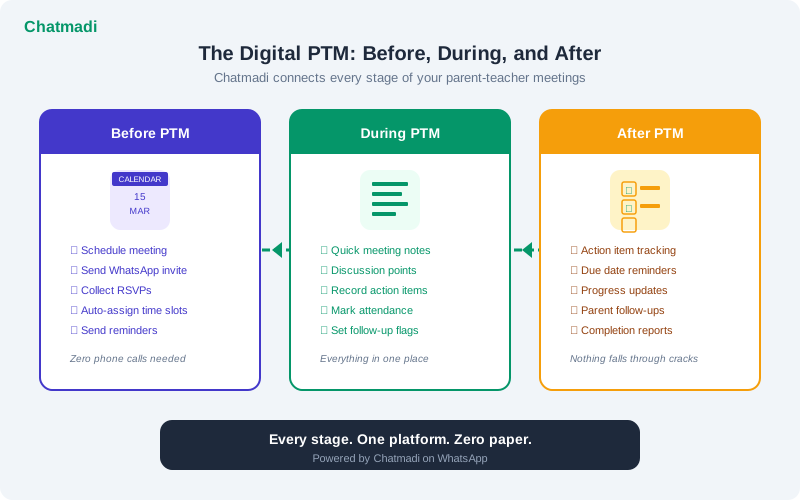
The parent-teacher meeting is a ritual in Indian schools. It happens once or twice a term. Parents arrive, wait, speak with the teacher for a few minutes, and leave. The teacher repeats the same general observations about the child's performance. The parent nods, asks a question or two, and goes home. By Monday, both parties have returned to their routines and whatever was discussed in the meeting fades from memory. This is the PTM event. It happens. It ends. And it changes nothing. What schools need is not a better PTM event. They need a PTM system: a structured before, during, and after process that turns conversations into commitments and commitments into outcomes. Parent teacher meeting software India schools need must support this complete system, not just the scheduling part. Chatmadi does exactly this.
Why Most PTMs Don't Produce Real Change (It's Not the Parents)
When schools complain about PTMs, they usually blame parent attendance. If only more parents came, PTMs would be more effective. This is a misdiagnosis. The real problem is not attendance. It is follow-through. Consider a school where 70% of parents attend the PTM. During the meeting, the teacher discusses each child's performance, highlights areas of concern, and suggests improvement strategies. Both teacher and parent agree on specific action items. The meeting ends. What happens next? In most schools, nothing systematic. The teacher does not record the discussion points. The action items are not written down. Nobody tracks whether the agreed-upon steps were taken. Three months later, at the next PTM, the same concerns are raised about the same students, and neither teacher nor parent can remember what was agreed upon at the previous meeting. The PTM becomes a recurring conversation that never progresses. This is not a parent problem. It is a systems problem. Without a mechanism to record, track, and follow up on PTM discussions, even the most engaged parents and dedicated teachers cannot sustain improvement between meetings. Parent teacher meeting software India schools need must solve the follow-through problem, not just the attendance problem.
The PTM System vs the PTM Event: Why Only One Matters
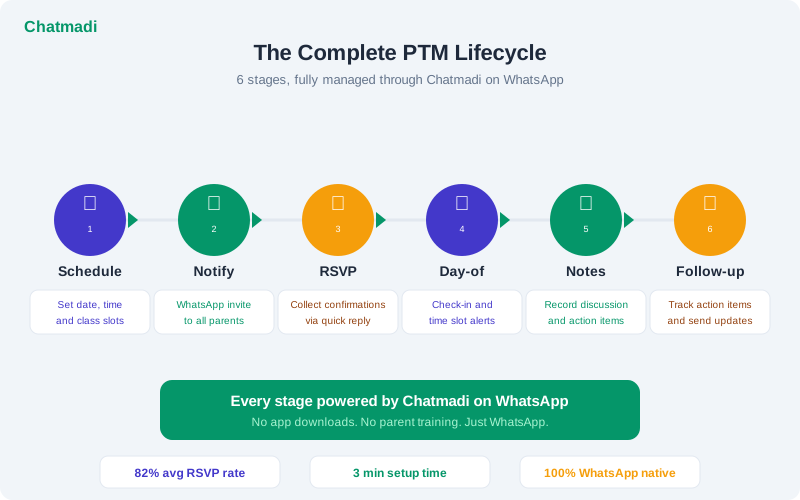
A PTM event has three characteristics: it happens on a specific date, it involves a conversation, and it ends. A PTM system has six characteristics: it prepares for the conversation, facilitates the conversation, records the conversation, creates commitments from the conversation, tracks those commitments, and feeds the outcomes into the next conversation. The distinction matters because a PTM event measures success by attendance percentage. A PTM system measures success by outcome achievement. A school with 60% PTM attendance but 90% action item completion is more effective than a school with 90% attendance but 10% follow-through. Building a PTM system requires three capabilities. First, pre-meeting preparation: the teacher has student data (academic performance, attendance, parent engagement score, previous PTM notes) readily available so the conversation is specific and data-driven rather than generic. Second, during-meeting recording: the teacher can quickly record key discussion points and action items during or immediately after each parent conversation. Third, post-meeting tracking: action items are visible on the teacher's dashboard, have due dates, and are reviewed before the next PTM. Chatmadi provides all three capabilities through its PTM module, student profiles, and action item tracker.
How Chatmadi Turns PTM Conversations into Trackable Commitments
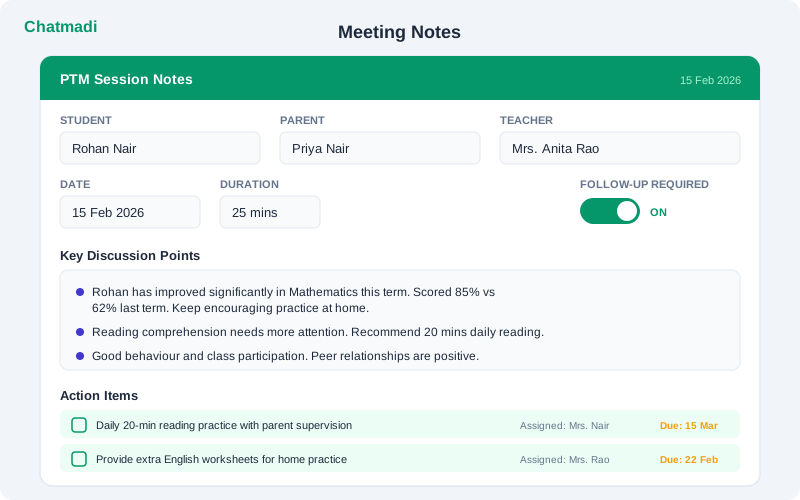
Chatmadi's PTM workflow transforms unstructured parent-teacher conversations into structured, trackable records. Before the PTM, the teacher opens each student's profile in Chatmadi and reviews the data that will inform the conversation. This includes the student's attendance record (how many days absent, patterns of absence), academic performance (latest exam scores, subject-wise breakdown), parent engagement score (homework acknowledgement rate, communication responsiveness), and notes from the previous PTM (including outstanding action items). Armed with this data, the teacher can have a focused, specific conversation: "Rohan has been absent 8 days this term, mostly on Mondays. His maths scores dropped from 78 to 65 between the first and second unit tests. However, Mrs. Nair, I notice you have been very responsive to homework updates and your engagement score is high. Let us discuss what might be happening on Mondays and how we can address the maths decline." During the PTM, the teacher records meeting notes directly in Chatmadi. The meeting notes form includes fields for key discussion points, parent concerns raised, teacher observations shared, and action items. Each action item has a description, a responsible party (teacher, parent, or both), and a due date. After the PTM, these action items appear on the teacher's dashboard alongside their other tasks. The system sends the teacher a reminder when action items are approaching their due dates. Before the next PTM, the teacher can pull up the previous meeting's notes and action items to assess progress and prepare for the follow-up conversation.
Chatmadi meeting notes form showing student parent and teacher details with discussion points and action items
How-To: Setting Up a PTM System That Follows Through Every Time
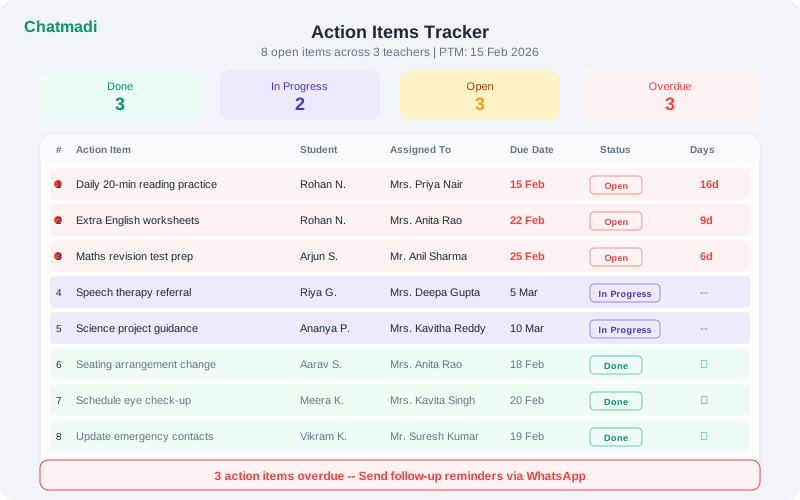
Building a PTM system in Chatmadi involves four setup steps and an ongoing process. Step one: create the PTM. In the PTM section of the dashboard, create a new PTM with the date, time window, class, and optional agenda topics. Chatmadi generates a WhatsApp notification message for parents. Step two: track RSVPs. Send the notification via WhatsApp. As parents respond, Chatmadi's AI detects RSVP signals and updates the dashboard. Follow up with non-responding parents five days before the PTM. Step three: prepare student briefs. Before the PTM, review each attending parent's child profile. Note the specific data points you want to discuss: attendance trends, exam scores, engagement metrics, and any previous action items. Step four: conduct the PTM with notes. During each parent meeting, have Chatmadi open on a phone or tablet. Record the key discussion points and create action items as they are agreed upon. This takes 30 to 60 seconds per parent and saves hours of retrospective note-taking. Ongoing process: review action items weekly. Set aside 10 minutes each Friday to check the status of open PTM action items. Update items that are in progress or completed. For items that are overdue, decide whether to follow up with the parent or adjust the timeline. Before the next PTM, generate a summary of all action items from the previous meeting. Share the completion status with each parent at the start of their meeting. This creates a continuity loop that demonstrates accountability and encourages parents to take the agreed actions seriously.
Chatmadi action items tracker showing 8 items across 3 teachers with status and overdue indicators
What to Do With Parents Who Miss PTMs Repeatedly
Every school has parents who consistently miss PTMs. The default response is to send more reminders, which rarely works. A more effective approach starts with understanding why they miss. Chatmadi helps by providing data. If a parent's engagement score is high across other dimensions (homework acknowledgement, fee timeliness, communication responsiveness) but PTM attendance is low, the parent is engaged but cannot attend. The solution is to offer an alternative: a 15-minute phone call or a brief meeting during school hours on a convenient day. If a parent's engagement score is low across all dimensions including PTM attendance, the issue is broader disengagement. The solution is not another PTM reminder. It is personal outreach from the class teacher or school counsellor to understand the underlying barriers. For parents who repeatedly miss PTMs, Chatmadi recommends creating a brief written summary of what would have been discussed: "Here is a summary of Rohan's term progress. He is doing well in English (82%) and EVS (79%) but needs support in Maths (58%). His attendance is regular. I would like to suggest 15 minutes of daily maths practice at home. Can we discuss this over a phone call this week?" This written summary, sent via WhatsApp, achieves two things. It delivers the information the parent would have received at the PTM. And it opens a communication channel that may be more accessible to the parent than an in-person meeting. Chatmadi tracks whether these summary messages receive responses, contributing to the parent engagement score and informing future outreach strategies.
Frequently Asked Questions
Can Chatmadi replace in-person PTMs with digital meetings?
Chatmadi enhances in-person PTMs by adding structure and follow-through. It does not replace the in-person interaction. However, for parents who cannot attend in person, the meeting notes and action item features can support a phone-based alternative.
How long does it take to record meeting notes during a PTM?
Teachers report spending 30 to 60 seconds per parent recording key points and action items. For a class of 30 students, this adds approximately 15 to 30 minutes of note-taking across the entire PTM session, a worthwhile investment for the follow-through it enables.
Can the principal see PTM meeting notes across all classes?
Yes. The principal dashboard shows PTM completion rates, attendance statistics, and aggregate action item status across all classes. Principals can drill into specific classes or students if needed.
Are meeting notes shared with parents?
Meeting notes are internal records visible only to school staff. However, teachers can choose to share specific action items with parents via WhatsApp to reinforce commitments made during the meeting.
What happens to action items from a PTM if the teacher changes mid-year?
Action items are stored in the student profile, not the teacher profile. If a teacher changes mid-year, the incoming teacher can see all previous PTM notes and outstanding action items, ensuring continuity.
---
A PTM that ends with "let us see" is a missed opportunity. A PTM that ends with tracked action items is a system that works. Build yours with Chatmadi. Start free at chatmadi.com
Tagsparent teacher meeting software IndiaPTM management software school Indiaparent engagement platform for schools Indiahow to improve parent engagement school IndiaChatmadi
C
Chatmadi Team
School Communication Intelligence
The Chatmadi team writes about AI-powered parent communication, school management best practices, and WhatsApp intelligence for Indian schools. Built by Eduloom Technologies OPC Pvt Ltd, Mysore.