School ERP vs WhatsApp CRM: Which One Does Your School Actually Need?
In this article
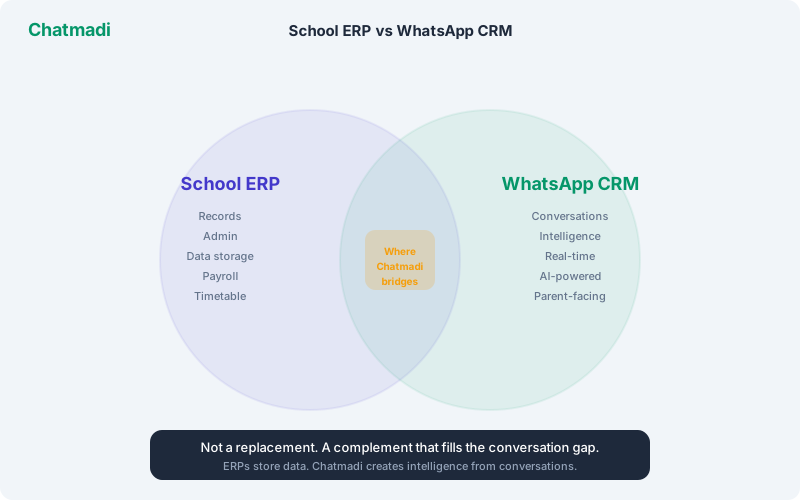
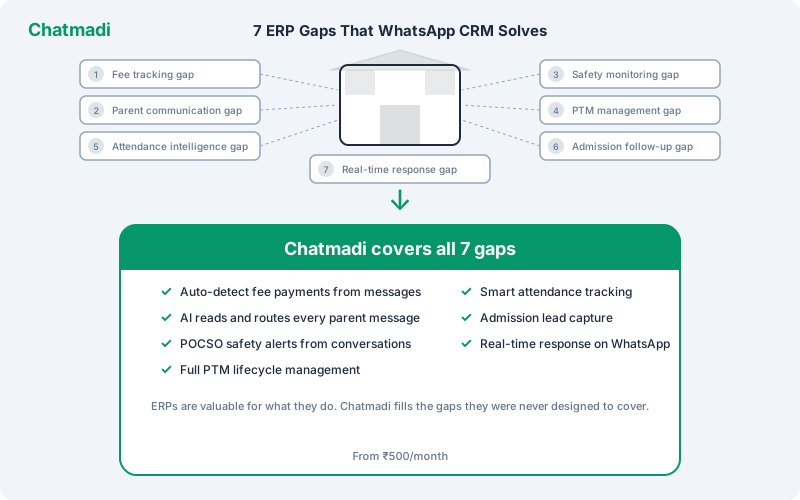
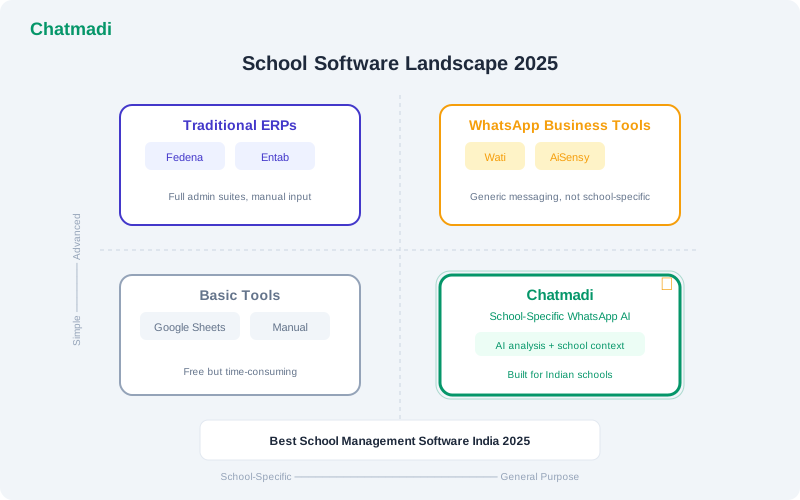
Indian school principals are increasingly asked to choose between two types of software: a School ERP (Enterprise Resource Planning) system that manages student records, staff payroll, timetables, and administrative processes, and a WhatsApp CRM that manages parent communication, conversation intelligence, and engagement tracking. The question "which one should we get?" assumes these tools compete with each other. They do not. They solve different problems. A School ERP is a record-keeping system. It stores and organises data that humans enter into it. A WhatsApp CRM like Chatmadi is an intelligence system. It reads conversations where data already exists and extracts it automatically. Understanding school management software vs WhatsApp CRM is understanding the difference between storage and extraction. Most Indian schools need both, but if you can only invest in one, the answer depends on where your biggest pain point is.
School ERP and WhatsApp CRM: Defining What Each Actually Does
A School ERP system manages the administrative backbone of a school. It typically includes student information management (name, class, section, parent details, address), staff management (employee records, payroll, leave tracking), fee management (fee structure definition, receipt generation, payment recording), timetable management (period allocation, teacher assignment, room scheduling), exam management (mark entry, report card generation, grade calculation), and attendance (register-based entry, monthly reports). Products like Fedena, Entab CampusCare, and MyClassboard are well-known school ERPs in India. They are valuable tools that bring structure to school administration. A WhatsApp CRM for schools manages the communication layer. Chatmadi specifically provides conversation intelligence (AI reads parent WhatsApp messages and extracts structured data), fee detection (identifying fee payment mentions in conversations), attendance detection (identifying absence notifications from parent messages), homework tracking (detecting assignment acknowledgements), safety monitoring (flagging welfare concerns in conversations), PTM management (scheduling, RSVPs, notes, follow-up), parent engagement scoring (composite metric from multiple data sources), and dashboards for class teachers and principals. The ERP stores data that staff enter. The WhatsApp CRM extracts data from conversations that are already happening.
The Data Entry Problem That School ERPs Cannot Solve
The fundamental limitation of any ERP system is that it depends on human data entry. Every piece of information in the ERP was typed in by a staff member. A student's attendance is entered by the teacher manually. A fee payment is entered by the accounts staff after verifying a receipt. An exam score is entered by the teacher after marking papers. A parent's contact update is entered by the admin after receiving the information. This data entry requirement creates three problems. First, it is slow. There is always a lag between when something happens and when it appears in the ERP. A parent confirms a fee payment on WhatsApp at 9 AM. The accounts staff may not enter it into the ERP until 3 PM or the next day. During this gap, the school does not have accurate fee data. Second, it is error-prone. Manual data entry introduces mistakes. A digit in a phone number is transposed. An absence date is entered incorrectly. A fee amount is mistyped. These errors propagate through the system and require time to detect and correct. Third, it is labour-intensive. A school with 300 students generates hundreds of data points every day: attendance records, fee payments, parent communications, homework assignments. Entering all of this into an ERP requires dedicated staff time that most Indian schools, especially smaller ones, cannot afford. Chatmadi addresses the data entry problem by reading the conversations where information already exists. When a parent confirms a fee payment on WhatsApp, the AI detects it immediately. When a parent reports an absence, the AI records it. When a parent acknowledges homework, the AI tracks it. The data enters the system through the conversation, not through manual entry.
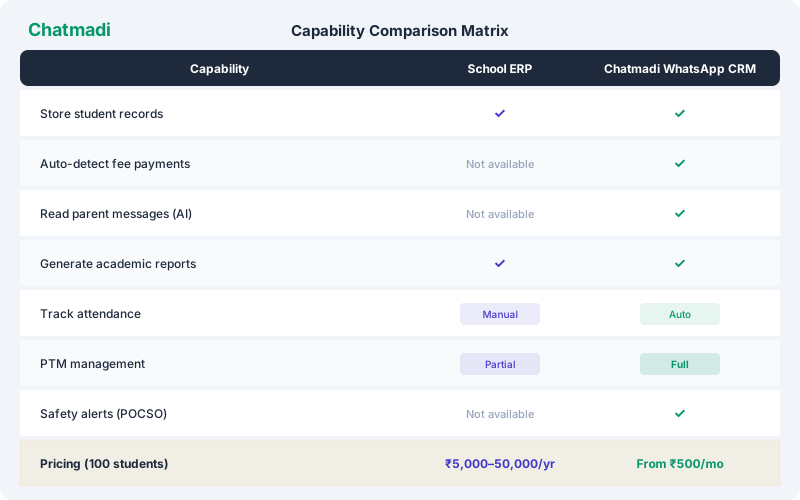
Capability comparison matrix showing School ERP versus Chatmadi WhatsApp CRM across 8 features with pricing
How Chatmadi Complements (Not Replaces) Your Existing ERP
Chatmadi is not a replacement for a School ERP. It is a complement. The two tools serve different functions and work best together. The ERP handles what it does well: storing structured records, generating report cards, managing staff payroll, and creating timetables. Chatmadi handles what the ERP cannot: reading WhatsApp conversations, extracting intelligence, tracking parent engagement, detecting safety concerns, and providing real-time dashboards based on communication data. In a school that uses both, the workflow looks like this. A parent confirms a fee payment on WhatsApp. Chatmadi's AI detects the confirmation and adds it to the fee queue. The accounts staff reviews the queue, verifies the payment, and enters the confirmed payment into the ERP for official record-keeping. The ERP generates the receipt. This workflow is faster and more accurate than the traditional process where the accounts staff discovers the payment only when they receive a phone call or when the parent brings a receipt to the school. Another example: a parent sends an absence notification on WhatsApp. Chatmadi detects it and records the absence with the reason. The class teacher confirms the AI's detection on the Chatmadi dashboard. At the end of the day, the attendance data can be reconciled with the official register in the ERP. The AI-detected data serves as the real-time intelligence layer while the ERP serves as the official record.
How-To: Choosing Between ERP and WhatsApp CRM Based on Your School's Stage
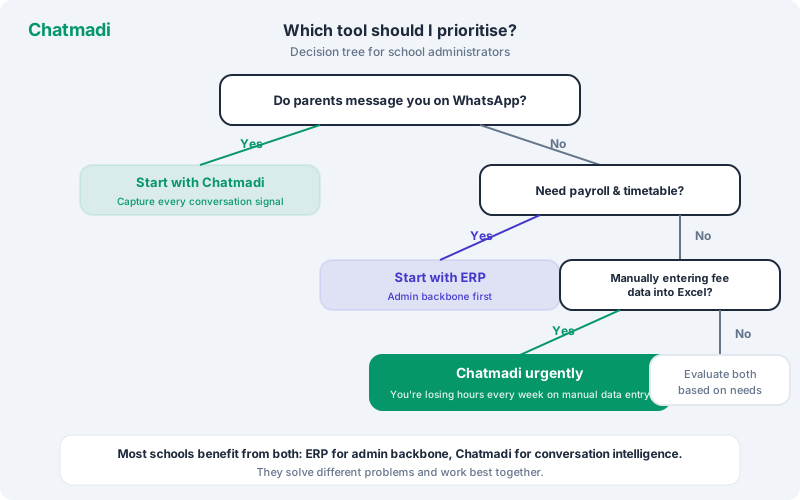
Not every school needs both tools immediately. Here is how to prioritise based on your school's current situation. If your school has no digital systems at all: start with Chatmadi. The reason is practical. Chatmadi requires only WhatsApp conversations, which your teachers already have. There is no complex setup, no staff training on data entry, and no IT infrastructure required. You get immediate value from the AI analysis of conversations your school is already having. You can add an ERP later when you are ready for full administrative digitisation. If your school already has an ERP but struggles with parent communication: add Chatmadi. Your ERP handles records and administration. Chatmadi adds the communication intelligence layer that the ERP cannot provide. Together, they give you complete coverage. If your school already has good parent communication but needs better record-keeping: invest in an ERP. If your teachers are managing parent communication effectively on WhatsApp but you lack structured student records, payroll management, or report card generation, an ERP addresses those needs. If your school has both needs equally: start with Chatmadi for faster time-to-value. A WhatsApp CRM can be operational in days. An ERP implementation typically takes weeks to months. Getting immediate intelligence from WhatsApp conversations while you plan your ERP implementation is a pragmatic approach.
Decision tree flowchart helping schools choose between ERP and WhatsApp CRM based on their specific needs
The School That Runs Both: How They Use Chatmadi and Fedena Together
A practical example of the complementary approach: a school in Karnataka with 250 students uses Fedena for student records, fee receipts, report cards, and staff payroll. They use Chatmadi for WhatsApp conversation analysis, parent engagement tracking, PTM management, homework acknowledgement tracking, and safety alerts. Their daily workflow combines both tools seamlessly. In the morning, the class teacher checks Chatmadi's dashboard for today's attendance (auto-detected from parent messages), active alerts, and pending actions. During the day, the teacher uses Chatmadi for parent communication management. At the end of the day, the admin staff reconciles Chatmadi's fee detection data with Fedena's fee register. At the end of the term, the academic coordinator enters exam results into both Chatmadi (for analytics and parent engagement) and Fedena (for official report cards). The principal uses Chatmadi's dashboards for daily operational decisions and Fedena's reports for board-level administrative reporting. Neither tool replaces the other. Each does what it does best. The school benefits from both.
Frequently Asked Questions
Can Chatmadi replace our School ERP entirely?
For smaller schools with basic administrative needs, Chatmadi's student profiles, fee tracking, attendance tracking, and academic analytics may be sufficient. For larger schools that need payroll, timetabling, transport management, and official report card generation, an ERP remains necessary alongside Chatmadi.
Is Chatmadi compatible with specific ERPs like Fedena or Entab?
Chatmadi operates independently of the ERP. Data can be reconciled between the two systems through CSV exports. Direct API integrations with specific ERPs are planned for future releases.
Which is more expensive: a School ERP or Chatmadi?
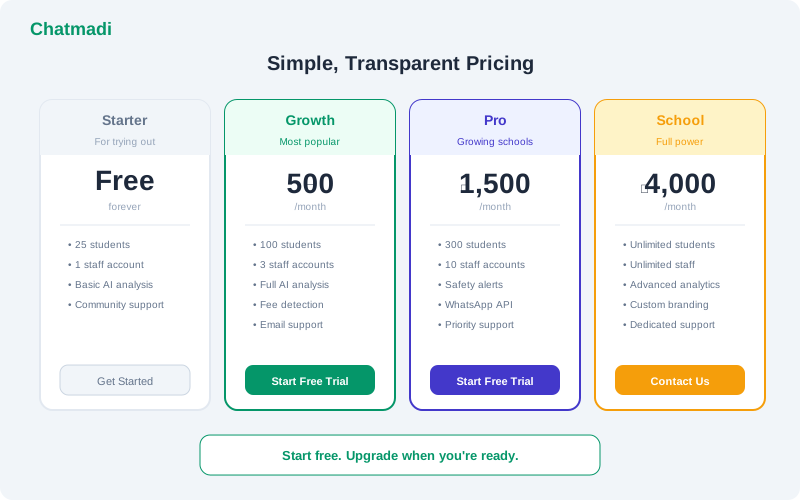
School ERPs typically cost between 50,000 and 2 lakh rupees per year depending on school size and features. Chatmadi's pricing starts at a significantly lower price point, making it accessible to schools that find ERPs too expensive.
Can I start with Chatmadi and add an ERP later?
Yes. This is a common approach. Schools start with Chatmadi for immediate communication intelligence and add an ERP when they are ready for full administrative digitisation. Student data from Chatmadi can be exported to help populate the ERP during setup.
Do I need technical staff to manage Chatmadi?
No. Chatmadi is designed for non-technical school staff. Teachers and administrators can set up and use the platform without IT support. ERP systems, by contrast, often require technical staff or vendor support for ongoing management.
---
ERP stores what you enter. Chatmadi extracts what you already have. Together, they give your school complete digital coverage. Start free at chatmadi.com
Tagsschool management software vs WhatsApp CRMschool admin software India freeschool management software for principals Indiaaffordable school CRM IndiaChatmadi
C
Chatmadi Team
School Communication Intelligence
The Chatmadi team writes about AI-powered parent communication, school management best practices, and WhatsApp intelligence for Indian schools. Built by Eduloom Technologies OPC Pvt Ltd, Mysore.