How to Build Trust with Parents Through Transparent School Communication
In this article
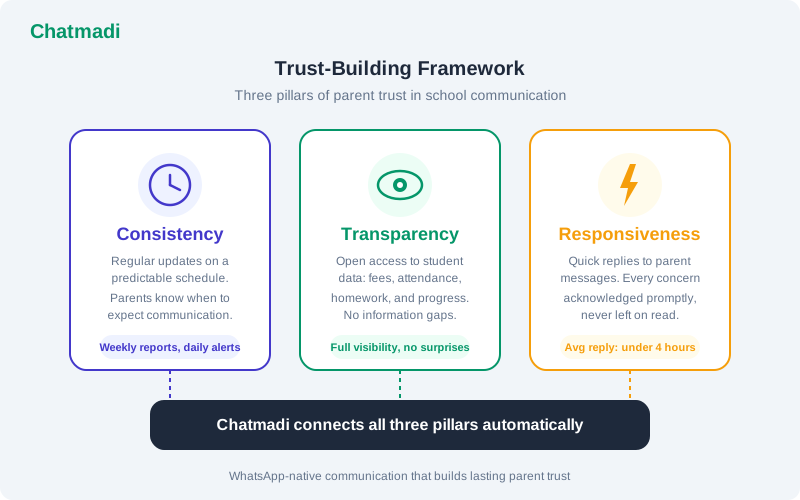
Trust between parents and a school is not built in a single PTM or a glossy annual report. It is built in the daily moments of communication: the teacher who replies to a concern within hours instead of days, the school that informs parents about a minor playground incident before the child gets home and tells a different version, the principal who sends a weekly update that makes parents feel included rather than excluded from their child's school life. A parent teacher communication app India schools rely on must facilitate trust, not just transmit messages. Chatmadi builds trust by ensuring that every parent message is acknowledged, every safety concern is escalated same-day, and every week brings consistent communication from the school to the family.
Why Parent Trust in Indian Schools Is at a Premium Right Now
The Indian school market is more competitive than it has ever been. In urban and semi-urban areas, parents have multiple school options within a five-kilometre radius. The decision to stay at a school is no longer just about academic results. It is about the overall experience, and the core of that experience is communication. Parents today expect responsiveness. They message their child's teacher on WhatsApp and expect a reply within a few hours, not a few days. They expect to be informed about incidents at school before they hear about them from their child or other parents. They expect the school to be transparent about what happens during the school day. When these expectations are not met, trust erodes. And when trust erodes, parents begin looking at alternatives. A school that loses a family does not just lose one year of fee revenue. It loses the lifetime value of that family, which includes the remaining school years for that child, potential admissions for younger siblings, and the word-of-mouth referrals that come from satisfied parents. Trust is not a soft metric. It is directly tied to retention, referrals, and revenue.
The 3 Communication Failures That Destroy Parent Trust
Three specific communication failures account for most parent trust breakdowns. Failure one: the unanswered message. A parent sends a message to the class teacher about their child's health, a concern about homework load, or a question about an upcoming event. The teacher sees it but is busy with classes and does not respond. A day passes. Then two days. The parent sends a follow-up. Still no response. The parent concludes that the school does not care about their concern. This is the most common trust failure and the most avoidable. Even a brief acknowledgement such as "Received your message, will respond by evening" preserves trust. Failure two: the surprise incident. A child falls on the playground and scrapes their knee. The school nurse attends to it. The child goes back to class. Nobody tells the parent. The child goes home and tells the parent, who adds their own interpretation. The parent arrives at school the next morning upset not because of the scrape but because they were not informed. Safety-related incidents, even minor ones, must reach parents the same day they occur. Failure three: inconsistent communication. For three weeks, the school sends regular updates about activities, homework, and upcoming events. Then communication stops for two weeks. Parents wonder what happened. Did the school stop caring? Is something wrong? Inconsistency creates anxiety and undermines the trust built during the communicative periods.
How Chatmadi Creates a Culture of Consistent Communication
Chatmadi addresses all three trust failures through systematic communication management. For unanswered messages: Chatmadi's conversation analysis identifies parent messages that contain questions, concerns, or requests. If a message flagged as requiring a response has not been addressed within 24 hours, the system generates a reminder for the teacher. This ensures no parent message falls through the cracks, even during busy periods. The teacher may not have the time to write a detailed response immediately, but a brief acknowledgement keeps trust intact. For surprise incidents: Chatmadi's safety alert system scans WhatsApp conversations for safety-related signals. When a parent mentions a concern or when a teacher logs an incident, the system can generate an appropriate notification message for the parent. Schools that inform parents about incidents on the same day they occur build significantly more trust than schools that wait for parents to discover the issue on their own. For inconsistent communication: Chatmadi's weekly digest feature generates a summary of the school week that teachers can share with parents. This automated weekly touchpoint ensures that even in busy weeks when individual messages might be fewer, parents receive a consistent communication from the school. The digest includes attendance, homework assignments, upcoming events, and any noteworthy class activities.
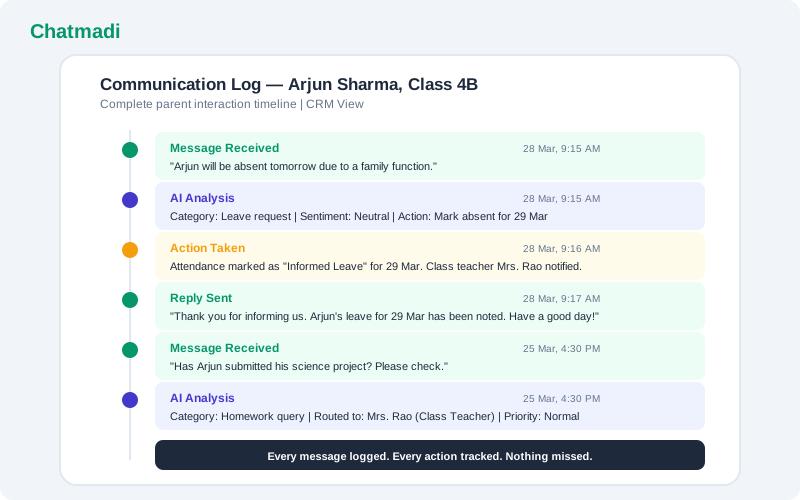
Communication log showing chronological parent interactions with AI analyses and actions taken
How-To: Building a Trust-First Parent Communication Policy for Your School
A trust-first communication policy establishes clear expectations for how the school communicates with parents. Here is a framework that schools can implement with Chatmadi's support. Policy element one: response time commitment. Every parent message that requires a response will receive at least an acknowledgement within the same school day. Detailed responses may take longer, but the parent will know their message was received and is being addressed. Chatmadi's reminder system enforces this commitment. Policy element two: same-day incident notification. Any safety-related incident involving a student, including minor playground injuries, health concerns, and behavioural incidents, will be communicated to the parent on the same day. The communication will include what happened, what action the school took, and what the parent should do if further attention is needed. Policy element three: weekly communication cadence. Every class will send a weekly update to parents covering the week's activities, upcoming events, and any noteworthy information. Chatmadi's digest feature generates this update automatically, requiring only teacher review and approval before sending. Policy element four: proactive academic updates. Parents will receive specific academic feedback about their child at least once per month, not only during PTMs. This can be a brief WhatsApp message about a recent test performance, a reading milestone, or an area of improvement. Policy element five: no negative surprises. If there is a concern about a student's academic performance, behaviour, or attendance pattern, the parent will be informed early, not at the next PTM. Early communication of concerns, paired with a suggested action plan, builds trust even when the news is not positive.
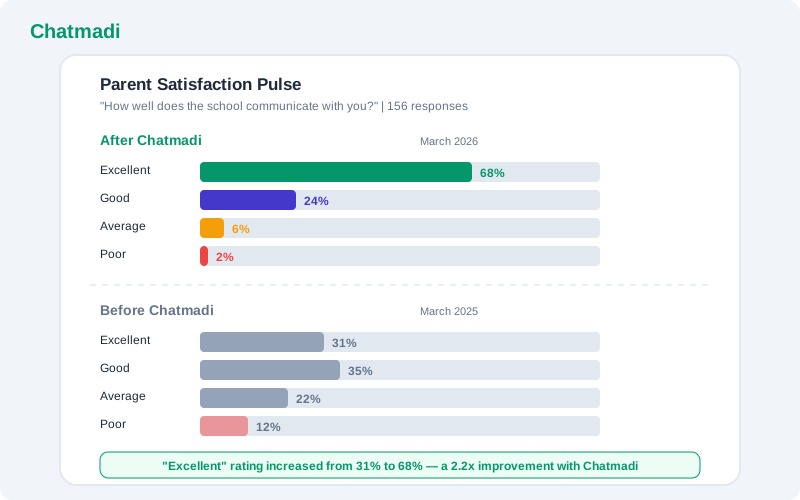
Parent satisfaction pulse survey showing communication ratings before and after Chatmadi implementation
What Transparent Communication Does to School Reputation
School reputation in Indian communities is built primarily through word of mouth. A parent who trusts the school tells other parents. A parent who does not trust the school tells even more other parents. The multiplier effect of trust on reputation is significant. Schools that implement transparent communication practices report measurable improvements in several areas. Retention improves because parents who feel heard and informed are less likely to explore other schools. Referrals increase because satisfied parents actively recommend the school to friends and relatives. Conflict decreases because concerns are addressed early, before they escalate into complaints. Admission enquiries increase because the school's reputation for good communication spreads through parent networks. Staff morale improves because teachers who have systems to manage parent communication feel less overwhelmed and more professional in their interactions. The investment in transparent communication, supported by a tool like Chatmadi, pays for itself through improved retention and increased admissions. It is not an additional cost. It is a revenue-protecting and revenue-generating practice.
Frequently Asked Questions
Does transparent communication mean sharing everything with parents?
No. Transparent communication means being honest and timely about what parents need to know regarding their child. Internal school matters, staff discussions, and administrative decisions are not part of parent communication unless they directly affect students.
What if a teacher does not want to respond to a parent message outside school hours?
Schools should establish communication hours as part of their policy. Parents should be informed that messages sent after school hours will be responded to the next school day. Chatmadi's reminder system respects these boundaries and only triggers reminders during school hours.
How does Chatmadi handle negative feedback from parents?
Parent messages that contain complaints or negative feedback are flagged by the AI for teacher attention. The system does not automatically respond to complaints. It ensures the teacher is aware of the feedback and can respond thoughtfully.
Can the school track whether trust is actually improving?
Chatmadi's analytics show communication metrics over time: response times, message volumes, engagement scores, and safety alert resolution times. Improving trends in these metrics correlate with improving trust, though schools can also conduct periodic parent satisfaction surveys for direct measurement.
What if parents abuse the communication channel with excessive messages?
This is rare but does happen. Teachers can flag specific parents for discussion with the principal. The school can set expectations about appropriate communication frequency while maintaining responsiveness for genuine concerns.
---
Trust is built one message at a time. Chatmadi ensures every message counts. Start free at chatmadi.com
Tagsparent teacher communication app Indiaparent engagement platform for schools Indiaparent school communication app without downloadschool communication automation IndiaChatmadi
C
Chatmadi Team
School Communication Intelligence
The Chatmadi team writes about AI-powered parent communication, school management best practices, and WhatsApp intelligence for Indian schools. Built by Eduloom Technologies OPC Pvt Ltd, Mysore.