How AI Reads Your School's WhatsApp Conversations (And What It Finds)
In this article
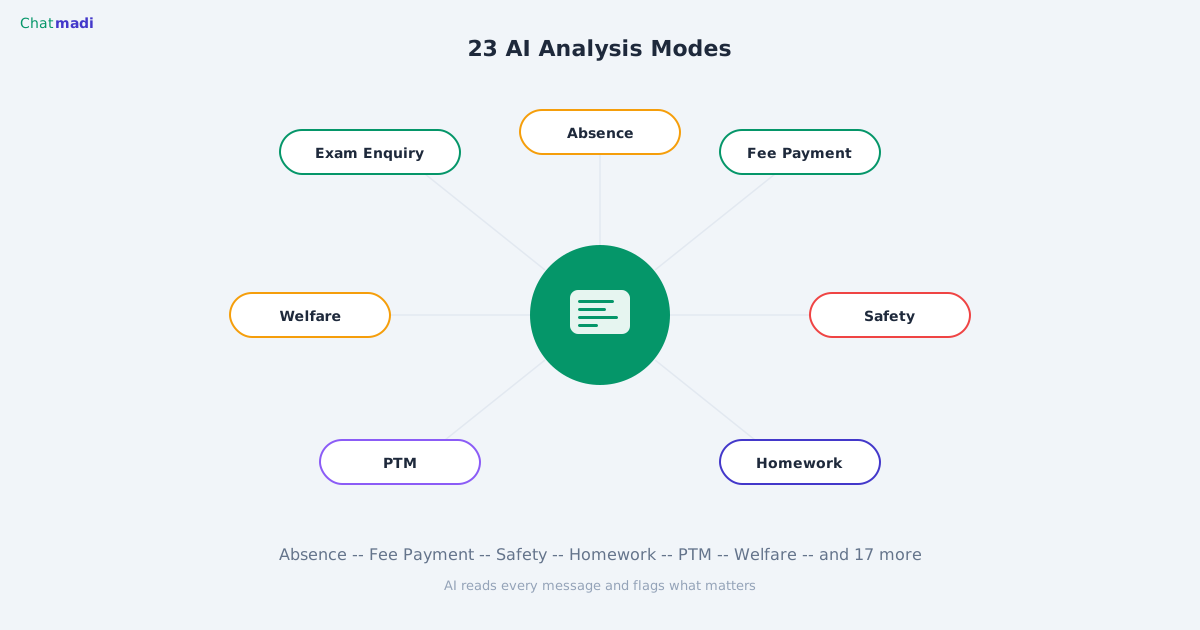
When we say Chatmadi's AI reads your school's WhatsApp conversations, what actually happens? Is there a person reading your messages? Does a robot type responses? The answer is simpler and more specific than most people expect. An AI tool to analyse WhatsApp messages school conversations does exactly what a thorough, attentive class teacher would do if they had unlimited time: it reads every word of every message, identifies the important information, and presents it in a structured format that humans can act on. The difference is that Chatmadi does this across 23 distinct categories simultaneously, for every conversation, in seconds.
What "AI Reads WhatsApp" Actually Means (No Jargon)
When a teacher uploads a WhatsApp conversation to Chatmadi, the platform sends the text of that conversation to an AI language model called Claude Sonnet, built by Anthropic. Claude is trained to understand natural language, which means it can read a message like "Good morning ma'am, Rohan ko thoda fever hai, aaj school nahi aayega" and understand that this is a parent reporting their child absent due to illness. The AI does not guess. It identifies specific signals based on patterns it has been trained to recognise in school communication. It knows what an absence notification looks like in Hindi, English, Kannada, Tamil, and mixed-language messages. It knows that "GPay kiya" or "UPI se transfer kiya" means a fee payment was made. It knows that "kuch bachche tang kar rahe hain" may be a bullying concern. The AI reads the text, identifies which of its 23 detection modes apply, and produces a structured output listing every signal it found.
The 23 Things Chatmadi's AI Looks for in Every School Conversation
Each of the 23 analysis modes targets a specific type of information that matters to schools. Absence Detection identifies when a parent reports a child sick, absent, or late. Fee Payment Detection finds mentions of GPay, UPI, cash, bank transfers, and transaction references. Homework Acknowledgement confirms when a parent acknowledges a homework assignment. Child Safety Alerts detect mentions of bullying, distress, isolation, or concerning adult behaviour. PTM RSVP Detection identifies attendance confirmations for parent-teacher meetings. Exam Enquiry Classification recognises questions about results, marks, or academic performance. Event Confirmation tracks RSVPs for school events and trips. Transport Issue Detection flags bus delays, route queries, and pickup changes. Medical Alert Detection identifies health conditions, allergies, and medication needs. Document Request Classification catches requests for certificates, bonafide letters, and receipts. Leave Request Detection identifies half-day and multi-day leave applications. Circular Acknowledgement tracks responses to official school communications. Academic Milestone Detection notices achievement reports and competition results. Volunteer Signals catch parent offers to help with school activities. Parent Concern Classification categorises complaints and feedback. Supply Request Detection flags uniform and stationery queries. Holiday Query Detection identifies calendar-related questions. Sports Signal Detection catches activity and PE-related communication. Health Alert Detection flags contagious illness reports. Fee Structure Query Detection notices instalment and discount questions. Admission Enquiry Detection identifies prospective parent questions. Language Classification identifies the primary language and code-switching patterns.
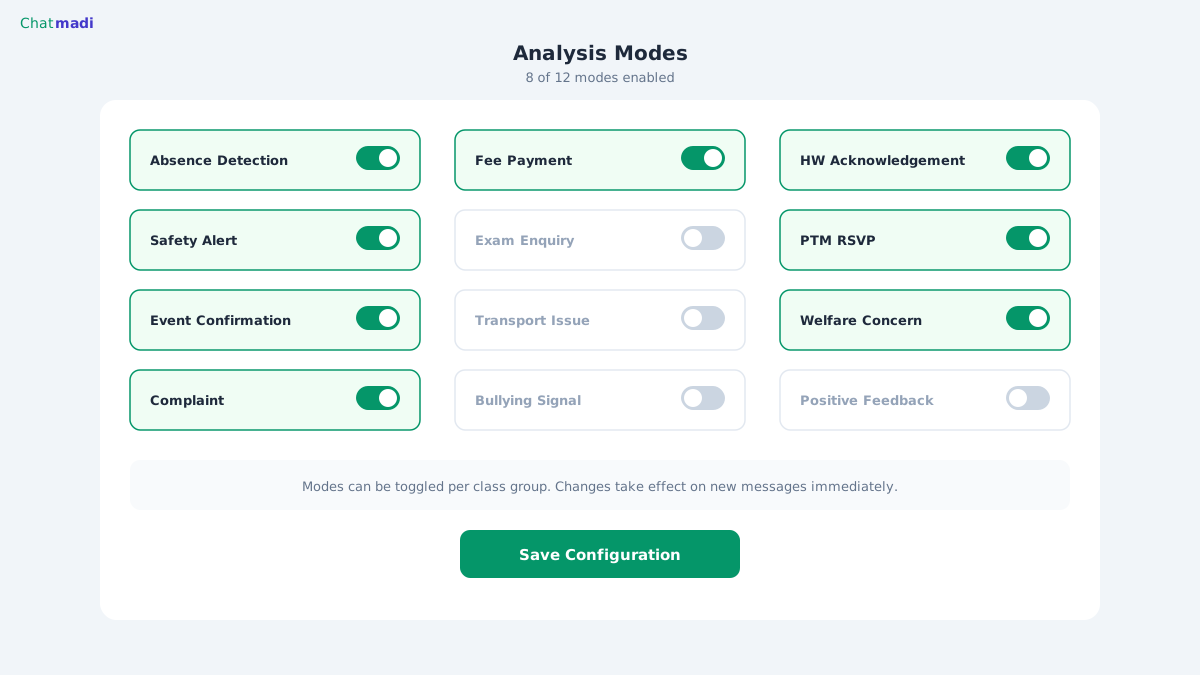
Chatmadi analysis modes settings showing 12 toggleable AI detection modes
Real Examples: What the AI Finds in Real Parent Messages
Consider these actual message patterns from Indian school WhatsApp groups. A parent writes: "Ma'am, yesterday we paid the second term fees via GPay. Transaction number TXN884299. Please confirm receipt." Chatmadi identifies this as a Fee Payment signal, extracting the payment method (GPay), the reference number (TXN884299), and the context (second term fees). Another parent writes: "Rohan has been coming home very upset lately. He told me some boys in his class are troubling him. I am worried." Chatmadi identifies this as a Child Safety signal, categorised as a potential bullying concern, flagged for immediate teacher attention. A third parent writes: "Good morning. Sneha won't come to school today and tomorrow. She has a throat infection. Doctor has given medicine. Will send her back on Wednesday." Chatmadi identifies this as an Absence signal, extracting the student name (Sneha), the duration (2 days), the reason (throat infection), and the expected return date (Wednesday). In each case, the AI does not simply tag the message with a label. It extracts specific details that the teacher needs to act on.
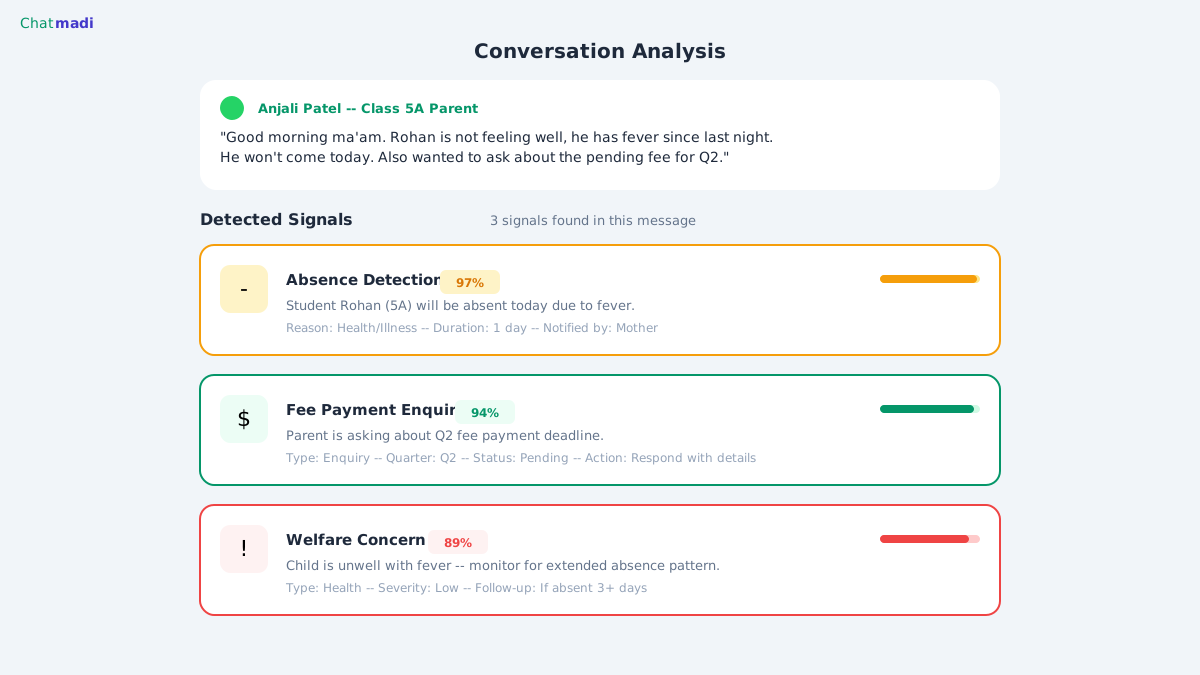
Chatmadi single conversation analysis showing extracted signals with confidence scores
How-To: Understanding and Acting on Your AI Analysis Results
When Chatmadi presents its analysis results, each signal appears as an actionable card on the teacher's dashboard. The card shows the signal type (colour-coded by category), the specific details extracted, the original message context, and a confidence indicator. Teachers review each signal and take one of two actions: confirm or dismiss. Confirming an absence signal adds it to the attendance record. Confirming a fee payment signal queues it for accounts team verification. Confirming a safety alert escalates it to the principal dashboard. Dismissing a signal removes it from the queue. This human-in-the-loop approach is fundamental to how Chatmadi works. The AI reads and extracts. Humans verify and act. No signal is committed to permanent records without a teacher or admin explicitly confirming it. This design ensures that the school's data remains accurate even when the AI occasionally misreads a message.
The Accuracy Question: How Reliable Is Chatmadi's Analysis?
The most common question principals ask about an AI tool to analyse WhatsApp messages school conversations is: how often does it get things wrong? The honest answer is that AI analysis is probabilistic, not perfect. Chatmadi's AI achieves high accuracy on clear, straightforward messages. A message that explicitly states "my child is absent today" will be correctly identified virtually every time. Messages with ambiguous language, heavy slang, or context that requires knowledge the AI does not have may occasionally be misclassified or missed. This is precisely why Chatmadi implements the confirmation step. False positives (the AI detects a signal that is not actually there) are caught during the teacher's review and dismissed in seconds. False negatives (the AI misses a signal that was there) are minimised by running all 23 modes simultaneously but cannot be eliminated entirely. Schools using Chatmadi report that the AI catches signals they would have otherwise missed far more often than it produces false alerts. The net benefit is overwhelmingly positive: more information captured, faster, with less manual effort.
Frequently Asked Questions
Does Chatmadi use my school's data to train its AI model?
No. Chatmadi does not use your school's conversations, student data, or any other information to train or improve AI models. Conversation text is processed for analysis and the results are stored in your school's workspace. The AI model used (Claude Sonnet by Anthropic) is not trained on your data.
Can I choose which analysis modes to enable?
Currently, all 23 analysis modes run simultaneously on every conversation. In future releases, Chatmadi may offer the ability to enable or disable specific modes based on school preferences. All modes are optimised for Indian school communication patterns.
How does the AI handle voice notes and images?
When using the export method, voice notes and images are not included in the .txt export file (WhatsApp exports text only when you select Without Media). When using the API method, voice notes are logged as "[Voice note]" and images as "[Image]" with captions if present. The AI analyses text content only.
What language does the AI understand?
Chatmadi's AI handles English, Hindi, and all major Indian regional languages including Kannada, Tamil, Telugu, Malayalam, Marathi, Bengali, and Gujarati. It is specifically trained to handle code-switching, where parents mix two or more languages in a single message, which is the most common communication pattern in Indian school WhatsApp groups.
---
See exactly what Chatmadi's AI finds in your school's WhatsApp conversations. Start free at chatmadi.com
TagsAI WhatsApp analysis schoolschool communication AIartificial intelligence school IndiaWhatsApp message analysisChatmadi
C
Chatmadi Team
School Communication Intelligence
The Chatmadi team writes about AI-powered parent communication, school management best practices, and WhatsApp intelligence for Indian schools. Built by Eduloom Technologies OPC Pvt Ltd, Mysore.