How to Use School Analytics to Make Better Decisions as a Principal
In this article
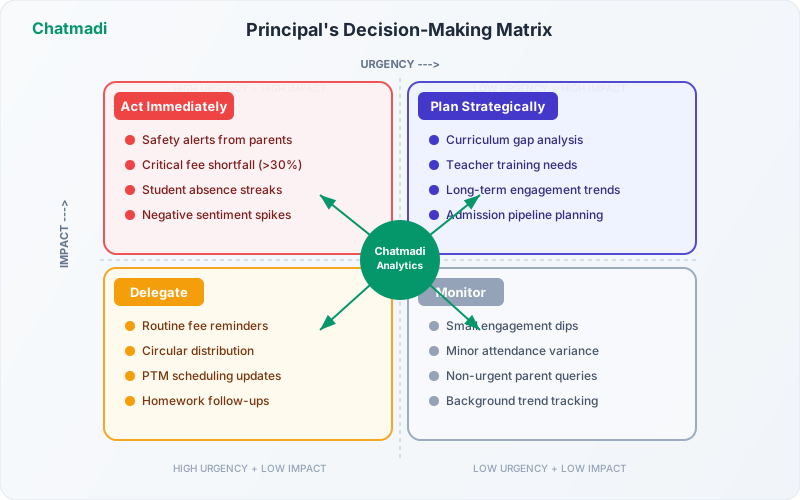
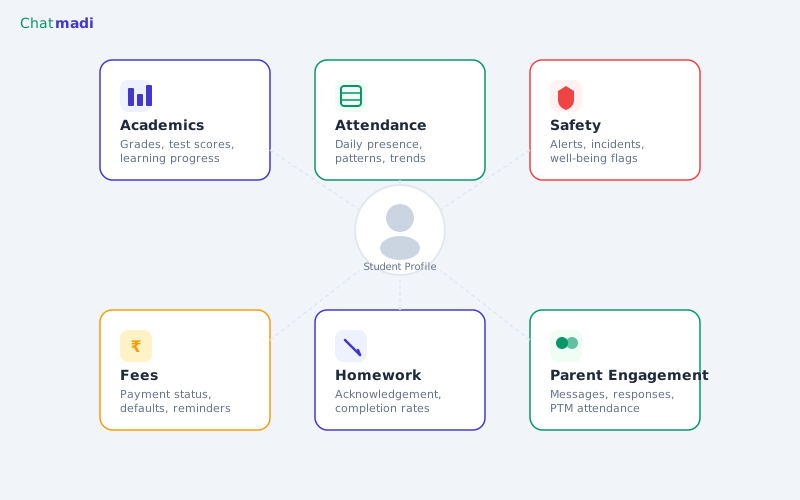
Every Indian school principal makes dozens of decisions each week. Should we send fee reminders this week or wait? Which class teacher needs support with parent communication? Is the declining attendance in Class 3B a pattern or a blip? Should we schedule an extra PTM for the class where engagement is dropping? Are there students at risk of failure that teachers have not flagged? Most principals make these decisions based on instinct, experience, and whatever information happens to reach them through staff meetings and corridor conversations. Some of these instinct-based decisions are excellent. Experienced principals develop strong intuitions about their schools. But instinct without data has blind spots. A principal cannot intuit that parent engagement in Class 4A dropped by 18% over the last month if nobody has measured it. They cannot intuit that 4 students across 3 classes are showing simultaneous attendance and homework declines if no system connects these signals. School data analytics India principals need must do more than present numbers. It must connect data to decisions. Chatmadi's analytics dashboard is designed around this principle: every metric exists to inform a specific decision.
Why Having Data Is Not Enough (The Decision Gap)
The decision gap is the space between seeing data and knowing what to do about it. Most school software produces data: attendance percentages, fee collection rates, exam averages. But data without a decision framework is just noise. A principal who sees that fee collection is 73% does not automatically know what to do. Should they send reminders? Call a parent meeting? Adjust the payment schedule? Escalate to the board? The answer depends on context: is 73% normal for this time of term? Is it higher or lower than last year? Which families are the ones who have not paid? Are they financially stressed or simply forgetful? Chatmadi bridges the decision gap in two ways. First, it provides context alongside data. The fee collection rate of 73% is shown alongside the same-period rate from last term (68%), the trend direction (improving), and the specific families that are outstanding. Second, it provides actionable next steps. The dashboard does not just show 73%. It shows "14 families with outstanding fees. 3 have already confirmed payment in WhatsApp. 8 are past the gentle reminder stage. 3 need personal outreach." This transforms data into a decision: send AI-drafted reminders to 8, mark 3 as confirmed, and call the remaining 3 personally.
The 6 Principal Decisions That Data Can Make Better
Decision one: where to focus fee collection efforts. The fee analytics show exactly which families owe what amount, when their last payment was, and whether they have mentioned payment in WhatsApp. Instead of sending reminders to everyone, focus on the families who need them. This targeted approach, enabled by Chatmadi's [fee detection system](/blog/track-school-fee-payments-whatsapp), improves collection rates while reducing parent frustration. Decision two: which students need intervention. The [at-risk detection system](/blog/ai-flag-at-risk-students-school) combines attendance decline, homework disengagement, and parent communication drops to identify students who are struggling before exam results confirm it. The principal decides which students receive teacher outreach, parent meetings, or counsellor referrals. Decision three: which classes need communication support. The class-level engagement analytics show which classes have strong parent communication and which have declining engagement. A class where [parent engagement](/blog/improve-parent-engagement-indian-schools) is falling may have a teacher who is overwhelmed, a group of disengaging families, or a communication approach that is not working. The data tells the principal where to investigate. Decision four: how to prepare for PTMs. The [PTM management system](/blog/ptm-planning-indian-schools-high-attendance) shows RSVP rates, historical attendance patterns, and outstanding action items from previous meetings. The principal decides whether additional outreach is needed to boost attendance and which teachers need support preparing data-backed talking points for parents. Decision five: whether safety protocols are working. The [safety alert system](/blog/detect-child-safety-concerns-whatsapp-school) tracks how many alerts were raised, how quickly they were resolved, and whether any patterns are emerging. The principal decides whether additional training, supervision, or policy changes are needed. Decision six: how to report to the board. The [board meeting preparation](/blog/whatsapp-data-school-board-meeting-prep) analytics generate every number the board needs. The principal decides which metrics to highlight, which trends to explain, and which actions to propose.
How to Read Chatmadi's Analytics Dashboard for Maximum Insight
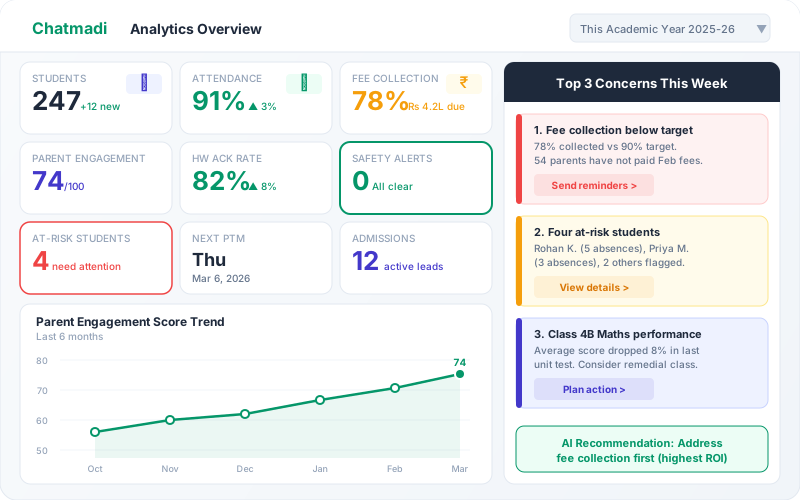
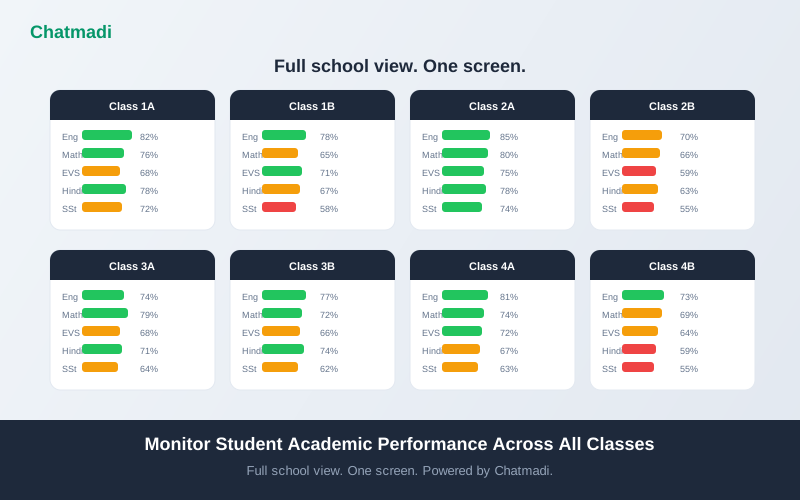
Chatmadi's analytics dashboard has six tabs, each corresponding to a domain of school operations. The Overview tab shows the school-wide health metrics: total students, attendance rate, fee collection rate, parent engagement score, active safety alerts, and admission pipeline status. This is the tab to check daily. It takes less than 60 seconds to scan and immediately reveals whether any metric needs attention. The Admissions tab shows the admission pipeline: total enquiries, conversion rate at each stage, top lead sources, and time-to-enroll metrics. This tab is most relevant during [admission season](/blog/school-admission-season-playbook-india) (January to April) and should be checked weekly during that period. The Fees tab shows collection rates by instalment, outstanding amounts by class, payment trends over time, and detected payments awaiting verification. This tab should be checked weekly and before any fee-related communication to parents. The Academics tab shows exam results across classes and subjects, [syllabus completion](/blog/track-syllabus-completion-school-software) rates, declining student identification, and subject-level performance rankings. This tab is most relevant after exam cycles and should be reviewed within a week of results being entered. The Engagement tab shows [parent engagement scores](/blog/parent-engagement-score-school-india) by class, [homework acknowledgement rates](/blog/track-parent-homework-acknowledgements-school), [communication patterns](/blog/whatsapp-data-parent-engagement-schools), and the at-risk family list. This tab should be checked weekly to identify families that need outreach. The Safety and Staff tab shows safety alert history, resolution times, and staff adoption metrics. This tab should be checked after any safety alert and reviewed monthly for trends.
Full analytics overview tab showing 9 KPI cards trend line chart top concerns and time range selector
How-To: Building a Weekly Data Review Habit That Actually Drives Action
The most effective way to use Chatmadi's analytics is to establish a weekly review routine that takes 15 to 20 minutes and produces specific actions. Monday morning, 10 minutes: open the Overview tab. Check the five headline metrics. Note any that have changed significantly since last Monday. If fee collection dropped, check the Fees tab. If attendance dropped, check the Engagement tab for possible causes. If a safety alert appeared, check the Safety tab immediately. Monday morning, 5 minutes: check the Engagement tab. Sort by engagement score, lowest first. Identify any families whose score dropped by 10 or more points since last week. For each, decide whether to reach out this week or monitor for another week. Note the specific families and assign follow-up to the relevant class teacher. Monday morning, 5 minutes: check the action item list. Review any outstanding PTM action items, pending fee follow-ups, or unresolved safety alerts. Assign deadlines and owners. The total investment is 20 minutes every Monday. The return is a principal who knows exactly what is happening in their school and has a specific action plan for the week. Over time, this weekly habit creates a data-driven culture where decisions are evidence-based rather than impression-based.
The 5 Analytics Patterns That Always Mean Something Important
Pattern one: simultaneous decline across multiple metrics for the same student. When a student's attendance drops and their homework acknowledgement rate drops and their parent's communication frequency drops at the same time, something significant is happening in that family. This pattern is the strongest predictor of academic failure and potential dropout. Action: immediate teacher outreach to the family. Pattern two: class-level engagement decline. When the average engagement score for an entire class drops over two or more weeks, the issue is systemic rather than individual. It may indicate teacher burnout, a communication breakdown, or a class-wide issue that is affecting multiple families. Action: principal conversation with the class teacher to understand the cause. Pattern three: fee collection plateau. When the fee collection rate stops improving and plateaus at 70 to 75%, the remaining 25 to 30% likely includes families that cannot be reached through standard reminders. They need personal outreach. Action: identify the specific families and assign personal phone calls. Pattern four: safety alert clustering. When multiple safety alerts appear in the same class or involve the same group of students within a short period, there may be a systemic issue such as a bully targeting multiple students or an unsafe environment during a specific period. Action: immediate investigation and potential intervention. Pattern five: homework acknowledgement divergence across subjects. When parents acknowledge homework consistently for some subjects but not others, it may indicate that certain teachers communicate homework more effectively or that parents find certain subjects less important. Action: share the high-performing teacher's communication approach with the lower-performing one.
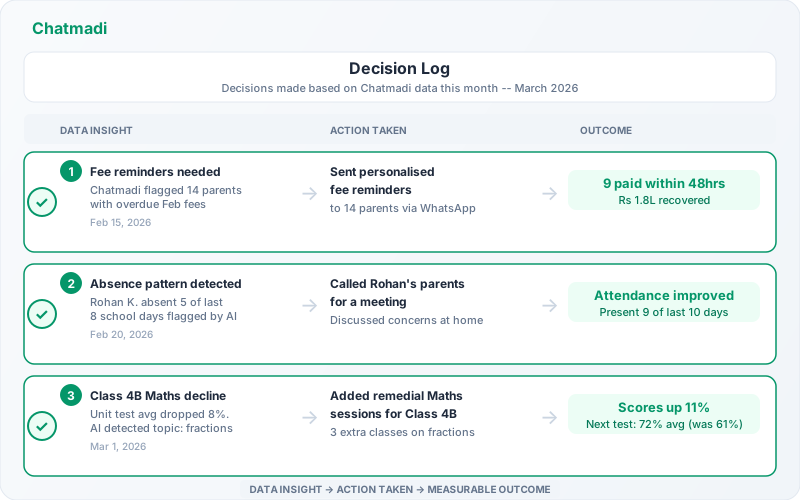
Decision log showing three data driven decisions with actions taken and measurable outcomes
When to Trust the Data and When to Override It
Data is a tool for decision-making, not a replacement for it. There are situations where the data is clear and the principal should follow it: if 4 students are flagged as at-risk by the composite scoring system, all 4 need investigation. There is no reasonable argument for ignoring the signal. There are also situations where the data should be questioned. A parent whose engagement score drops from 80 to 30 in one month may not be disengaging. They may have changed their phone number, been hospitalised, or had a family emergency. The data shows the decline. The principal's judgement determines whether it warrants a concerned phone call or a routine check-in. The general rule is: trust the data for identifying what to investigate, but use human judgement for deciding how to respond. Chatmadi surfaces patterns that humans cannot see in raw conversation data. But the appropriate response to those patterns requires the principal's understanding of context, relationships, and community dynamics that no AI can fully capture. The best principals use Chatmadi as their eyes and their own experience as their hands. The data tells them where to look. Their judgement tells them what to do.
Frequently Asked Questions
How much data does Chatmadi need before analytics become useful?
Basic analytics like attendance rates and homework acknowledgements become useful from the first week. Trend analysis becomes meaningful after four to six weeks. Engagement scoring and at-risk detection are most accurate after eight weeks of consistent data.
Can I customise which metrics appear on my dashboard?
The Overview tab shows the most universally important metrics. Future releases will allow principals to pin their most-watched metrics and create custom dashboard layouts.
What if the data contradicts what a teacher tells me about their class?
Use the data as a starting point for conversation, not as a verdict. Ask the teacher "I see that engagement in your class dropped this month. What do you think is causing it?" The teacher may have context that explains the data, or the data may reveal something the teacher had not noticed.
Can other staff members access the analytics dashboard?
Class teachers see analytics for their own class. Subject teachers see analytics for their subjects. The full school-wide analytics dashboard is accessible to the principal and designated administrators.
How does Chatmadi protect against making decisions based on incomplete data?
The dashboard shows data confidence indicators based on the volume of conversations uploaded and the recency of the data. If data for a class has not been updated in two weeks, the system flags it so the principal knows the metrics may not reflect current reality.
---
Data without decisions is just numbers. Chatmadi turns your school's WhatsApp data into the decisions that move your school forward. Start free at chatmadi.com
Tagsschool data analytics Indiaschool analytics platform IndiaAI tools for school principals Indiaschool principal dashboard software IndiaChatmadi
C
Chatmadi Team
School Communication Intelligence
The Chatmadi team writes about AI-powered parent communication, school management best practices, and WhatsApp intelligence for Indian schools. Built by Eduloom Technologies OPC Pvt Ltd, Mysore.