How to Improve Parent Engagement in Indian Schools: A Principal's Playbook
In this article
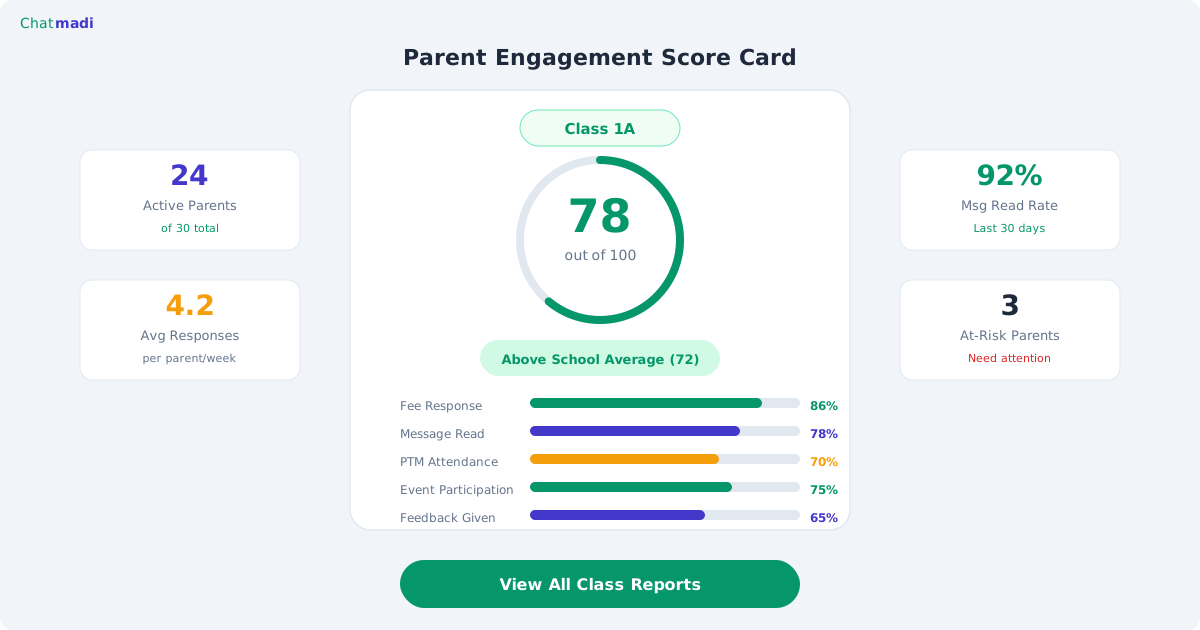
When Indian school principals talk about parent engagement, they usually mean one thing: whether parents show up to PTMs. But engagement is far broader than attendance at a twice-yearly meeting. A parent who acknowledges every homework assignment but never attends a PTM is more engaged than a parent who attends the PTM but has not acknowledged a single assignment all term. Understanding how to improve parent engagement school India principals need requires first defining what engagement actually means and then measuring it systematically. Chatmadi computes a Parent Engagement Score for every student-parent pair using five distinct metrics, giving principals the data they need to move from guessing to knowing.
What Parent Engagement Actually Means in Indian Schools (And How to Measure It)
Parent engagement in an Indian school context has five measurable dimensions. First, communication responsiveness: does the parent respond to teacher messages, queries, and updates in a timely manner? A parent who responds to a homework query within 24 hours is more engaged than one who takes a week. Second, homework acknowledgement: does the parent confirm receipt of homework assignments and worksheets shared by the teacher? This is a direct measure of how closely the parent is following their child's academic activities. Third, fee payment timeliness: does the parent pay fees by the due date, or does the school need to send reminders? Timely payment indicates organisational engagement with the school's administrative requirements. Fourth, PTM participation: does the parent confirm attendance at parent-teacher meetings and actually show up? PTM engagement is the most visible form of participation. Fifth, event and activity participation: does the parent respond to event announcements, permission slips, and activity communications? Each of these dimensions can be measured from data that Chatmadi collects automatically through WhatsApp conversation analysis, fee tracking, PTM management, and homework tracking modules.
The 5 Metrics That Make Up a Parent Engagement Score
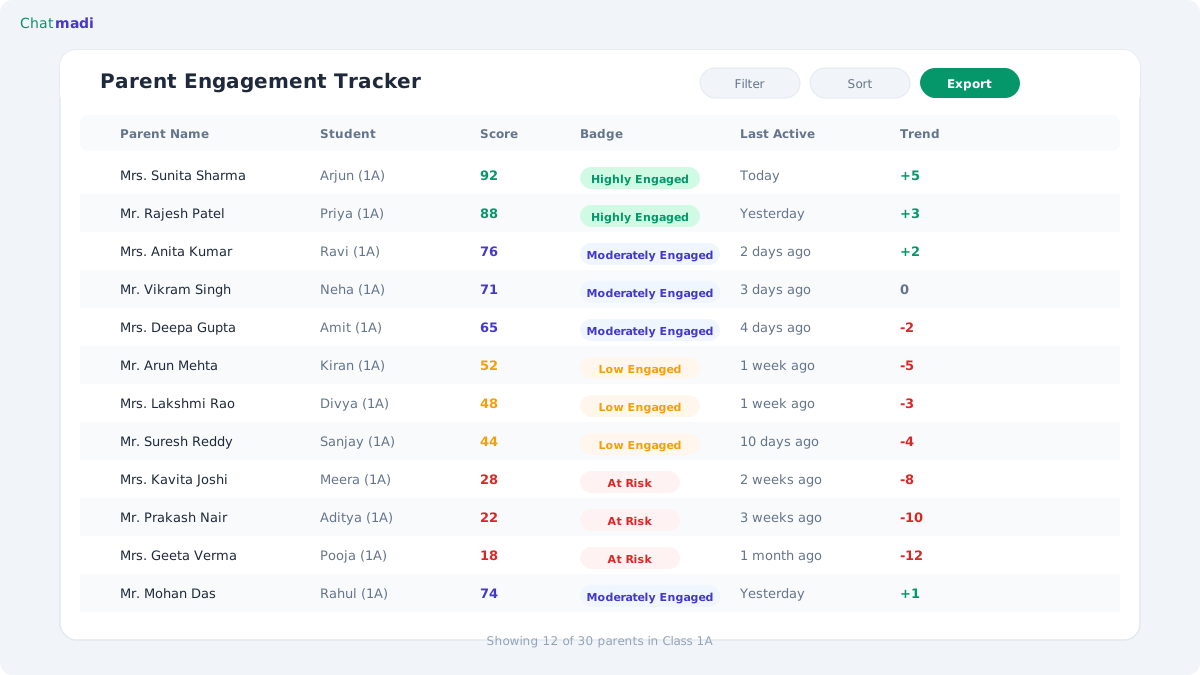
Chatmadi computes a composite Parent Engagement Score on a scale of 0 to 100 for each student-parent pair. The score is a weighted combination of the five dimensions. Communication responsiveness contributes 25% of the score. It is calculated from how frequently and quickly the parent communicates via WhatsApp. Homework acknowledgement contributes 25% of the score. It is the percentage of assignments the parent has acknowledged out of all assignments shared during the period. Fee payment timeliness contributes 20% of the score. Parents who pay before the deadline score highest. Those who pay within the grace period score moderately. Those who are overdue score lower. PTM participation contributes 20% of the score. It combines RSVP response (did the parent confirm or decline) and actual attendance (did they show up). Event participation contributes 10% of the score. It tracks responses to event announcements, permission slips, and school activity communications. The composite score places each parent-student pair into one of four categories: Highly Engaged (score 80 and above), Moderately Engaged (60 to 79), Low Engagement (40 to 59), and At Risk (below 40). These categories help teachers and principals quickly identify which families need outreach.
How Chatmadi Tracks and Scores Parent Engagement Automatically
The engagement data is collected automatically from Chatmadi's existing modules. Communication responsiveness is measured from WhatsApp conversation analysis: when a parent sends a message, the AI notes their activity and frequency. Homework acknowledgement is tracked by the homework module: when a teacher shares an assignment and a parent confirms receipt in WhatsApp, the AI records the acknowledgement. Fee timeliness is tracked by the fee module: payment dates relative to due dates determine the score. PTM participation is tracked by the PTM module: RSVPs and attendance are recorded per student. Event participation is tracked from event announcements and response detections. No additional data entry is required from teachers. The engagement score is computed weekly and displayed on the class teacher's dashboard as a parent engagement overview. Each parent's score is visible with their engagement category badge. The class average is shown alongside the school average, so teachers can see how their class compares. This is how to improve parent engagement school India educators can measure it first: by making the invisible visible.
Chatmadi parent engagement tracker showing 12 parents with individual scores and status badges
How-To: A 90-Day Parent Engagement Improvement Plan
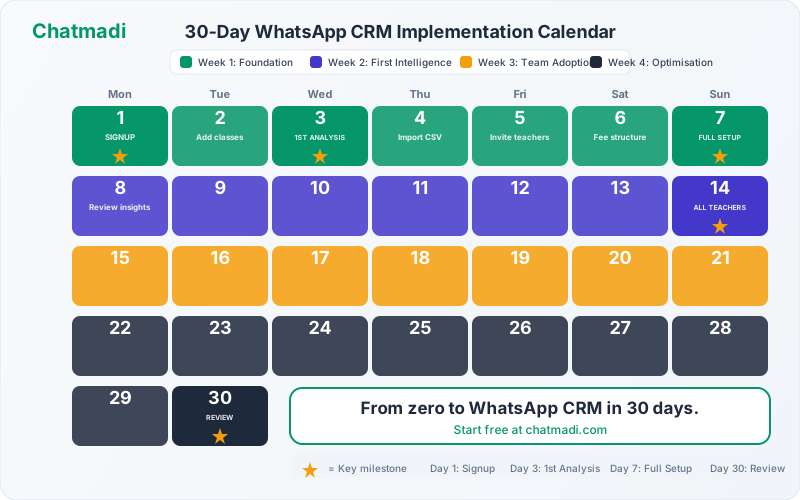
Improving parent engagement is not a one-time event. It is a systematic process. Here is a 90-day plan. Days 1 to 30: establish baseline. Ensure all class teachers are uploading WhatsApp conversations regularly so engagement data is being collected. At the end of month one, review each class's engagement score distribution. Identify which classes have the most At Risk parents. Days 31 to 60: targeted outreach. For parents in the Low Engagement and At Risk categories, initiate personalised outreach. Not a generic reminder, but a specific message: "We noticed we haven't heard from you recently about Aarav's homework. Is everything okay? We want to make sure you are receiving the updates." For the homework dimension specifically, experiment with different communication formats: shorter messages, visual homework sheets, or voice notes. Track which format produces higher acknowledgement rates. Days 61 to 90: measure improvement. Compare the engagement scores at day 90 to the baseline at day 30. Celebrate improvements publicly (in staff meetings, not parent groups). For parents who remain At Risk despite outreach, schedule individual phone conversations to understand if there are barriers to engagement such as language, digital literacy, or personal circumstances that the school can accommodate.
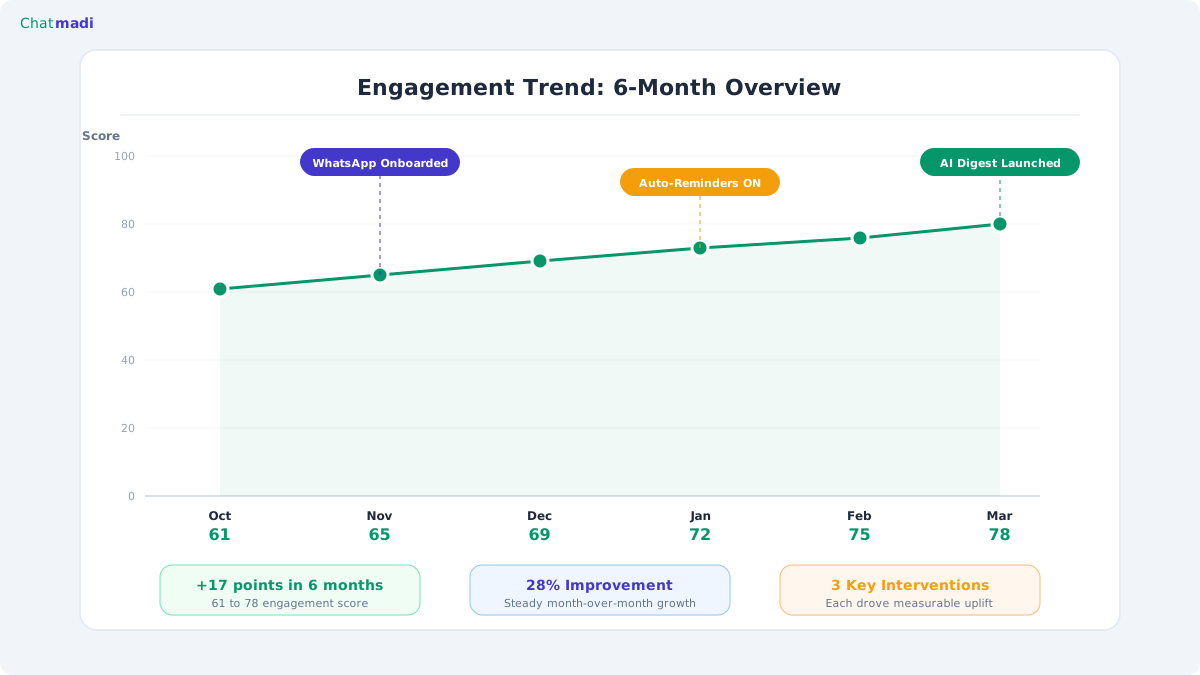
Chatmadi parent engagement trend chart showing improvement from 61 to 78 over 6 months
Which Parents Need More Attention (And How to Identify Them)
Not all low-engagement parents need the same intervention. Chatmadi helps identify three distinct profiles. Profile one: the busy parent. This parent pays fees on time and attends PTMs but does not acknowledge homework or respond to daily messages. They are engaged with major commitments but not with routine communication. Intervention: reduce the number of messages requiring response and prioritise quality over quantity. Profile two: the disengaging parent. This parent was previously moderately engaged but scores have been declining over the past month. Something has changed, perhaps a family situation, dissatisfaction with the school, or the child's declining interest. Intervention: a personal phone call from the class teacher, not to discuss homework, but to ask how the family is doing. Profile three: the consistently absent parent. This parent has never been highly engaged across any dimension. They may have language barriers, digital literacy challenges, or personal circumstances that prevent engagement. Intervention: explore alternative communication channels (phone calls instead of WhatsApp, face-to-face meetings instead of digital PTMs). Chatmadi's engagement tracker helps teachers distinguish between these profiles by showing the score breakdown across all five dimensions. A parent who scores 90 on fee timeliness but 20 on homework acknowledgement is clearly Profile one. A parent whose overall score dropped from 72 to 41 in two months is clearly Profile two.
Frequently Asked Questions
Can parents see their own engagement scores?
No. Engagement scores are visible only to school staff (class teachers, principals, and admins). They are an internal management tool, not a parent-facing metric. Sharing scores with parents could create unnecessary anxiety or competitive dynamics.
How quickly does the engagement score update?
Scores are computed weekly using the most recent data. Changes in parent behaviour (for example, a parent who starts acknowledging homework after outreach) are reflected in the next weekly score update.
Does low parent engagement always indicate a problem?
Not always. Some parents are engaged through channels Chatmadi does not track (face-to-face conversations at pickup, phone calls to the principal's office). Low digital engagement may reflect preference, not disengagement. Context matters when interpreting scores.
Can I track engagement for both parents (mother and father)?
Yes. If both parents are linked to the student's profile and both have WhatsApp conversations analysed by Chatmadi, each parent will have an individual engagement score. The class view shows the higher-scoring parent by default.
Is the engagement score available on all plans?
Basic engagement indicators (homework ack rates, fee timeliness) are available on Growth plans and above. The composite Parent Engagement Score with all five dimensions requires the Pro or School plan.
---
Your parents are already communicating. Chatmadi helps you measure and improve that engagement systematically. Start free at chatmadi.com
Tagsparent engagement school Indiaparent communication platformschool engagement trackingparent school relationshipChatmadi
C
Chatmadi Team
School Communication Intelligence
The Chatmadi team writes about AI-powered parent communication, school management best practices, and WhatsApp intelligence for Indian schools. Built by Eduloom Technologies OPC Pvt Ltd, Mysore.