Admission Pipeline Management: How to Stop Losing Leads at Every Stage
In this article
Every admission season, Indian schools receive dozens to hundreds of enquiries from prospective parents. These enquiries arrive through phone calls, WhatsApp messages, walk-ins, and referrals. Most schools manage them in a notebook, a spreadsheet, or simply in the principal's memory. The result is predictable: enquiries are forgotten, follow-ups do not happen, and parents who were interested on Tuesday choose a competitor school by Friday because nobody called them back. School admission management software India schools need must track every lead from first contact to enrolled student, making it impossible for an enquiry to fall through the cracks.
The Hidden Admission Funnel Leaks Costing Indian Schools 30% of Enrollments
The admission funnel at most Indian schools has five stages: enquiry, site visit, form submission, review, and enrollment. At each stage, leads are lost. A study of school admission patterns shows that 30 to 40% of parents who make an initial enquiry never hear back from the school within 48 hours. Of those who do visit the school, 25 to 35% never submit an admission form because nobody followed up. Of those who submit forms, 10 to 15% lose interest during the review period because communication stops. These are not parents who chose another school because it was better. They are parents who chose another school because it responded first. The total leakage from these three drop-off points typically represents 30 to 40% of potential enrollments. For a school expecting 50 new enrollments per year, that means 15 to 20 lost students, each worth 50,000 to 1,50,000 rupees in annual fees.
What a Proper School Admission Pipeline Looks Like
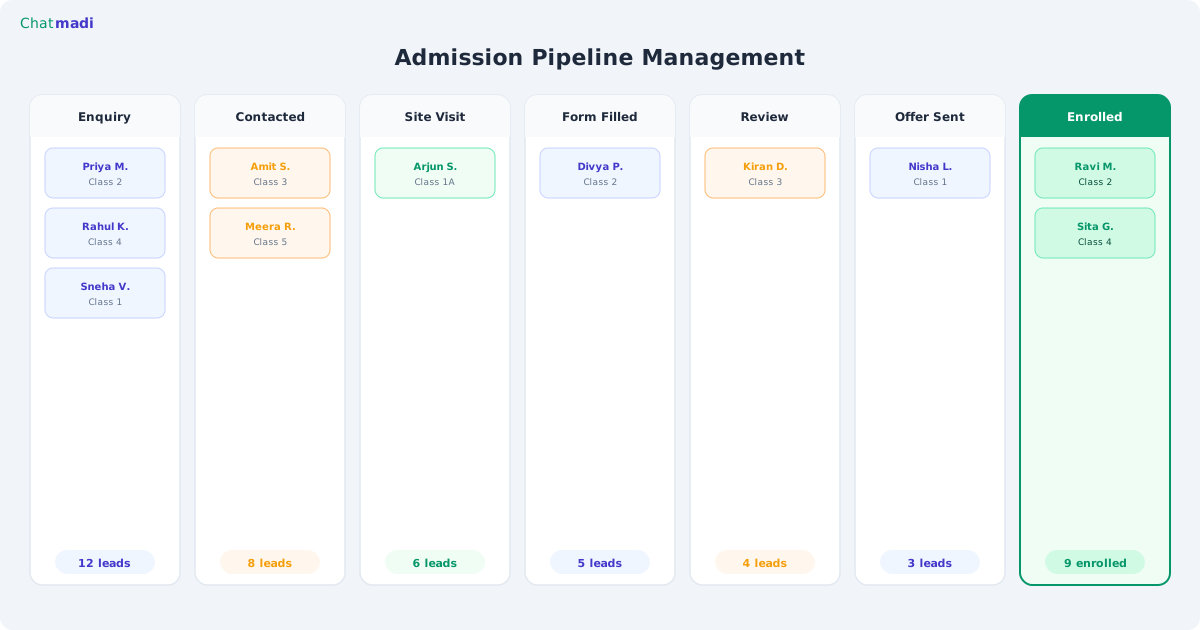
A proper admission pipeline is a visual representation of every prospective student's journey from first contact to enrollment. Chatmadi implements this as a Kanban board with seven stages. Stage one: New Enquiry. The parent has contacted the school by phone, WhatsApp, or walk-in. Basic information is recorded: child name, parent name, phone number, class applying for, and source. Stage two: Contacted. The school has responded to the enquiry. The parent has received information about the school, fees, and the admission process. Stage three: Site Visit. A campus visit has been scheduled or completed. Stage four: Form Submitted. The admission form has been received by the school. Stage five: Under Review. The school is reviewing the application, which may include an assessment or interview. Stage six: Offer Made. The school has offered admission and is awaiting the parent's acceptance. Stage seven: Enrolled. The parent has accepted and completed enrollment formalities. Each lead exists as a card on this board, and moving a card from one stage to the next takes a single action. No lead can be forgotten because every card is visible.
How Chatmadi's Kanban Pipeline Tracks Every Lead From Enquiry to Enrolled
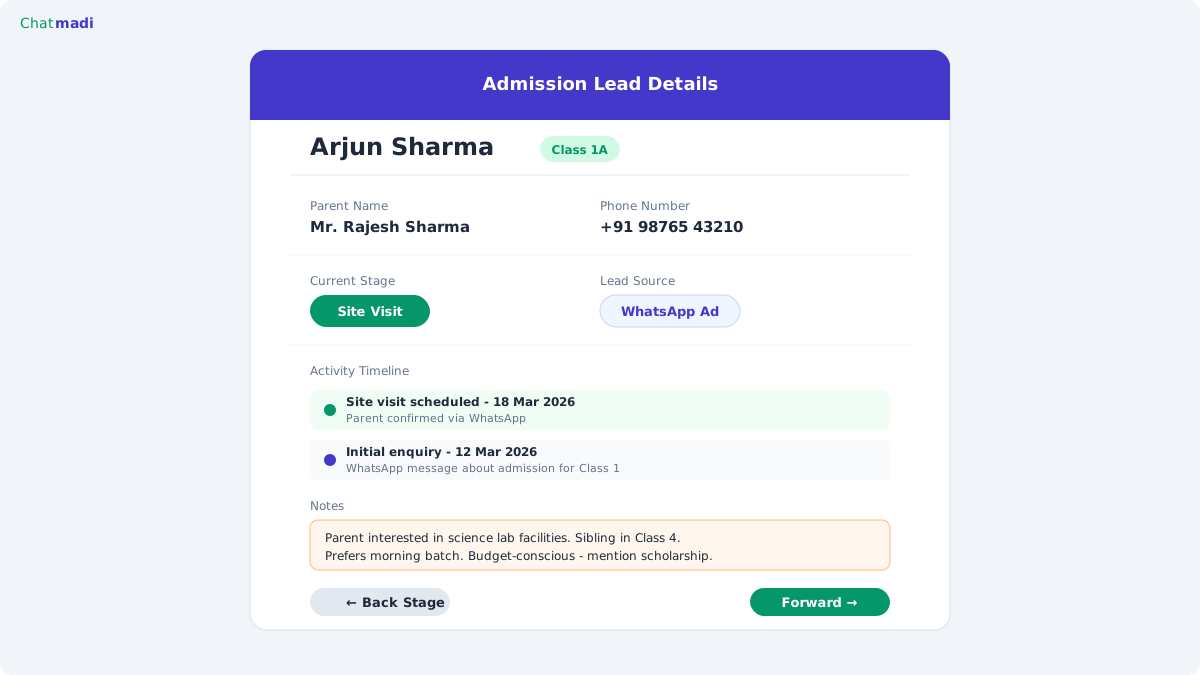
Chatmadi's admission pipeline is available on the School plan and provides a complete Kanban interface. Creating a new lead takes 30 seconds: enter the student name, parent contact, class applying for, and source. The card appears in the New Enquiry column. As you progress the lead through conversations and actions, you move the card to the next stage. Each card stores the complete history: when the enquiry was received, when contact was made, notes from the site visit, form submission date, and any follow-up actions. Chatmadi also auto-creates pipeline cards when the AI detects admission enquiries in WhatsApp conversations. If a parent writes "I am interested in admission for my son to Class 1 next year," the AI identifies this as an admission signal and can create a pipeline card automatically. The school admission management software India schools need should not rely on manual data entry alone. Chatmadi's AI-assisted lead creation ensures that no WhatsApp-based enquiry is missed.
Chatmadi individual admission lead card showing parent details and stage controls
How-To: Managing Admission Season Using Chatmadi's Pipeline
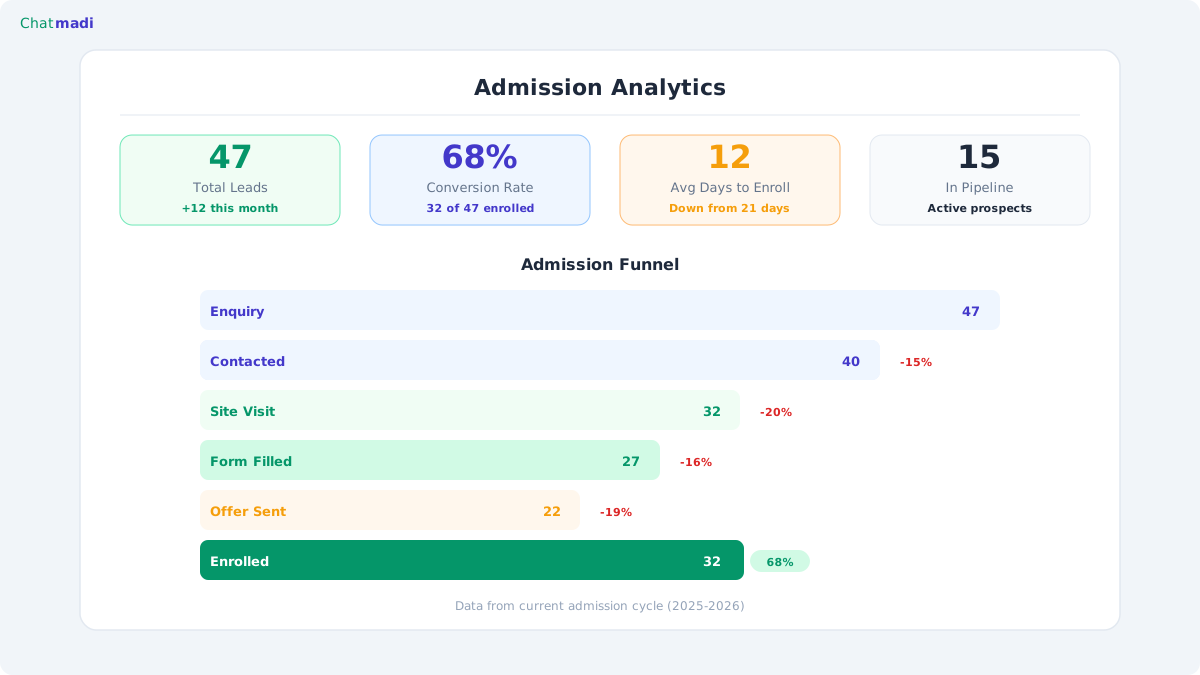
Admission season typically runs from October to March for the following academic year. Here is how to use the pipeline effectively. Start early: create pipeline cards for every enquiry received, including phone calls, walk-ins, and WhatsApp messages. Assign each card a source tag (word of mouth, social media, newspaper, walk-in) so you can track which channels produce the most leads. Daily review: spend 15 minutes each morning reviewing the pipeline board. Which leads have been in the same stage for more than 3 days? These need follow-up. Move leads who have progressed to the next stage. Add notes from any conversations. Weekly metrics: check the conversion analytics. What percentage of enquiries convert to site visits? What percentage of site visits convert to form submissions? Where is the biggest drop-off? This data tells you where to focus your outreach efforts. Follow-up discipline: the single most important factor in admission conversion is response time. Parents expect a response within 24 hours of enquiry. The pipeline board makes it impossible to forget a lead because every card is visible with its days-in-stage counter. After admission season: review the complete data. How many leads came in? What was the overall conversion rate? Which sources produced the most enrolled students? This data informs next year's marketing and outreach strategy.
Chatmadi admission analytics showing conversion funnel and lead statistics
Converting Site Visits to Enrollments: The Follow-Up Framework
The highest-leverage intervention in the admission funnel is the transition from site visit to form submission. This is where 25 to 35% of leads are lost. Here is a follow-up framework that schools using Chatmadi report improves this conversion rate significantly. Day of visit: after the site visit, send a personalised WhatsApp message thanking the parent for visiting. Include the admission form link or details on how to obtain one. Day 3: send a follow-up asking if they have any questions about the school. Reference something specific from the visit ("I hope Arjun enjoyed seeing the science lab"). Day 7: if no form has been received, make a phone call. Ask directly whether they have decided and if there is anything preventing them from proceeding. Day 14: final follow-up. If no response, send a gentle message noting that admission slots are filling up and you would be happy to hold a spot if they confirm interest. Each of these follow-up actions can be tracked in the Chatmadi pipeline. When a follow-up is due, the card's days-in-stage indicator turns amber. The school knows exactly which parents need attention without maintaining a separate follow-up tracker.
Frequently Asked Questions
Is the admission pipeline available on all Chatmadi plans?
The full Kanban admission pipeline is available on the School plan. Other plans include basic lead tracking capabilities. Schools on Growth or Pro plans who need pipeline management can upgrade to the School plan.
Can multiple people manage the admission pipeline?
Yes. All admin-level users in the Chatmadi workspace can view and manage the pipeline. Cards can be assigned to specific staff members, and the pipeline shows who is responsible for each lead.
Does Chatmadi automatically detect admission enquiries from WhatsApp?
Yes. When the AI analyses a conversation and detects an admission-related signal (such as a parent asking about admission for the next year), it can be flagged for pipeline entry. The admin reviews and confirms before a card is created.
Can I export admission data for reporting?
Yes. The Export Data feature includes admission pipeline data: lead details, stages, conversion dates, and source information. This CSV can be used for board presentations and marketing analysis.
---
Every enquiry your school receives is a potential enrollment. Stop letting them slip away. Start free at chatmadi.com
The Chatmadi team writes about AI-powered parent communication, school management best practices, and WhatsApp intelligence for Indian schools. Built by Eduloom Technologies OPC Pvt Ltd, Mysore.