School Admission Season Playbook: Converting Enquiries to Enrolled Students
In this article
Admission season is the most critical period in an Indian school's year. For most private schools, the window between January and March determines the student strength for the entire academic year. Revenue projections, teacher hiring, section planning, and budget allocation all depend on how many students enrol during these eight weeks. Yet most schools manage this process with spreadsheets, diary entries, and memory. An enquiry comes in by phone. Someone writes the parent's name in a register. The principal promises a callback. The callback happens three days late, by which time the parent has visited two other schools and made a decision. School admission pipeline software exists precisely to prevent this leakage. Chatmadi's admission pipeline gives schools a systematic way to track every enquiry from first contact to enrolled student.
The 8-Week Indian School Admission Season: What Happens When
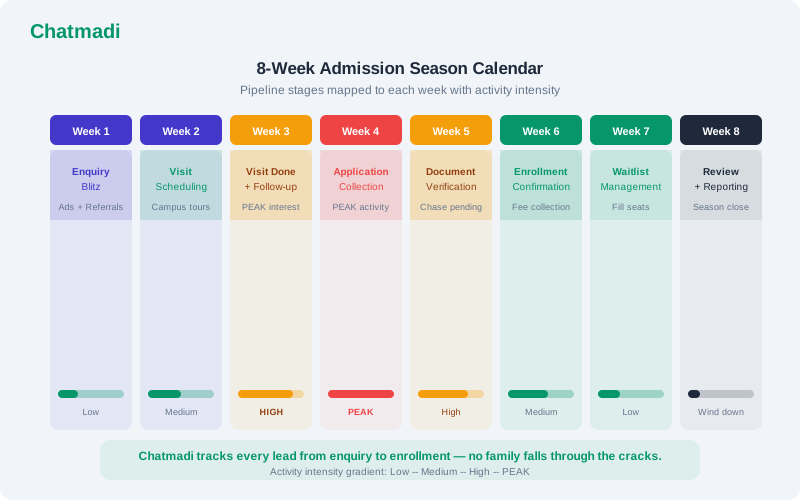
The typical Indian school admission season follows a predictable rhythm. Week one to two: the enquiry surge. Advertisements go out, word of mouth picks up, and parents start calling or visiting the school. This is the highest-volume period. A school that receives 80 enquiries during the season will get 40 to 50 of them in these first two weeks. Week three to four: site visits. Parents who made initial enquiries now want to see the school. They schedule campus tours, meet teachers, and evaluate the facilities. This is the conversion window. A parent who visits the campus is significantly more likely to enrol than one who only called. Week five to six: form collection and documentation. Interested parents collect admission forms, submit required documents (birth certificate, previous school records, address proof), and make their decision. This is where many schools lose leads because the form submission process is manual and slow. Week seven to eight: the final push. Parents who have not made a decision are on the fence. A well-timed follow-up call or message can tip them toward enrolling. Schools that do not follow up during this period lose these fence-sitters to competitors who do. Each week requires different actions, different messaging, and different tracking. Without a pipeline system, schools cannot manage the complexity of 80 to 100 leads at various stages simultaneously.
Why Schools Lose 40% of Leads Between Enquiry and Enrollment
The gap between enquiry volume and enrolment numbers is one of the most expensive problems in school management. A school that receives 100 enquiries and enrols 60 students has lost 40 potential admissions. At an average annual fee of 50,000 to 80,000 rupees per student, those 40 lost admissions represent 20 to 32 lakh rupees in lost annual revenue. Where do these leads go? The first leak point is the initial follow-up. A parent calls to enquire. The school takes the name and number. The follow-up call should happen within 24 hours but often happens after 48 to 72 hours because the administrator is busy with other tasks. By then, the parent has visited another school that followed up faster. The second leak point is the site visit scheduling. A parent expresses interest in visiting the campus. The school says "come anytime." Without a scheduled appointment, 30% of interested parents never visit. A specific date and time commitment increases visit completion rates by 50%. The third leak point is the documentation stage. A parent submits partial documents. The school needs the remaining documents but does not follow up systematically. Weeks pass. The parent assumes the school is not interested and enrols elsewhere. The fourth leak point is the decision stage. A parent who has completed all steps but has not made a final decision needs one more nudge. Schools that wait for parents to call back lose these leads to schools that proactively reach out. Each of these leak points is a follow-up failure, not a demand failure. The leads exist. The school simply fails to move them through the pipeline.
The Chatmadi Admission Pipeline: Managing Every Lead Systematically
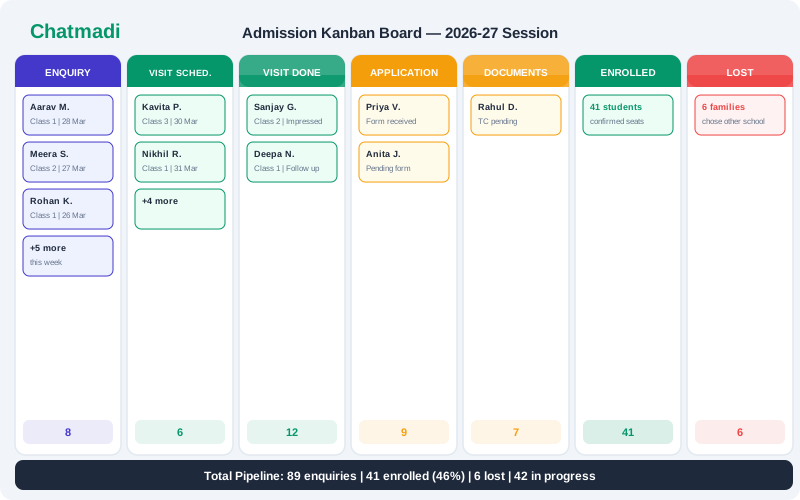
Chatmadi's admission pipeline is a visual Kanban board with seven stages that map to the natural admission journey. Stage one: Enquiry. Every new lead enters here. The record captures the parent's name, phone number, child's name and age, grade applying for, and the source of the enquiry (word of mouth, advertisement, website, walk-in). Stage two: Visit Scheduled. When a site visit is confirmed with the parent, the lead moves to this stage. The scheduled date and time are recorded. Stage three: Visit Done. After the parent visits the campus, the lead moves here. Notes from the visit are added: what the parent asked about, what impressed them, what concerns they raised. Stage four: Application. The parent has decided to apply. The admission form has been issued or submitted. Stage five: Documents. Required documents are being collected. Chatmadi tracks which documents have been received and which are pending. Stage six: Enrolled. The admission is confirmed. Fee payment has been made. The student is now part of the school database. Stage seven: Lost. If a lead drops out at any stage, it moves to Lost with a reason (chose another school, too expensive, relocated, unresponsive). Tracking lost leads and their reasons helps schools improve their admission strategy for the next season.
Chatmadi admission Kanban board showing seven pipeline stages with lead cards and counts
How-To: Running a Complete Admission Season Using Chatmadi
Here is a week-by-week guide for managing admission season with Chatmadi. Week one: set up the pipeline. Create the admission pipeline in Chatmadi with the seven stages. Add any existing leads from previous enquiries. Train the reception staff and admission coordinator on how to add new leads as they come in. Week two: capture every lead. Every phone call, walk-in, and website enquiry must be entered into the pipeline within 30 minutes. The fastest schools follow up with a WhatsApp message within 2 hours: "Thank you for your interest in Greenwood Primary School. We would love to show you our campus. Would Saturday 10 AM work for a visit?" Week three: schedule and confirm visits. Move leads from Enquiry to Visit Scheduled. Send a confirmation message via WhatsApp the day before the visit. Prepare a standard campus tour route that highlights the school's strengths. Week four: conduct visits and capture feedback. After each visit, update the lead card with visit notes. Move the lead to Visit Done. Within 24 hours, send a follow-up: "It was wonderful meeting you today. As we discussed, our Class 2 section has a strong focus on reading and outdoor activities. Here is the admission form. Please let us know if you have any questions." Week five: drive application completions. Follow up with all Visit Done leads who have not yet submitted applications. Address any concerns raised during the visit. Move leads that submit applications to the Application stage. Week six: chase documents. For leads in the Application and Documents stages, create a checklist of required documents and follow up on missing items. A specific message works best: "We have received Arjun's birth certificate and transfer certificate. We still need one passport-size photograph and the address proof. Can you share these by Friday?" Week seven: final conversion push. Contact all leads in Visit Done and Application stages who have not progressed. A phone call from the principal is often effective at this stage. Week eight: close the season. Move all unresponsive leads to Lost with appropriate reasons. Generate the season report.
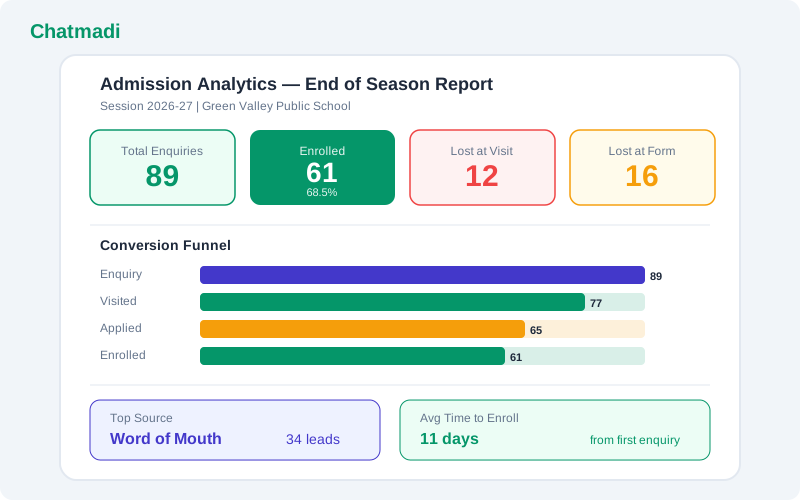
Admission analytics end of season report showing 89 enquiries 61 enrolled and conversion funnel
The Post-Season Audit: What Data Tells You About Next Year
After admission season closes, the pipeline data tells a valuable story about next year. Chatmadi's analytics show the conversion rate at each stage, revealing exactly where the school's admission funnel is weakest. If 70% of enquiries convert to visits but only 40% of visits convert to applications, the campus visit experience needs improvement. If 90% of applications convert to enrolments but the school only gets 50 enquiries in the first place, the marketing and awareness strategy needs improvement. Source analysis reveals which channels produce the most leads and which produce the highest-quality leads (those that convert to enrolment). Word of mouth may produce fewer leads than advertisements but convert at a higher rate. Timeline analysis shows how long the average lead takes to move from enquiry to enrolment. If the average is 18 days but some leads take 35 days, the slow leads may benefit from more aggressive follow-up. Lost lead analysis reveals why families chose not to enrol. If "too expensive" is the top reason, pricing may need adjustment. If "chose another school" is the top reason, competitive positioning needs work. This data transforms admission planning from guesswork into strategy.
Frequently Asked Questions
Can multiple staff members manage the admission pipeline simultaneously?
Yes. The admission pipeline is accessible to all authorised staff members. The reception desk can add new enquiries, the admission coordinator can manage visits and applications, and the principal can review the overall pipeline status.
Does Chatmadi integrate with the school's existing student database?
When a lead reaches the Enrolled stage, Chatmadi can transfer the student's information into the school's student database, eliminating duplicate data entry.
How does Chatmadi handle enquiries that come via WhatsApp?
If a parent sends an enquiry via WhatsApp and the conversation is uploaded to Chatmadi, the AI can detect the admission intent and suggest creating a pipeline lead. The teacher or administrator confirms and the lead is added.
Can I customise the pipeline stages?
The seven default stages cover the standard Indian school admission journey. Schools can add custom stages or rename existing ones to match their specific process.
What happens to the pipeline data after admission season ends?
All pipeline data is retained for analysis and comparison. The following year's admission season can be benchmarked against previous years to track improvement in conversion rates, lead volume, and processing time.
---
Every lost lead is a student who could have been in your school. Chatmadi ensures no enquiry slips through the cracks. Start free at chatmadi.com
The Chatmadi team writes about AI-powered parent communication, school management best practices, and WhatsApp intelligence for Indian schools. Built by Eduloom Technologies OPC Pvt Ltd, Mysore.