School Communication Software India: The Principal's Buying Guide 2025
In this article
Every year, thousands of Indian school principals sign up for a new school communication software that promises to solve their WhatsApp problem. Twelve months later, most are back to managing thirty parent groups manually. The market for school communication software in India has grown rapidly, but the tools available range from genuinely transformative to actively counterproductive for schools. This guide is for principals and administrators who want to choose the right platform without wasting a year discovering it was the wrong one.
Table of Contents
- [Generic WhatsApp Business Platforms](#generic-whatsapp-business-platforms)
- [Traditional School ERPs](#traditional-school-erps)
- [Dedicated Parent Communication Apps](#dedicated-parent-communication-apps)
- [AI-Powered WhatsApp Intelligence Platforms](#ai-powered-whatsapp-intelligence-platforms)
- [1. Does It Work with WhatsApp Without Asking Parents to Change Anything?](#1-does-it-work-with-whatsapp-without-asking-parents-to-change-anything)
- [2. Does It Understand Indian School Context Specifically?](#2-does-it-understand-indian-school-context-specifically)
- [3. Can Different Roles Each See Exactly What They Need?](#3-can-different-roles-each-see-exactly-what-they-need)
- [4. How Does It Track Fee Payments?](#4-how-does-it-track-fee-payments)
- [5. Does It Have Child Safety and Welfare Features?](#5-does-it-have-child-safety-and-welfare-features)
- [6. What Are the True Total Costs Over Twelve Months?](#6-what-are-the-true-total-costs-over-twelve-months)
- [7. How Long Does It Actually Take to Set Up?](#7-how-long-does-it-actually-take-to-set-up)
Why Most Indian Schools Choose the Wrong Communication Tool
The selection process at most schools follows the same pattern. Someone attends an EdTech conference or receives a cold call. A demo is arranged. The product looks impressive in a controlled environment. A decision is made based on features that seemed compelling during a forty-five-minute presentation. What is rarely evaluated before purchase is how the tool actually fits into how Indian schools communicate.
Indian schools have requirements that generic tools do not meet. PTMs happen twice a year with RSVP tracking requirements that take administrative staff hours to manage manually. Fee collection follows a quarterly cycle: April, July, October, January. Payment confirmations arrive through WhatsApp in Hindi, Kannada, Tamil, and English in the same message. Board exams create surges in parent queries that must reach the right teacher at the right time. Class teachers own attendance. Subject teachers own syllabus. Principals need a school-wide view without being buried in class-level communication.
A tool built for sales teams or e-commerce does not understand any of this. Before evaluating any platform, it helps to understand the four distinct categories of school communication software available in India. Most evaluation mistakes come from comparing tools across categories as if they serve the same purpose.
The Four Categories of School Communication Software in India
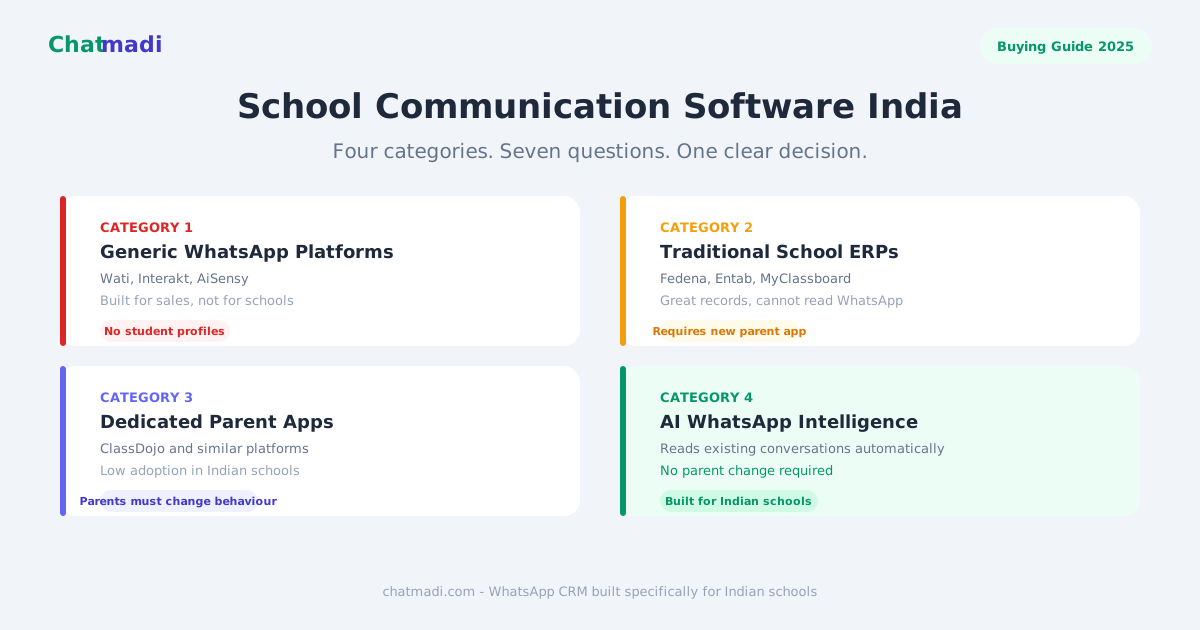
Generic WhatsApp Business Platforms
Tools like Wati, Interakt, and AiSensy were designed for sales teams, customer support, and e-commerce. They excel at sending broadcast messages, managing support queues, and running WhatsApp marketing campaigns. They are strong products, built for the purpose they were designed for.
When schools try to use them, the category mismatch becomes clear within weeks. There is no concept of a student, a class, a class teacher, or a PTM. Fee payment detection from conversation content is not a feature that exists. Child safety alerts based on parent message sentiment do not exist. The tools are designed for businesses communicating with customers, not for schools communicating with parents about children.
Before evaluating any WhatsApp Business platform for school use, ask one question: was this tool designed for schools or adapted for schools? The answer determines everything. For a detailed breakdown, the comparison of WhatsApp tools vs school ERPs covers this question thoroughly.
Traditional School ERPs
Platforms like Fedena, Entab, and MyClassboard are comprehensive administrative systems built specifically for schools. They handle admissions, fee structures, report cards, timetables, and examination processing. They understand CBSE and ICSE workflows and have served Indian schools for years.
What they do not do is read WhatsApp. Parent communication on ERP platforms requires parents to log into a portal or download a school-specific app. According to WhatsApp's official business page, India has the largest WhatsApp user base in the world with over 500 million active users. Asking Indian parents to adopt a new platform for school communication produces adoption rates below 40 percent in most schools. The messages that matter, including absence notifications, fee payment confirmations, and welfare concerns, continue arriving on WhatsApp regardless of what portal the school sets up.
ERPs manage what is already structured. They do not convert unstructured WhatsApp conversations into structured school intelligence.
Dedicated Parent Communication Apps
Apps that require parents to create accounts and actively use a new platform face a fundamental adoption challenge in India. In schools where parent digital literacy varies significantly, which describes most Indian schools, enforcement is difficult and dropout rates are high.
These apps also face direct competition from WhatsApp itself. If parents are already communicating comfortably via WhatsApp, they need a compelling reason to adopt something new. Most school communication apps cannot provide one.
AI-Powered WhatsApp Intelligence Platforms
This is the newest category, and the one Chatmadi belongs to. The approach is fundamentally different from every other category. Instead of asking schools or parents to change their communication behaviour, the platform reads existing WhatsApp conversations and extracts structured intelligence from them.
Parents keep using WhatsApp exactly as they always have. Teachers export conversations using WhatsApp's built-in export function, a ten-second action they do once per day. The AI reads every message, extracts absences, fee payment mentions, homework acknowledgements, safety concerns, and welfare signals, and routes each piece of intelligence to the right person automatically.
This category is most relevant to schools where WhatsApp is the primary parent communication channel, which describes the overwhelming majority of Indian schools today.
Seven Questions to Ask Before Buying Any School Communication Software
The right questions, asked before any purchase decision, eliminate most of the wrong options without needing a lengthy evaluation period.
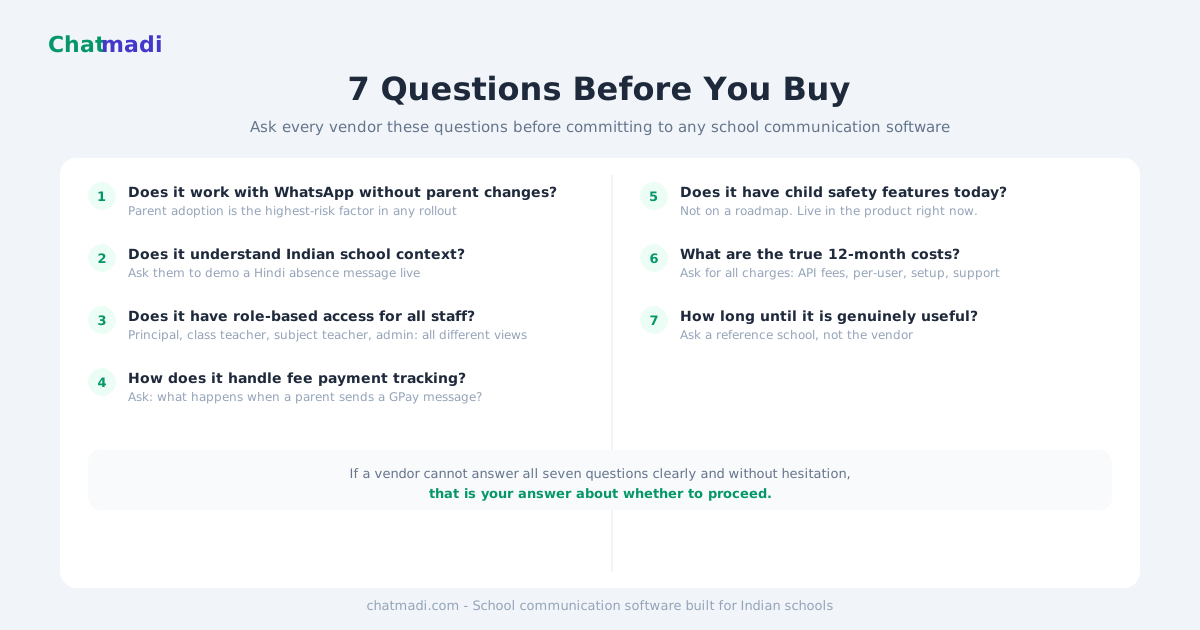
1. Does It Work with WhatsApp Without Asking Parents to Change Anything?
Parent adoption is the highest-risk factor in any school communication tool rollout. If parents need to download a new app, create an account, or change how they communicate, expect 30 to 60 percent adoption in the first year at best. The remaining parents continue using WhatsApp, leaving the school managing two communication channels simultaneously.
A tool that works with WhatsApp as it already exists, without any parent-side change, eliminates this risk entirely. Ask specifically: do parents need to do anything differently for this tool to work?
2. Does It Understand Indian School Context Specifically?
Ask the vendor to walk through a real scenario. A parent sends a message in a class WhatsApp group saying "Rohan ko aaj fever hai, nahi aayega." Does the software detect this as an absence notification? Does it link to Rohan's student profile automatically? Does it route to the class teacher rather than the admin?
If the vendor cannot demonstrate this specific scenario, the tool was not built for Indian schools. It was built for something else and positioned toward schools.
3. Can Different Roles Each See Exactly What They Need?
A principal needs a school-wide view. A class teacher needs their class only. A subject teacher needs their assigned subjects. An admin needs fee and admissions data. If everyone sees everything, teachers are overwhelmed with information that is not relevant to their role.
Ask for a live demonstration with four different login roles active simultaneously. The multi-role dashboard system is not optional for any school with more than five staff members.
4. How Does It Track Fee Payments?
Fee collection is the most financially significant function in school communication. Ask specifically: if a parent sends a WhatsApp message saying "GPay kar diya ma'am, transaction ID 8842991," what does the software do? Does it detect the payment? Does it match it to a student's fee record? Does it flag it for admin confirmation or does it auto-commit?
If the answer requires the admin to manually read and enter the payment, the software has not solved the fee communication problem. It has only moved the problem to a different screen.
5. Does It Have Child Safety and Welfare Features?
Indian schools have welfare monitoring responsibilities that extend to communication they receive from parents. Ask whether the platform detects welfare and safety signals from parent messages, including bullying mentions, distress signals, and isolation indicators. Ask what happens when a concerning message is detected: who is notified, in what timeframe, and how is it tracked to resolution?
Safety features should be present today, not on a product roadmap. See how child safety alerts work as a live feature in practice.
6. What Are the True Total Costs Over Twelve Months?
Listed prices rarely reflect what a school actually pays. Ask specifically about per-user charges, per-conversation charges, WhatsApp API message costs, setup fees, training costs, and what support looks like beyond the first month. For any tool that uses the WhatsApp Business API, ask who pays Meta's per-conversation charges and how those scale with your school's actual message volume.
A school that budgets five hundred rupees per month and receives a four thousand rupee bill after three months has not been served honestly. Insist on a twelve-month total cost estimate in writing before signing anything.
7. How Long Does It Actually Take to Set Up?
Vendor-quoted setup times are routinely underestimated. Ask for a reference from a school similar to yours, similar student count, similar board, similar city, and ask them directly: how many weeks before the system was genuinely useful, not just installed? The difference between "we went live" and "it was actually helping us" is often measured in months.
Red Flags That Should End Any Demo
Some signals during a product demonstration should stop the evaluation immediately.
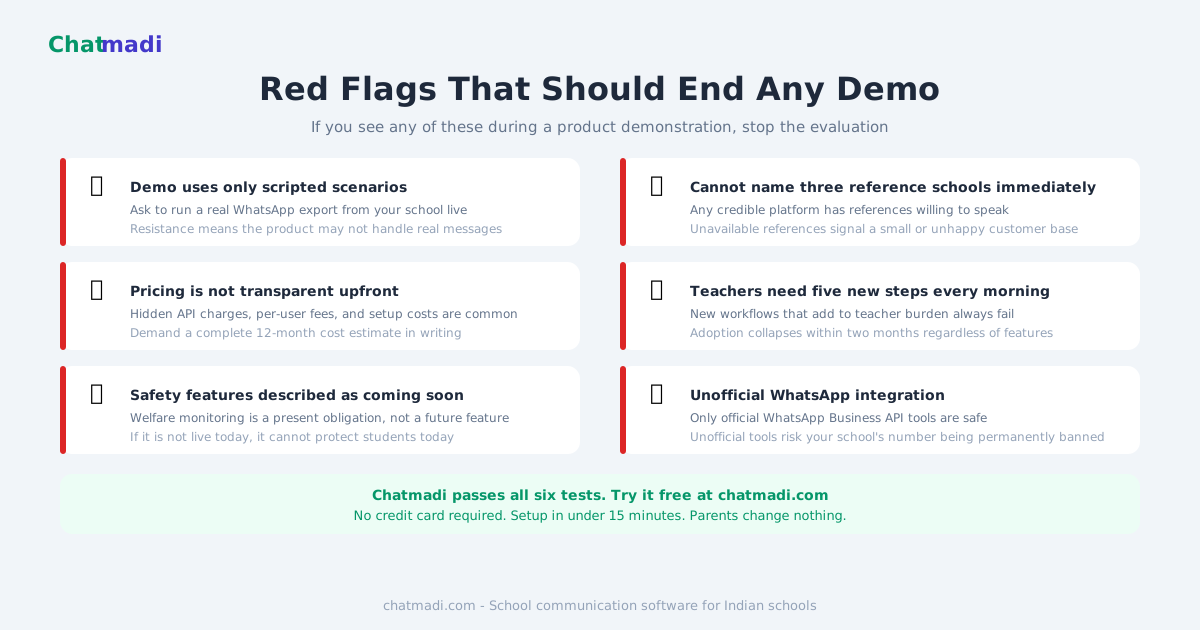
The demo uses only scripted scenarios. Ask to run a real WhatsApp conversation from your own school through the system live. If the vendor resists or redirects, the system may not handle real-world Indian school messages the way the scripted demo suggests. The vendor cannot immediately name three schools similar to yours. Any credible school communication platform should have reference customers willing to speak to prospective schools. If references are not immediately available, the customer base is either too small or too unhappy to provide them. Pricing is not transparent up front. Hidden per-message charges, per-user fees that activate above a certain team size, and WhatsApp API costs that are not disclosed during the demo are common in this market. Ask for a complete written price breakdown before the demo ends. The tool requires a new daily workflow from teachers. The best school communication software fits into how teachers already work. If the demo shows teachers completing five new steps every morning, adoption will fail within two months regardless of how good the platform looks in the demo room. Child safety and welfare features are described as coming soon. Schools cannot defer welfare monitoring obligations to a product roadmap. If a tool does not have safety monitoring today, it cannot meet welfare obligations today. The platform is not built on the WhatsApp Business API but is described as a WhatsApp solution. Unofficial WhatsApp integrations violate Meta's terms of service and can result in the school's number being banned. Only tools using the official WhatsApp Business API or working with exported conversation files are safe to use for school communication.What Schools Report After Switching
Schools that move from manual WhatsApp management to purpose-built school communication software consistently report three outcomes in the first academic term.
Time recovery. School administrators report saving between 90 minutes and three hours daily that was previously spent manually reading WhatsApp groups and extracting actionable information. When fee payments are detected automatically and absences are flagged without manual scrolling, that time shifts to higher-value work. Fee recovery. Schools consistently discover that a meaningful portion of fees they believed were outstanding were actually paid. The payment confirmations were buried in WhatsApp messages that nobody had time to find and act on. Automatically detecting these payments and routing them for admin confirmation changes the fee collection picture in the first month. Welfare visibility. Safety and welfare concerns that previously went unnoticed because they arrived buried in fifty other messages now surface to the right person within hours. The full overview of how AI reads school conversations explains how this works in practice.Making the Final Decision
School communication software is not a one-size-fits-all purchase. The right tool depends on whether your school's primary challenge is broadcasting messages to parents, managing a WhatsApp inbox for direct replies, analysing conversations for intelligence, or all three together.
What is non-negotiable for any Indian school evaluating options in 2025: the tool must work with WhatsApp because that is where Indian parents communicate. It must require no change from parents. It must have role-based access so class teachers see their class and principals see the school. It must handle fee tracking in the context of how Indian parents actually confirm payments: GPay screenshots, UPI transaction IDs, cash payment messages in Hindi and English. And it must have welfare monitoring that reflects India's school safety obligations.
Tools that meet all five requirements are rare. Evaluate them carefully, ask for references from schools with a similar profile to yours, and insist on a genuine trial with your own school's data before committing to a subscription.
Start free at chatmadi.com. No credit card required. School setup completes in under 15 minutes.
Frequently Asked Questions
What is the difference between school communication software and a school ERP?A school ERP manages structured administrative data: student records, fee ledgers, timetables, examination results. School communication software manages the flow of information between parents, teachers, and administrators, particularly across WhatsApp. The two serve complementary functions. Most Indian schools benefit from both: an ERP for record-keeping and a communication platform that reads WhatsApp conversations and routes intelligence to the right people.
Do parents need to change how they use WhatsApp for AI-based school communication tools?For WhatsApp intelligence platforms that work by reading exported conversations, parents change nothing. They continue messaging in the same WhatsApp groups they already use. The school exports conversations and the AI reads them. No new app, no new account, no new behaviour required from parents.
How much does school communication software cost in India in 2025?Costs range from free starter plans with meaningful limitations to four thousand rupees per month for unlimited plans. Chatmadi's pricing starts at zero for the Starter plan and reaches four thousand rupees per month for the School plan covering unlimited classes, students, and staff. See the full plan comparison for exact feature breakdowns across all tiers.
Is WhatsApp Business API required for school communication software to work?Not necessarily. Platforms that work by reading exported WhatsApp conversations operate without API access. WhatsApp API integration enables direct message sending from the platform, useful for fee reminders, PTM announcements, and exam result broadcasts, but is not required for conversation analysis, attendance tracking, fee detection, or safety monitoring. The WhatsApp API vs export guide explains when each approach makes sense for schools.
Which school boards does Chatmadi support?Chatmadi supports CBSE, ICSE, all State Boards, IB, and IGCSE. The AI analysis understands each board's academic calendar, exam cycle, fee collection timing, and the specific communication patterns that emerge around board-specific events: Half Yearly exams, Pre-Board preparations, PTM schedules, and annual fee collection cycles.
Chatmadi Team
School Communication Intelligence
The Chatmadi team writes about AI-powered parent communication, school management best practices, and WhatsApp intelligence for Indian schools. Built by Eduloom Technologies OPC Pvt Ltd, Mysore.
Ready to Try Chatmadi at Your School?
Free to start. Setup in 15 minutes. No new apps for parents.
Set Up My School Free →