School Fee Outstanding Recovery: How Indian Schools Discovered Payments Already Made
In this article
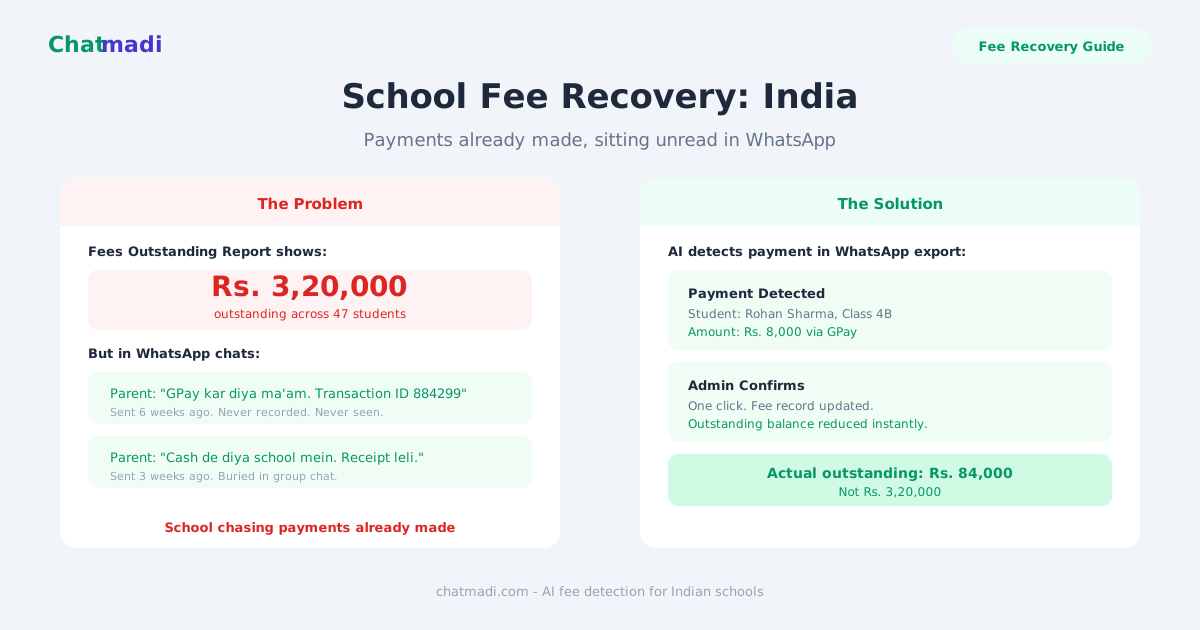
Every school in India that uses WhatsApp for parent communication has a version of this story. The accounts team runs the monthly fee outstanding report. It shows forty-seven students with unpaid fees totalling three lakh and twenty thousand rupees. The fee reminder messages go out. Two days later, a parent calls the office, irritated. She paid six weeks ago. The transaction ID is right there in a WhatsApp message she sent to the class teacher's group. Nobody saw it. Nobody recorded it. The school spent two days chasing a payment that was already made.
Table of Contents
- [The Wrong WhatsApp Contact](#the-wrong-whatsapp-contact)
- [The Buried Group Message](#the-buried-group-message)
- [The Teacher Turnover Gap](#the-teacher-turnover-gap)
- [The Screenshot That Was Never Forwarded](#the-screenshot-that-was-never-forwarded)
- [The Language Gap](#the-language-gap)
- [The Delayed Recording](#the-delayed-recording)
This is not a rare exception. It is the default experience for any Indian school managing fee communication over WhatsApp without a system designed to read those messages. The outstanding balance is not always what it appears to be. A significant portion of what looks like unpaid fees at most Indian schools has already been paid. The evidence is sitting unread in WhatsApp chat histories.
Why Fee Payment Confirmations Disappear in WhatsApp
Understanding why this happens is the first step toward fixing it. Indian parents pay school fees in ways that feel natural to them: GPay, PhonePe, NEFT, cash handed to the class teacher, or a cheque dropped at the office. Almost universally, they follow up with a WhatsApp message confirming the payment. The message is sent to the most convenient WhatsApp contact they have for the school, which is usually the class teacher's personal number or the class parent group.
What happens next is predictable. The class teacher receives forty-two other messages that day. The payment confirmation gets buried. Nobody logs it in the fee register. The accounts team never sees it. The student appears as outstanding for weeks or months until the parent complains, or until someone with enough time manually scrolls through hundreds of messages looking for it.
The problem is structural, not a failure of individual teachers or administrators. WhatsApp was not designed to serve as a fee management system. It has no way to flag a message as a payment confirmation, route it to the accounts team, or link it to a student's fee record. The school is trying to use a consumer messaging app as a financial communication channel without any of the infrastructure that would make that safe.
The Six Places Where Fee Payments Get Lost
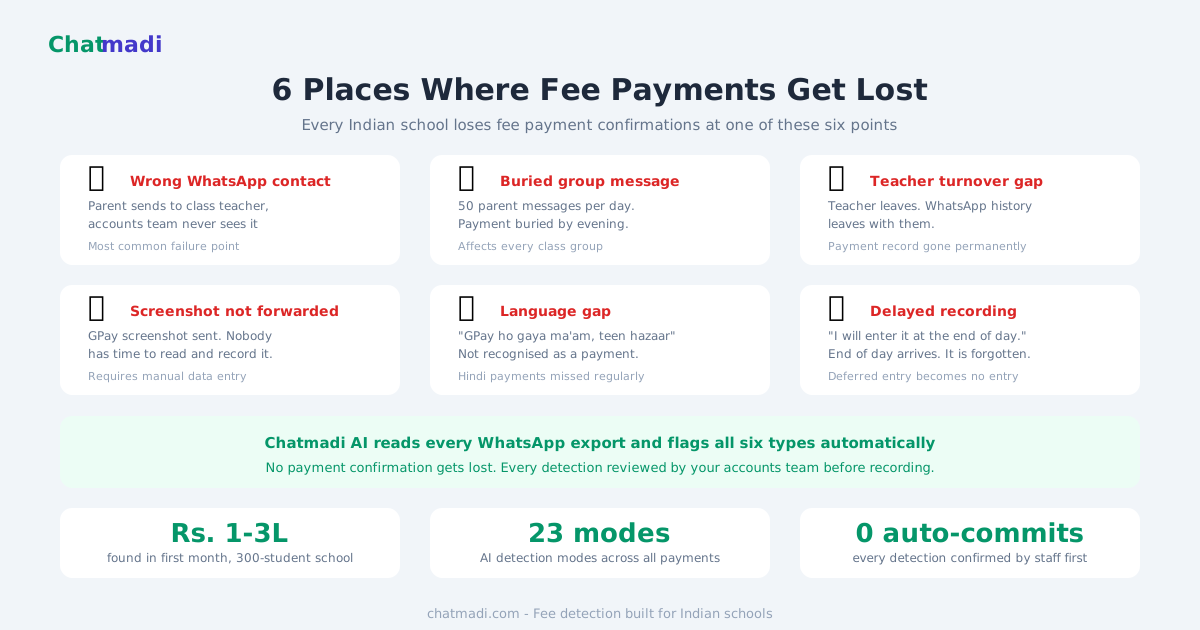
A payment confirmation sent via WhatsApp can disappear at any of six points between the parent's phone and the school's fee register.
The Wrong WhatsApp Contact
Parents send payment confirmations to whoever they last spoke to from the school. That is often the class teacher, the principal's personal number, or a general school enquiries number. None of these contacts have a direct connection to the accounts team. The message arrives at the right institution but at the wrong person.
The Buried Group Message
When a parent posts a payment confirmation in a class WhatsApp group of fifty members, it is one message among hundreds sent that day. Teachers scrolling through the group to find absence notifications, homework queries, and PTM confirmations routinely miss financial messages that were never meant to be in that group in the first place.
The Teacher Turnover Gap
If the class teacher who received a payment confirmation leaves the school, changes their phone number, or is reassigned to a different class, those historical WhatsApp messages move with them or disappear entirely. There is no institutional record of the payment confirmation because it existed only in a personal WhatsApp conversation.
The Screenshot That Was Never Forwarded
Many parents take a screenshot of their GPay or PhonePe success screen and send it to the school via WhatsApp. These screenshots require someone to read the transaction details, identify the student, and manually enter the payment. When nobody has time to do that work, the screenshot sits in a chat unread.
The Language Gap
A parent who sends "GPay ho gaya ma'am, teen hazaar" in Hindi to the class group has confirmed a three-thousand-rupee payment. If the accounts team only monitors one WhatsApp contact and that contact does not receive this message, the payment is invisible to the people responsible for recording it.
The Delayed Recording
Sometimes the payment confirmation is seen but the recording is deferred. "I will enter it at the end of the day." The end of the day arrives with seventeen other urgent tasks. The payment goes unrecorded. The student becomes outstanding.
What the Numbers Look Like at a Typical Indian School
The school fee collection AI guide documents a pattern that repeats across schools of different sizes and boards. When schools implement a system that reads WhatsApp conversations for fee payment signals and routes confirmed payments to the accounts team, the first fee reconciliation consistently reveals payments that were already made but never recorded.
The amount varies by school size. A 300-student school typically discovers between one lakh and three lakh rupees in untracked payments in the first month of systematic detection. A 600-student school commonly finds between two lakh and six lakh rupees. These are not fraudulent entries or accounting errors. They are legitimate payments made by parents who fulfilled their financial obligation, which the school simply had no system to capture.
According to CBSE's parent engagement guidelines, schools are expected to maintain transparent fee communication with parents. A system that routinely fails to record payments and then sends outstanding notices for amounts already paid is a significant source of parent dissatisfaction and trust erosion, regardless of intent.
How AI Fee Detection Changes the Recovery Process
The technical approach to solving this problem is simpler than it sounds. When teachers export WhatsApp conversations using WhatsApp's built-in export function and upload them to a platform with AI fee detection, the AI reads every message in the conversation and flags any that contain payment signals.
Payment signals include explicit amounts with payment mode mentions (GPay, PhonePe, Paytm, NEFT, IMPS, UPI), transaction IDs, bank transfer confirmations, cash payment acknowledgements, and cheque deposit confirmations. The AI also understands Indian language patterns: "paid kar diya," "transfer ho gaya," "cash de diya school mein" are all detected correctly.
Each detected payment creates a pending confirmation item in the admin dashboard. The accounts team sees the student name, the class, the detected amount, the payment mode, the confidence level, and the original message text. They confirm or dismiss each detection. Confirmed payments update the student's fee record immediately.
This is not an automatic system. The AI detects and flags. Humans confirm. No payment updates a fee record without a staff member reviewing and approving it. This design prevents false positives and keeps the school in full control of its financial records.
The fee tracking feature shows exactly how this detection and confirmation flow works in practice.
A Practical Recovery Exercise for Indian Schools
Schools that have not yet implemented systematic fee detection can run a manual version of this exercise to understand the scale of their untracked payments.
Ask three class teachers to export their WhatsApp class group conversations from the past ninety days. Have one person from the accounts team read through the exports looking only for payment-related messages. Count how many payment confirmations appear in those conversations that do not have a corresponding entry in the fee register.
Most schools that run this exercise find between five and fifteen unrecorded payment confirmations in just three classes over ninety days. Scaled across all classes and a full academic year, the untracked payment total is typically significant.
This manual exercise is time-consuming and not scalable. It demonstrates the problem but does not solve it. The solution is a system that reads every conversation automatically and flags payment signals without requiring anyone to manually scroll through chat histories.
Preventing the Problem Going Forward
Recovery is one part of the solution. Prevention is the other. Once a school implements systematic WhatsApp fee detection, the gap between payment made and payment recorded closes from weeks to hours. Parents who confirm payment via WhatsApp see that confirmation acknowledged by the school quickly. Outstanding notices go out only to parents who have genuinely not paid.
The impact on parent relationships is significant. Parents who have paid and receive an outstanding notice feel that the school is disorganised and untrustworthy. Eliminating these false outstanding notices removes one of the most common sources of parent complaints at Indian schools.
For the accounts team, the reduction in manual follow-up work is substantial. Instead of spending hours each month on the phone with parents who insist they have paid, the team can see exactly what was detected, what was confirmed, and what is genuinely outstanding. The fee collection report becomes accurate rather than aspirational.
The reduce fee collection time guide covers the operational side of this transformation in detail, including how schools restructure their fee follow-up process once payment detection is in place.
Setting Up Fee Detection at Your School
Getting started with AI fee detection does not require replacing your existing fee management system. Chatmadi works alongside whatever fee ledger or ERP your school already uses. Teachers export WhatsApp conversations once a day. The AI reads them. The accounts team confirms detected payments. The fee register stays accurate.
The setup process is straightforward. Add your school's classes and students. Invite the accounts team member who manages fee recording. Teachers export their WhatsApp conversations and upload them. The first upload typically produces a detection list that the accounts team processes in under thirty minutes. From that point forward, the process runs daily with minimal time investment.
The school setup guide walks through the complete configuration process, including how to structure the fee detection workflow for different school sizes.
Start free at chatmadi.com. The Starter plan includes basic fee tracking at no cost. Schools serious about comprehensive fee detection can trial the Growth or Pro plan to see the full detection capability before committing to a subscription.
Frequently Asked Questions
How does Chatmadi detect fee payments from WhatsApp messages?The AI reads uploaded WhatsApp conversation exports and identifies messages that contain payment signals: amounts with payment mode mentions, transaction IDs, UPI confirmation language, and cash or cheque acknowledgements. It understands Indian language patterns including Hindi and regional language payment confirmations. Each detection creates a pending item in the admin dashboard for staff to review and confirm before any fee record is updated.
What payment methods can the AI detect from WhatsApp conversations?Chatmadi detects GPay, PhonePe, Paytm, NEFT, IMPS, UPI (any UPI handle), cash payments, bank transfer confirmations, and cheque deposits. It also detects partial payments and instalment confirmations. Both formal and informal payment language is understood.
Does fee detection work for group WhatsApp conversations as well as individual chats?Yes. Chatmadi parses both 1:1 WhatsApp conversations and group chat exports. In a group conversation with fifty parents, the AI reads every message and identifies which parent sent a payment confirmation, then matches that parent to the correct student profile via the linked contact record.
How long does the first fee recovery exercise take?Uploading and processing the first batch of WhatsApp conversations takes under ten minutes. The AI typically processes a 90-day conversation export in seconds. The accounts team then reviews the detection list, which for a medium-sized school might contain 20 to 50 items in the first batch. Processing the list takes between 20 and 45 minutes depending on the number of detections and the team's familiarity with the interface.
Will parents know that Chatmadi is reading their WhatsApp messages?Chatmadi reads WhatsApp exports that school staff upload manually. It does not connect directly to anyone's WhatsApp account or read messages in real time. The conversations processed are conversations that school staff are already a party to, specifically class group conversations and direct messages between parents and teachers. There is no interception of private parent communication.
Chatmadi Team
School Communication Intelligence
The Chatmadi team writes about AI-powered parent communication, school management best practices, and WhatsApp intelligence for Indian schools. Built by Eduloom Technologies OPC Pvt Ltd, Mysore.
Ready to Try Chatmadi at Your School?
Free to start. Setup in 15 minutes. No new apps for parents.
Set Up My School Free →