School Fee Collection in India: How AI Is Solving the Payment Chase Problem
In this article
Indian schools collectively manage fee collections worth thousands of crores annually. Yet the process at most schools remains remarkably manual: spreadsheets for tracking, phone calls for reminders, and WhatsApp messages for confirmations that never get recorded. The result is a gap between what has been paid and what has been tracked. Schools chase parents who have already paid. Defaulters are identified weeks after they become overdue. Reconciliation takes hours that could be spent on education. School fee tracking software India schools need must address this gap not by adding more manual work, but by automatically reading the communication where payments are confirmed, which is WhatsApp.
India's School Fee Collection Problem: The Scale Schools Don't Talk About
Consider the numbers for a typical 300-student school with an annual fee of 50,000 rupees per student. The total collectible is 1.5 crore per year, or approximately 37.5 lakh per quarter. If even 10% of that amount is delayed or untracked at any given time, the school is operating with a 3.75 lakh gap in its cash flow. For smaller schools, this gap can mean delayed salary payments to staff. For larger schools, it affects infrastructure maintenance and expansion plans. The problem is not that parents refuse to pay. In most cases, parents do pay, many of them confirming payment through WhatsApp messages to the class teacher or accounts department. The problem is that these confirmations are not systematically captured. A parent who writes "Ma'am, paid the fees yesterday via UPI" in a class group at 9 AM has fulfilled their obligation. But if nobody connects that message to the fee register, the school's records show the fee as outstanding. This tracking gap is where school fee tracking software India schools need adds the most value.
Why Manual Fee Tracking Fails Even With Dedicated Accounts Staff
Even schools with dedicated accounts staff face the same fundamental challenge: fee payment confirmations arrive through a channel (WhatsApp) that is disconnected from the system of record (the fee register). The accounts team's workflow typically involves three stages. Stage one: identify who has not paid by checking the fee register. Stage two: contact parents via phone or WhatsApp to request payment. Stage three: when parents confirm payment, manually update the register. The failure point is between stage two and stage three. Parents confirm payment in WhatsApp. The confirmation sits in a chat thread. The accounts person does not see it until they scroll through the group or receive a direct message. By then, the parent may have already received an automated reminder, creating frustration. Some schools attempt to solve this by asking parents to email payment confirmations or fill out Google Forms. Adoption is universally low. Parents are already on WhatsApp. Asking them to use an additional channel for payment confirmation adds friction they will not accept.
How Chatmadi Automates the Complete Fee Collection Lifecycle
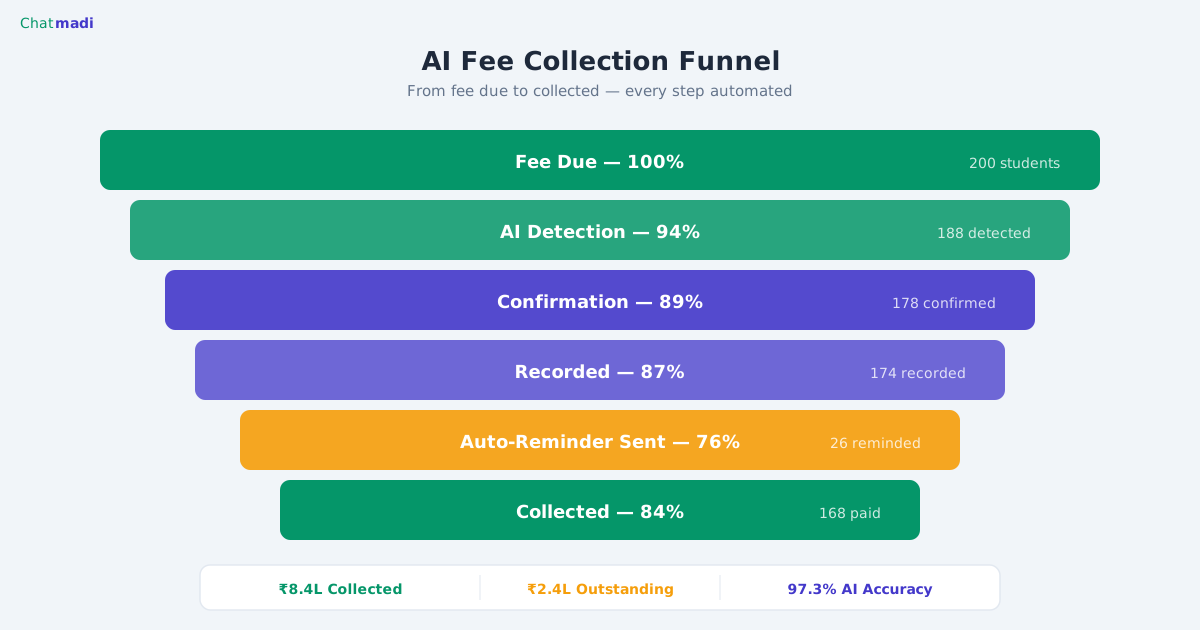
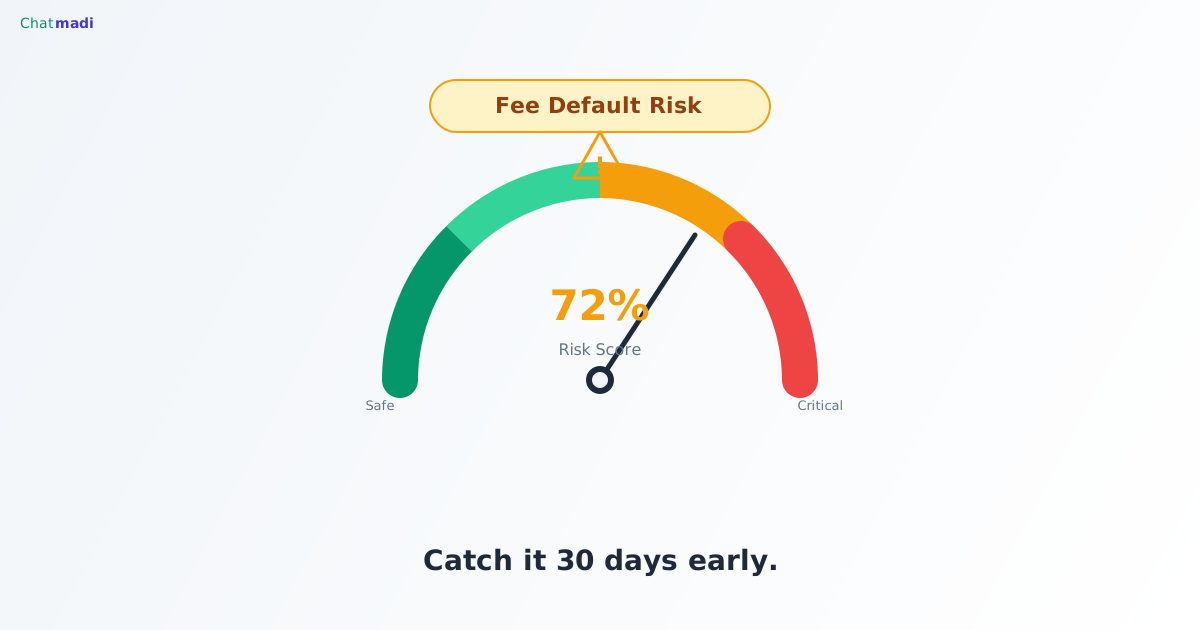
Chatmadi addresses the fee collection lifecycle from structure setup to payment tracking to defaulter identification. The lifecycle has six stages, and Chatmadi handles each one. Stage one: fee structure definition. In Settings, schools define fee components (tuition, transport, activity, lab) and set payment schedules (quarterly, termly, or monthly) for each class. Stage two: student fee record creation. When students are imported or added, Chatmadi automatically creates a fee record for each student based on their class fee structure, calculating total payable, instalment amounts, and due dates. Stage three: WhatsApp payment detection. As teachers upload parent conversations or messages arrive via API, the AI scans for fee payment mentions. Every detection enters a confirmation queue with extracted details: student name, amount, payment method, and transaction reference. Stage four: human confirmation. The accounts team reviews the queue and confirms valid detections. Each confirmation updates the student's fee record, reducing the outstanding balance. Stage five: overdue identification. Students whose instalment due dates have passed without confirmed payment are automatically flagged as overdue. These flags appear on the class teacher dashboard and the principal dashboard. Stage six: reporting and analysis. The fee analytics dashboard shows collection rates by class, payment mode breakdowns, overdue trends, and AI detection accuracy.
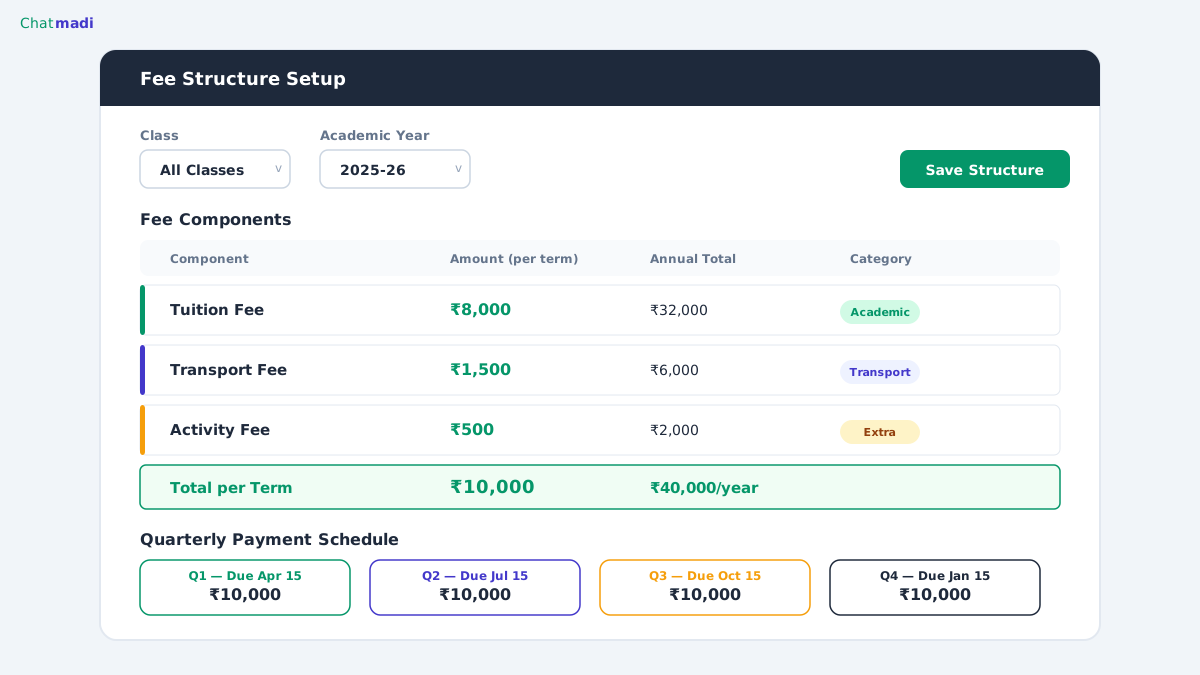
Chatmadi fee structure setup page showing class components and quarterly schedule
How-To: Setting Up Your School's Complete Fee Structure in Chatmadi
The setup process is designed for school administrators, not accountants or IT staff. Navigate to Settings then Fee Structures in your Chatmadi dashboard. Click Create Fee Structure and give it a name (for example, "Standard Annual Fee 2025-26"). Select which classes this structure applies to. Define the fee components: add each component (tuition, transport, activity, lab) with its annual amount. Set the payment frequency: quarterly (4 instalments), termly (2 instalments), or monthly (12 instalments). Chatmadi automatically calculates the per-instalment amount and sets due dates based on the Indian academic calendar (first quarter April, second quarter July, third quarter October, fourth quarter January). Once saved, Chatmadi creates fee records for every enrolled student in the selected classes. The dashboard immediately shows the total expected collection, current collection rate, and outstanding balances. From this point, every fee payment detected from WhatsApp conversations feeds directly into this tracking system.
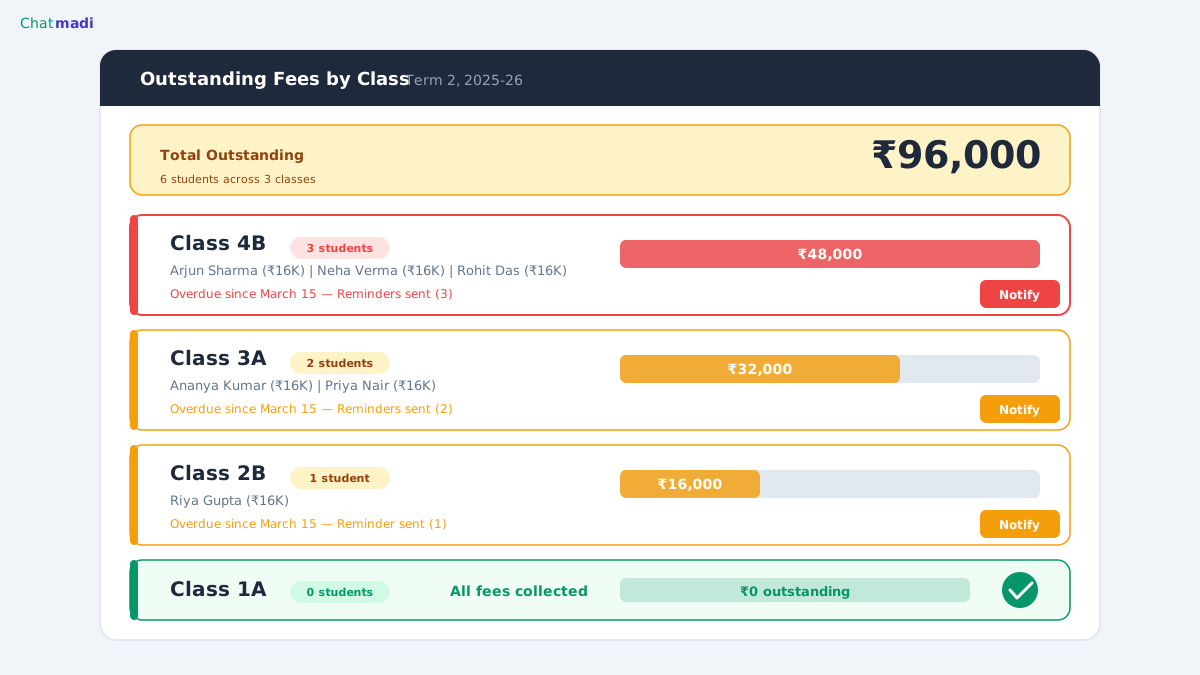
Chatmadi outstanding fees by class ranked chart showing amounts and student counts
The ROI of AI Fee Tracking: How Schools Calculate Their Return
The return on investment for school fee tracking software India schools implement can be calculated in three ways. First, recovered untracked payments. Schools report discovering between 1 and 3 lakh in payment confirmations that were in WhatsApp but never recorded during their first fee reconciliation with Chatmadi. This is money that was already paid but showing as outstanding. Second, staff time saved. A school accounts team that previously spent 40 to 60 hours per quarter on fee reconciliation and parent follow-up calls reduces this to 5 to 10 hours of queue confirmation in Chatmadi. At an accounts staff cost of 200 to 400 rupees per hour, the quarterly savings range from 6,000 to 20,000 rupees. Third, reduced defaulter friction. Parents who receive overdue notices for fees they have already paid are the most frustrated segment of the parent community. Eliminating these false overdue notices through accurate WhatsApp detection improves parent satisfaction and reduces complaint handling time. For a school on the Pro plan at 1,500 rupees per month (18,000 rupees per year), the fee tracking feature alone typically delivers a return of 3 to 10 times the subscription cost within the first year. And fee tracking is just one of 20 modules included in every Chatmadi subscription.
Frequently Asked Questions
Can Chatmadi track partial fee payments?
Yes. If a parent confirms paying 5,000 rupees out of a 12,000 rupee instalment, the AI detects the amount mentioned and the accounts team confirms the partial payment. The student's record reflects the partial payment and the remaining balance.
Does Chatmadi send automatic fee reminders to parents?
Chatmadi identifies overdue accounts and flags them on dashboards. On the Pro plan with WhatsApp API, schools can send reminder messages directly from the platform. On the export-based plans, overdue flags inform teachers who can then communicate with parents through their regular WhatsApp channels.
What if a parent pays via the school's online portal?
Portal payments are tracked separately through the school's payment gateway. Chatmadi's fee detection focuses on WhatsApp-mentioned payments that would otherwise go unrecorded. The two sources complement each other: portal payments are already digital, WhatsApp mentions are the ones that need AI to capture.
Can I export fee data for my accountant?
Yes. The Export Data feature in Chatmadi produces a complete CSV file with every student's fee record including: total payable, amount paid, outstanding balance, payment dates, transaction references, and instalment status. This file can be imported into any accounting software.
How quickly does fee detection work?
Individual conversations are analysed in 10 to 30 seconds. Fee payment detections appear in the confirmation queue immediately after analysis. With the API integration, detections appear within seconds of the parent sending the message.
---
Your school's WhatsApp conversations already contain the fee payment confirmations your accounts team is looking for. Chatmadi finds them all. Start free at chatmadi.com
The Chatmadi team writes about AI-powered parent communication, school management best practices, and WhatsApp intelligence for Indian schools. Built by Eduloom Technologies OPC Pvt Ltd, Mysore.