Staff Performance Management for School Principals: A Practical Framework
In this article
Most school principals in India manage teacher performance through annual reviews, informal observations, and intuition. When pressed for specifics, they struggle to articulate exactly why one teacher is rated higher than another. The process feels subjective to teachers and inadequate to principals. What is missing is not effort or intention. What is missing is a framework. A structured approach to measuring, reviewing, supporting, and improving teacher performance that works month after month without depending on a single high-stakes annual conversation. Chatmadi's school staff performance tracking software provides the data engine for this framework, but the framework itself is what transforms how a school approaches performance management.
Why Most School Staff Performance Systems Don't Work
Performance systems in Indian schools fail for four reasons. First, they are event-based rather than continuous. An annual review is a snapshot, not a video. It captures one moment and misses the trajectory. A teacher who struggled in Term 1 but dramatically improved in Term 2 looks the same as a teacher who performed moderately all year. Second, there is no baseline data. Without objective metrics, the principal's assessment is based on what they can remember, which is biased toward recent events and personal interactions. Third, the review conversation is one-directional. The principal talks. The teacher listens. There is no shared data that both parties can reference objectively. Fourth, there is no follow-through mechanism. Even when a review identifies areas for improvement, there is rarely a structured support plan with checkpoints. The teacher is told to improve and left to figure out how. A school staff performance tracking software approach should address all four of these problems.
A 4-Stage Performance Management Framework for Schools
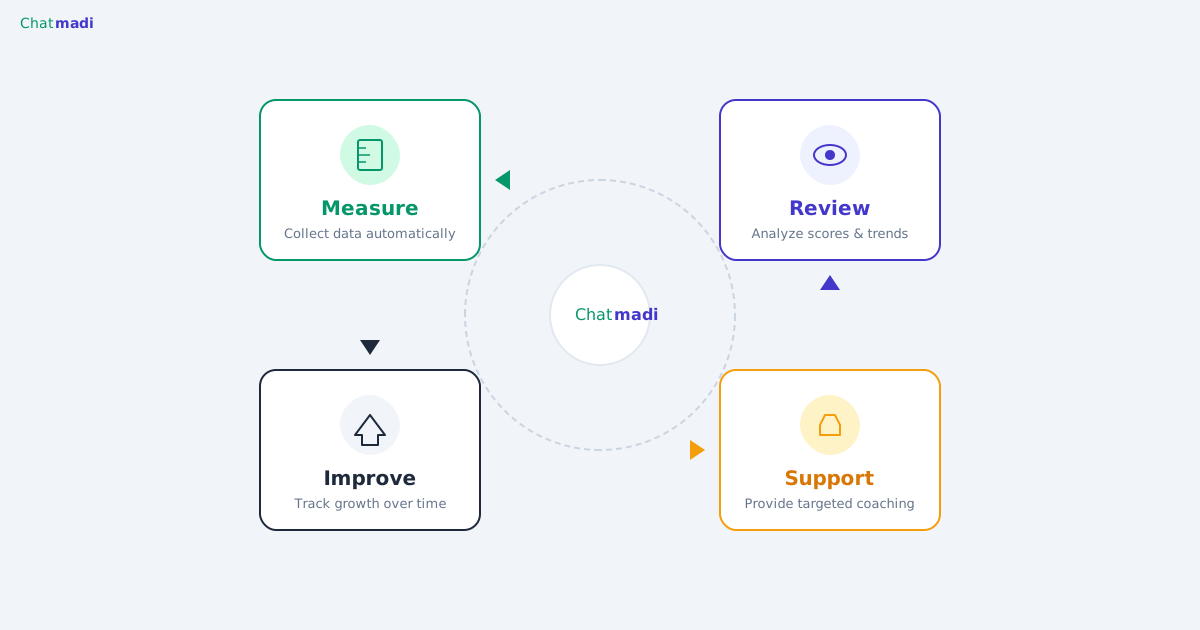
The framework has four stages that repeat each academic term. Stage one is Measure. During the term, the school collects performance data automatically through Chatmadi. The five dimensions, Attendance Quality, Homework Engagement, PTM Completion, Exam Performance, and Communication Frequency, are computed weekly from real data. No additional data entry is required from teachers or principals. Stage two is Review. At the end of each term, the principal reviews each teacher's performance card showing all five dimension scores, the composite score, and the trend compared to the previous term. The principal prepares talking points based on the data before the review conversation. Stage three is Support. During the review conversation, the principal and teacher collaboratively identify one or two development areas and agree on specific actions. The principal commits to providing the support needed, whether that is training, reduced administrative load, mentoring from a higher-scoring colleague, or access to resources. Stage four is Improve. During the next term, the teacher works on the agreed development areas. The weekly scores provide real-time feedback on whether the actions are making a difference. The next review conversation begins by examining whether the previous term's development areas showed improvement.
How Chatmadi Data Powers Each Stage of the Framework
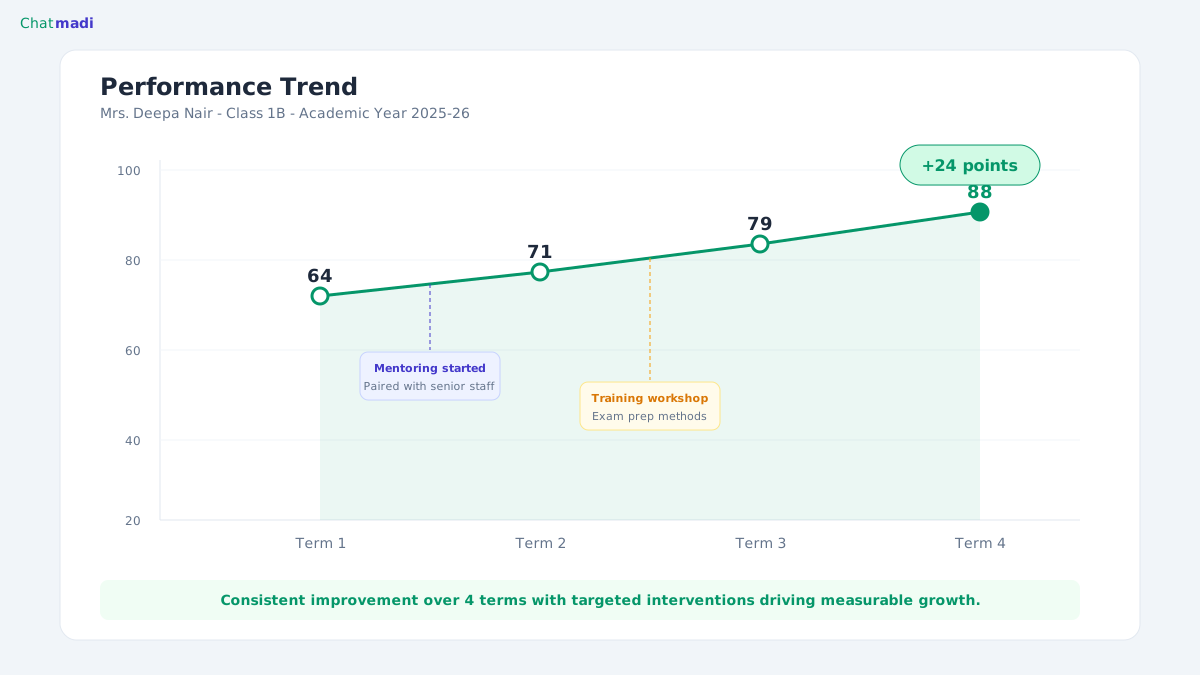
Chatmadi's school staff performance tracking software provides the data infrastructure for each stage. During the Measure stage, Chatmadi automatically computes performance scores from data that flows through the platform: WhatsApp conversation analysis results, homework acknowledgement rates, PTM RSVP and attendance records, exam results, and conversation upload frequency. No teacher needs to fill out a self-assessment form. No principal needs to compile data manually. During the Review stage, the principal opens each teacher's performance card in Chatmadi and sees a complete picture: the five dimension scores, the composite score, the percentile rank relative to other teachers, and the trend over multiple terms. This data is the foundation of the review conversation. During the Support stage, the principal can reference specific metrics to identify where the teacher needs help. If Homework Engagement dropped from 78 to 62, the conversation focuses on what changed in the teacher's homework communication approach. If PTM Completion is consistently low, the discussion explores whether the teacher needs support with scheduling or parent outreach. During the Improve stage, the weekly score updates show whether the agreed actions are producing results. A teacher whose Homework Engagement score rises from 62 to 75 over two months can see their own progress in real time.
Chatmadi performance trend chart showing teacher improvement over 4 terms with interventions
How-To: Running a Data-Backed Teacher Performance Review
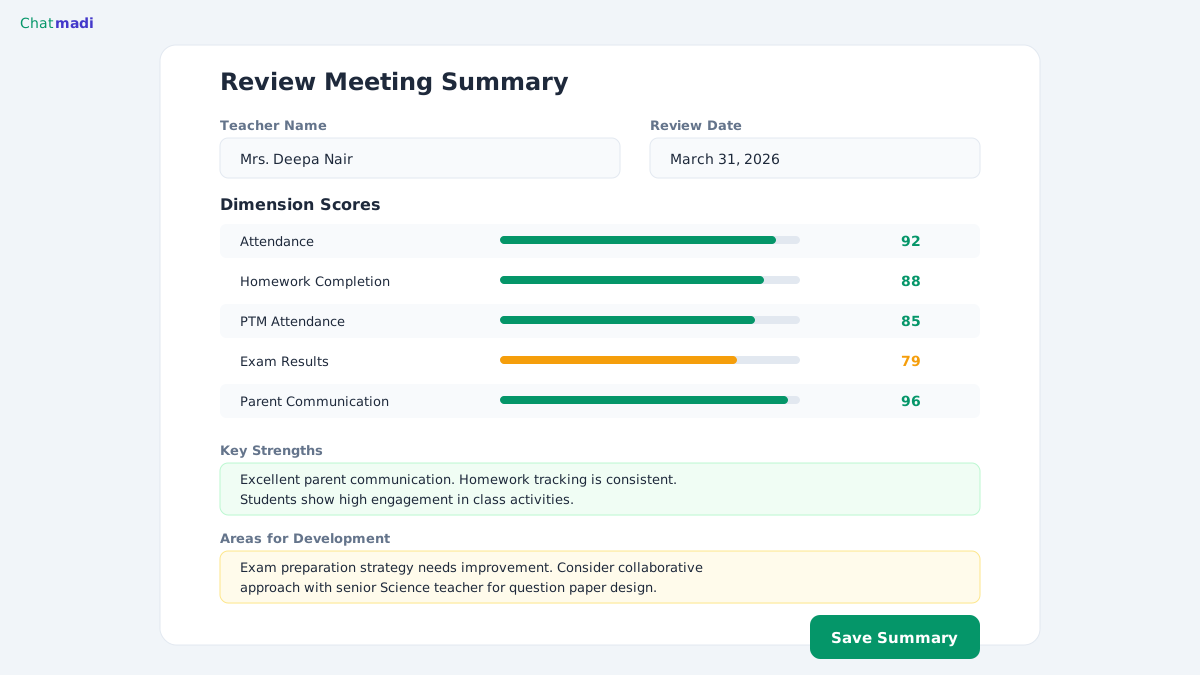
The review meeting should follow a structured format. Begin by sharing the data. Open the teacher's performance card on screen so both the principal and teacher can see the same numbers. State the composite score and note the trend. Review each of the five dimensions briefly, highlighting strengths (scores above 80) and development areas (scores below 65). Then discuss context. Ask the teacher for their perspective on any dimension where the score seems surprising. There may be legitimate contextual factors that affected a score. A teacher whose PTM Completion score dropped may have had a medical leave that prevented them from scheduling one of the PTMs. Next, agree on focus areas. Select one or two dimensions for the teacher to focus on during the next term. Be specific. Not "improve parent communication" but "increase homework acknowledgement rate from 62% to 75% by experimenting with shorter, more frequent homework messages." Then commit to support. State what the principal or school will do to help. This could be pairing the teacher with a colleague who has a high score in the relevant dimension, providing training on effective WhatsApp communication, or reducing the teacher's non-teaching duties for the term. Finally, set a check-in date. Schedule a 10-minute mid-term check-in to review whether the weekly scores are trending in the right direction.
Chatmadi review meeting summary form with dimension scores and development notes
The Performance Conversation Template Every Principal Needs
Here is a conversation template that principals using Chatmadi report works well. Opening: "Thank you for your work this term. I want to share your performance data so we can discuss it together." Data review: "Your composite score this term is [X]. That puts you at the [X]th percentile across our teaching staff. Let me walk through each dimension." Strengths: "Your [highest dimension] score is [X], which is excellent. This tells me that [specific interpretation]." Development: "Your [lowest dimension] score is [X], which is below where we would like it to be. What is your perspective on this?" Context: "Are there any factors that affected this score that the data might not capture?" Action plan: "For next term, I suggest we focus on improving your [dimension] score. Here is what I propose we try: [specific action]. I will support this by [principal commitment]." Check-in: "Let us meet briefly in 6 weeks to see how the weekly scores are trending. I am confident you will see improvement." Closing: "Thank you for engaging with this data openly. Our goal is to help every teacher improve, and I am committed to giving you the support you need." This template works because it is data-driven, collaborative, forward-looking, and supportive. It is a conversation between two professionals examining shared evidence, not a lecture from an authority figure delivering a subjective verdict.
Frequently Asked Questions
How much time does the performance management framework require?
Measuring is automatic through Chatmadi. Review conversations take 20 to 30 minutes per teacher at term end. Mid-term check-ins take 10 minutes. For a school with 12 teachers, the total investment is approximately 8 to 10 hours per term.
What if a teacher disagrees with their score?
The scores are computed from objective data, which reduces disagreement. However, context matters. If a teacher believes a score is unfair due to factors the data does not capture (such as medical leave, family emergency, or class composition), the principal should adjust their interpretation accordingly.
Can I use this framework without Chatmadi?
Yes. The 4-stage framework (Measure, Review, Support, Improve) works with any data source. However, without school staff performance tracking software like Chatmadi, the Measure stage requires significant manual data collection, which is why most schools skip it and go directly to subjective reviews.
How do I handle a teacher whose scores are consistently low?
Consistent low scores over 2 to 3 terms, despite documented support efforts, may indicate a deeper mismatch between the teacher and the role. The performance data provides an objective basis for honest conversations about the teacher's future at the school, which is more respectful than a subjective termination decision.
---
Give your teachers the objective, supportive performance feedback they deserve. Start free at chatmadi.com
The Chatmadi team writes about AI-powered parent communication, school management best practices, and WhatsApp intelligence for Indian schools. Built by Eduloom Technologies OPC Pvt Ltd, Mysore.