Chronic Absenteeism in Indian Schools: How to Spot It Before It Becomes a Crisis
In this article
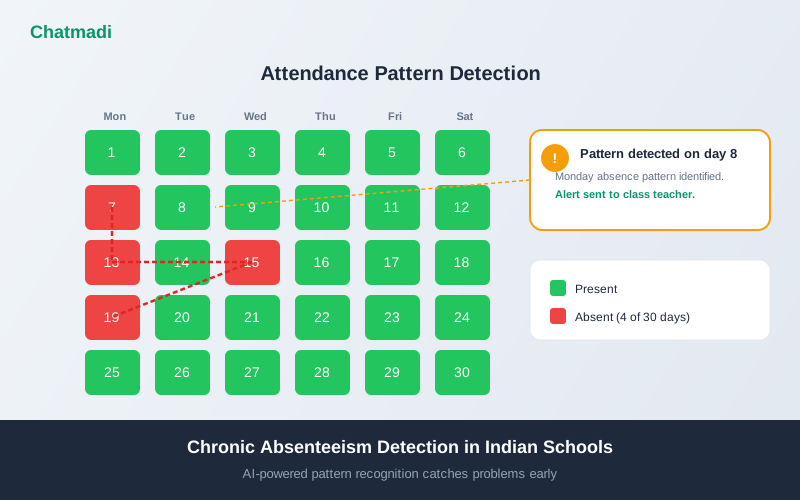
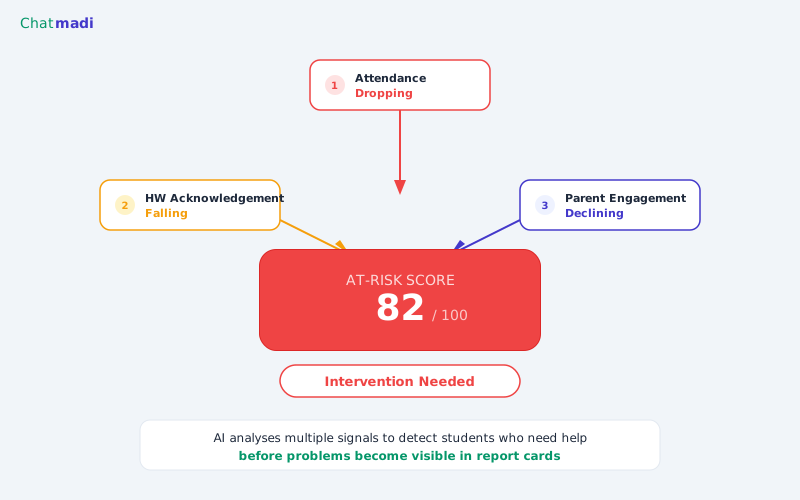
Chronic absenteeism, defined as missing 10% or more of school days in an academic year, affects an estimated 15 to 20% of students in Indian schools. For a school with 200 students, that means 30 to 40 students are missing enough school to significantly impact their academic progress and social development. The problem is not that schools are unaware of absenteeism. The problem is that they notice it too late. A student who has missed 15 days by mid-term is already in crisis, but the pattern started weeks earlier when they missed 3 days in the first fortnight. Chronic absenteeism tracking school software must detect patterns early, not report them after the damage is done. Chatmadi's absence pattern intelligence identifies emerging patterns from WhatsApp conversation data and alerts teachers before occasional absences become chronic ones.
The Chronic Absenteeism Crisis in Indian Schools: What the Data Shows
National data on school attendance in India paints a concerning picture. Government surveys consistently show that 10 to 15% of enrolled students are absent on any given day, with rates higher in rural areas and among economically disadvantaged communities. Private schools fare better on average but are not immune. Even in well-run private schools, 5 to 8% of students miss more than 10% of school days. The academic impact is well documented. Students who miss more than 10% of school days score 15 to 20% lower on standardised assessments compared to students with regular attendance. The impact is cumulative. A student who is chronically absent in Class 3 is significantly more likely to be chronically absent in Class 4 and Class 5, creating a compounding deficit that becomes nearly impossible to reverse by middle school. The social impact is equally significant. Chronically absent students miss not just lessons but friendships, group activities, and the social learning that happens during school hours. They become increasingly disconnected from their peer group, which further reduces their motivation to attend. The economic impact on schools is direct. In fee-paying private schools, chronic absenteeism often precedes dropout. A family that stops sending their child to school regularly is a family that is likely to withdraw the child at the next natural breakpoint, typically the end of the academic year.
Why Schools Only Notice Absenteeism When It's Already a Crisis
The typical Indian school tracks attendance through a manual register. The class teacher marks attendance at the start of the day. At the end of the month, someone tallies the numbers. The monthly report shows that Rohan was absent 6 days out of 22. The teacher notes it but does not act because 6 days does not seem alarming in isolation. The next month, Rohan is absent 5 days. Still not alarming on its own. By month three, the cumulative total is 16 absences out of 66 school days, which is 24%. Rohan is deeply chronically absent and the school is only now noticing. The problem is that monthly reports are backward-looking. They tell you what happened, not what is happening. A student who misses every Monday for three weeks is establishing a pattern that will become chronic if not addressed, but a monthly report does not surface the Monday pattern. It just shows a number. Additionally, class teachers track their own class but have no visibility into school-wide patterns. The principal has no way to see which classes have the highest absence rates without manually reviewing every register. There is no system to compare patterns across months, identify common absence days, or flag students whose attendance is declining before it reaches crisis levels. Chatmadi changes this by analysing absence data in real time and surfacing patterns as they emerge.
How Chatmadi's Absence Pattern Intelligence Works
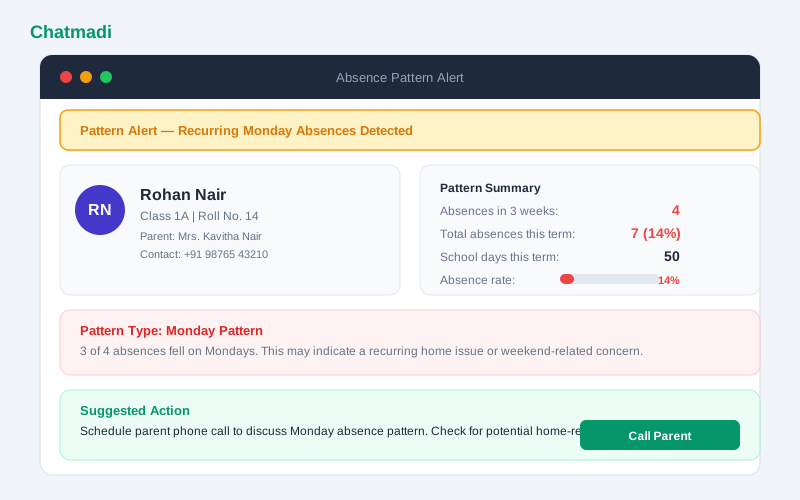
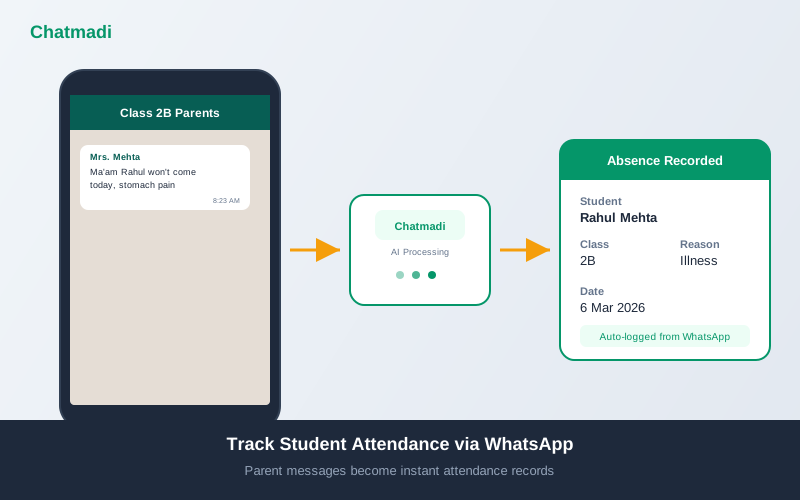
Chatmadi's absence detection starts with the data source that most schools overlook: parent WhatsApp messages. When a parent messages the class teacher saying "Rohan won't come today, he has a fever" or "Diya will be absent tomorrow, family function," the AI detects this as an absence notification. It records the student's name, the date, and the reason. This happens automatically, without the teacher needing to log into a separate system or enter data manually. As absence records accumulate, the pattern engine analyses them across three dimensions. Frequency analysis tracks how many days each student has been absent in the current term and compares it against the total school days elapsed. When a student's absence rate exceeds 8% (an early warning threshold before the 10% chronic mark), the system generates a Yellow alert. Day-of-week analysis identifies patterns in which days a student is absent. A student who is absent on Mondays specifically may be dealing with a home situation that occurs over the weekend. A student absent on Fridays may be travelling for extended weekends. These day-specific patterns are often invisible in aggregate absence counts but are immediately visible to the pattern engine. Clustering analysis identifies whether absences are concentrated in a short period (suggesting illness or a specific event) or distributed across the term (suggesting an ongoing issue). Concentrated absences are less concerning for chronic absenteeism than distributed ones. Each of these analyses runs automatically in Chatmadi whenever new absence data enters the system.
Absence pattern alert for Rohan Nair showing 4 absences in 3 weeks with Monday pattern and suggested parent call action
How-To: Setting Up Absence Tracking and Pattern Alerts in Chatmadi
Setting up absence tracking in Chatmadi takes minimal effort because the system uses data that already flows through the teacher's WhatsApp conversations. Step one: ensure your class roster is complete. Every student in the class must be in Chatmadi with their parent contact linked. The AI matches absence messages to students using parent names and student names from the roster. Step two: upload conversations regularly. For the absence detection to work accurately, conversations should be uploaded at least every two to three days. If you are using the API integration, this happens automatically. Step three: review the attendance dashboard weekly. Navigate to your class dashboard and check the Attendance section. You will see each student's attendance rate for the current term, any emerging patterns, and alerts for students whose rates are declining. Step four: configure alert thresholds. The default thresholds are: Yellow alert at 8% absence rate (early warning), Orange alert at 10% (chronic threshold reached), and Red alert at 15% (severe chronic absenteeism). Schools can adjust these thresholds based on their own policies. Step five: assign response protocols. For each alert level, define who is notified and what action is expected. Yellow: class teacher sends a check-in message to the parent. Orange: class teacher calls the parent and reports to the principal. Red: principal intervention with a parent meeting.
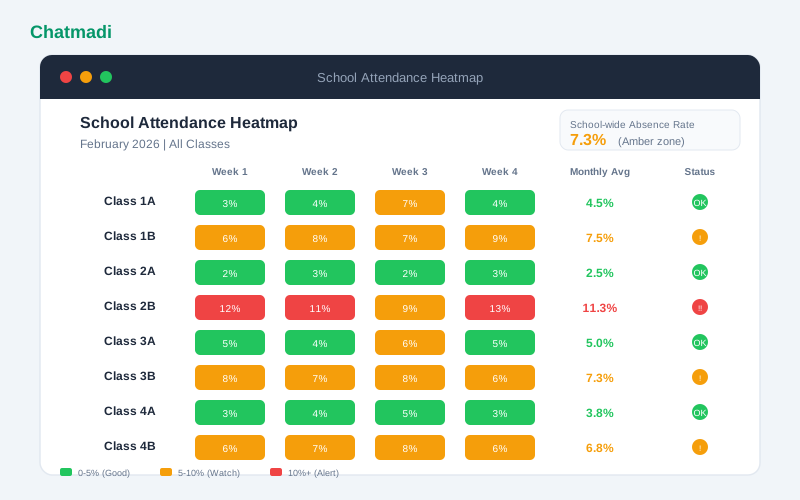
School attendance heatmap showing 8 classes with monthly absence rates colour coded green amber and red
The Intervention Protocol: What to Do When an Absence Pattern Appears
When Chatmadi flags an absence pattern, the response should be prompt and empathetic. The goal is not to scold the parent for the child's absence but to understand the underlying cause and offer support. For a Yellow alert (8% absence rate): the class teacher sends a warm, non-judgemental message. "Good morning, Mrs. Nair. I noticed Rohan has been away a few times recently and wanted to check if everything is alright. We miss him in class and want to make sure he is not falling behind on any topics. Please let me know if there is anything we can help with." This message opens a dialogue without making the parent defensive. For an Orange alert (10% absence rate): the class teacher calls the parent directly. A phone call is more personal and allows for a real conversation about what is happening. Common causes at this stage include ongoing health issues, transportation problems, family circumstances, or the child's own reluctance to attend school. Each cause requires a different response. For a Red alert (15% absence rate): the principal becomes involved. A meeting with the parent is scheduled to discuss the situation formally. The school should come prepared with the attendance data, the impact on the student's academic progress, and a concrete support plan. The tone should remain supportive. "We are concerned about Arjun's progress and want to work with you to ensure he does not fall further behind. Here is what we can do together." Chatmadi tracks all interventions and their outcomes, helping schools identify which approaches are most effective for different types of absence patterns.
Frequently Asked Questions
Can Chatmadi detect absences that parents do not report on WhatsApp?
Chatmadi detects absences from parent messages. If a parent does not send a message, the absence may not be automatically recorded. Teachers can manually mark absences in the dashboard for complete records.
What if a parent sends an absence message in Hindi or another language?
Chatmadi's AI recognises absence notifications in Hindi, Hinglish, and common regional language patterns. "Aaj Rohan nahi aayega" is detected just as accurately as "Rohan won't come today."
Does the pattern engine distinguish between excused and unexcused absences?
Yes. Absences with reasons provided (illness, family function, medical appointment) are classified as excused. Absences without a reason or with vague reasons are classified as unexcused. Both count toward the chronic absenteeism threshold because the academic impact is the same regardless of the reason.
Can the principal see absence patterns across all classes?
Yes. The principal dashboard shows school-wide attendance data with class-by-class breakdowns. The attendance heatmap provides a visual overview of which classes have the highest absence rates.
How early can the pattern engine detect chronic absenteeism?
The engine can flag a concerning pattern as early as two to three weeks into the term, when a student has missed three or more days in a pattern. The earlier the detection, the more effective the intervention.
---
Every absent day is a missed opportunity to learn. Chatmadi helps you spot the pattern before it becomes a crisis. Start free at chatmadi.com
Tagschronic absenteeism tracking school softwarestudent absence pattern detection softwarehow to reduce student absenteeism IndiaAI attendance tracking school IndiaChatmadi
C
Chatmadi Team
School Communication Intelligence
The Chatmadi team writes about AI-powered parent communication, school management best practices, and WhatsApp intelligence for Indian schools. Built by Eduloom Technologies OPC Pvt Ltd, Mysore.