How to Detect Fee Defaults Early and Act Before It's Too Late
In this article
Every school discovers fee defaults the same way: at the end of the quarter, when the accounts team runs a report and discovers that 15% of students have not paid. By then, the instalment is 30 to 60 days overdue. The accounts team begins making phone calls. Some parents genuinely forgot. Others had financial difficulties that started weeks ago. A few had actually paid but the confirmation never reached the register. In every case, the school could have acted earlier if it had the right fee defaulter tracking school software showing warning signs before the default actually occurred. Chatmadi provides exactly these early warning signals by analysing parent WhatsApp communication patterns alongside fee records.
Why Schools Always Find Out About Fee Defaults Too Late
The standard fee collection workflow at Indian schools is reactive. Fee deadlines are announced. A grace period passes. The accounts team checks the register. Unpaid students are flagged. Reminder calls begin. This process has two fundamental problems. First, the school only learns about non-payment after the deadline has passed, by which point the parent may have been struggling for weeks without the school knowing. Second, the register does not capture leading indicators, signals that suggest a payment problem before it becomes a default. A parent who asked about instalment options in a WhatsApp message two weeks before the deadline was signalling financial concern. A parent who stopped responding to group messages may be disengaging. A class where homework acknowledgement rates dropped sharply may have broader engagement issues that correlate with fee collection difficulties. These signals exist in WhatsApp conversations. Without a tool like Chatmadi to read them, they go unnoticed until the quarterly report reveals the shortfall.
The 5 Early Warning Signs a Fee Default Is Coming
Through analysis of school fee patterns, five early warning indicators consistently predict upcoming defaults. First, fee payment queries without follow-through. When a parent asks about instalment options, payment methods, or fee breakdowns but no payment is confirmed within 10 days, this signals financial hesitation. Second, silence during payment window. Parents who were previously active in the class group but stop responding during the fee collection period may be avoiding the topic. Third, partial payment mentions. A parent who says "I will pay half now and half next month" is indicating cash flow constraints that need proactive management. Fourth, declining class engagement. When a parent's homework acknowledgement rate and group participation drop simultaneously with an approaching fee deadline, the combination often predicts non-payment. Fifth, explicit financial concern signals. Messages mentioning job changes, medical expenses, or family difficulties in the context of school fees require immediate, empathetic outreach, not a deadline reminder. Chatmadi's AI detects all five of these patterns from WhatsApp conversations and flags them on the fee risk dashboard.
How Chatmadi Flags At-Risk Fee Records Before They Become Defaults
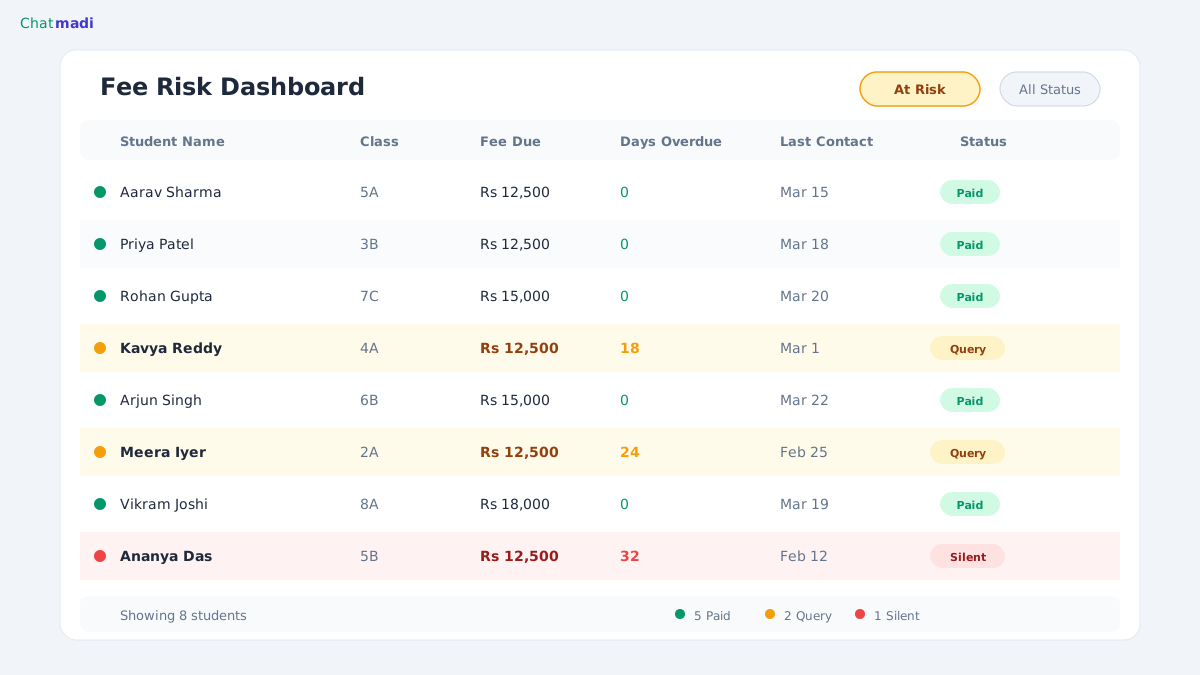
Chatmadi's fee tracking module goes beyond simple paid/unpaid tracking. Each student's fee record includes a risk status that is updated based on multiple data sources. Green status means the fee is paid or the payment has been confirmed via WhatsApp. Yellow status means a fee query or instalment request was detected in a conversation but no payment has been confirmed. Red status means the instalment due date has passed with no payment, no query, and no communication from the parent. The yellow status is the critical early warning. It tells the school that the parent is aware of the fee but has not yet paid, and may need proactive, supportive outreach rather than a generic reminder. The risk dashboard shows all students colour-coded by their fee status, with filters for at-risk students. Class teachers see their class. The accounts team sees all classes. The principal sees the school-wide picture. This fee defaulter tracking school software approach means the school can act on yellow flags 15 to 30 days before they become red defaults.
Chatmadi fee risk dashboard showing students color coded by payment risk status
How-To: Setting Up Fee Default Early Warning in Chatmadi
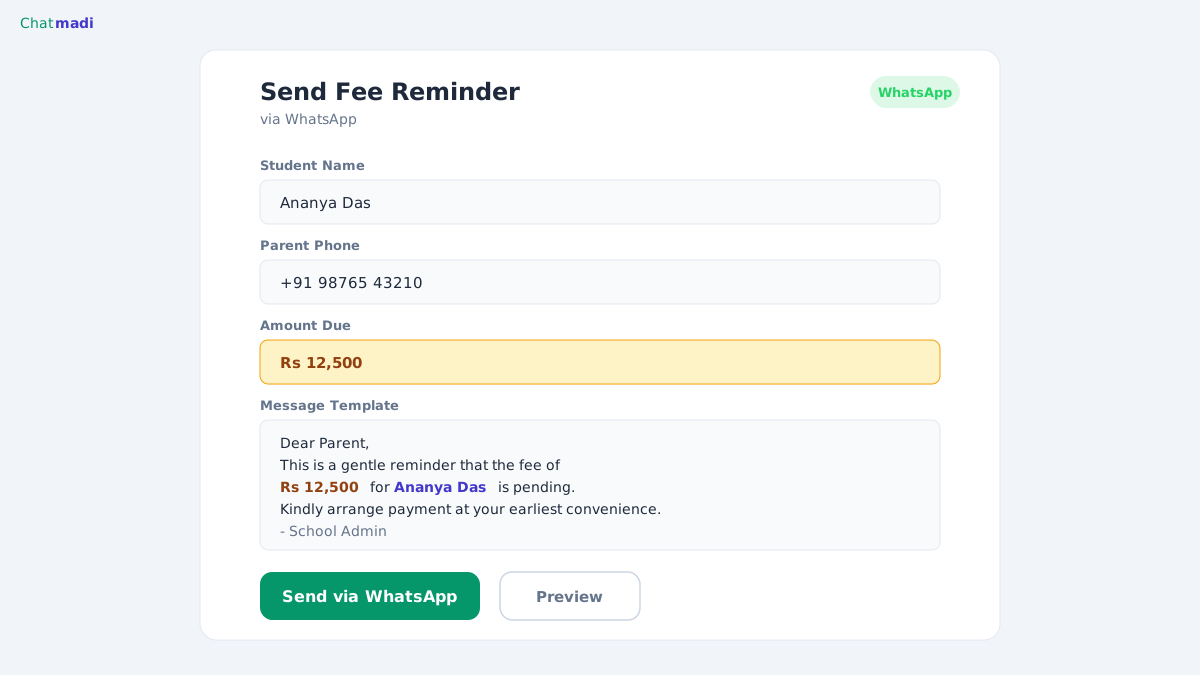
Setting up early warning requires three components already in Chatmadi. First, fee structures must be defined with due dates. Navigate to Settings then Fee Structures and ensure each class has a fee structure with quarterly or monthly due dates specified. Second, student fee records must exist. When students are imported or added, Chatmadi automatically creates fee records based on their class fee structure. Third, WhatsApp conversations must be uploaded regularly. The AI needs conversation data to detect fee-related queries and payment mentions. Once these three components are in place, the risk dashboard activates automatically. Students whose fees are approaching the due date are monitored for payment signals in their parent's WhatsApp conversations. Fee queries detected by the AI (such as "What is the fee amount?" or "Can I pay in two parts?") move the student from green to yellow on the risk dashboard. The accounts team can then proactively reach out to yellow-flagged parents with payment support rather than waiting for the deadline to pass. For schools on the Pro plan with WhatsApp API connected, fee reminders can be sent directly from Chatmadi using customisable message templates. The reminder includes the student name, outstanding amount, and payment instructions.
Chatmadi fee reminder compose screen with pre-filled WhatsApp message template
What Schools Recover by Acting 30 Days Earlier
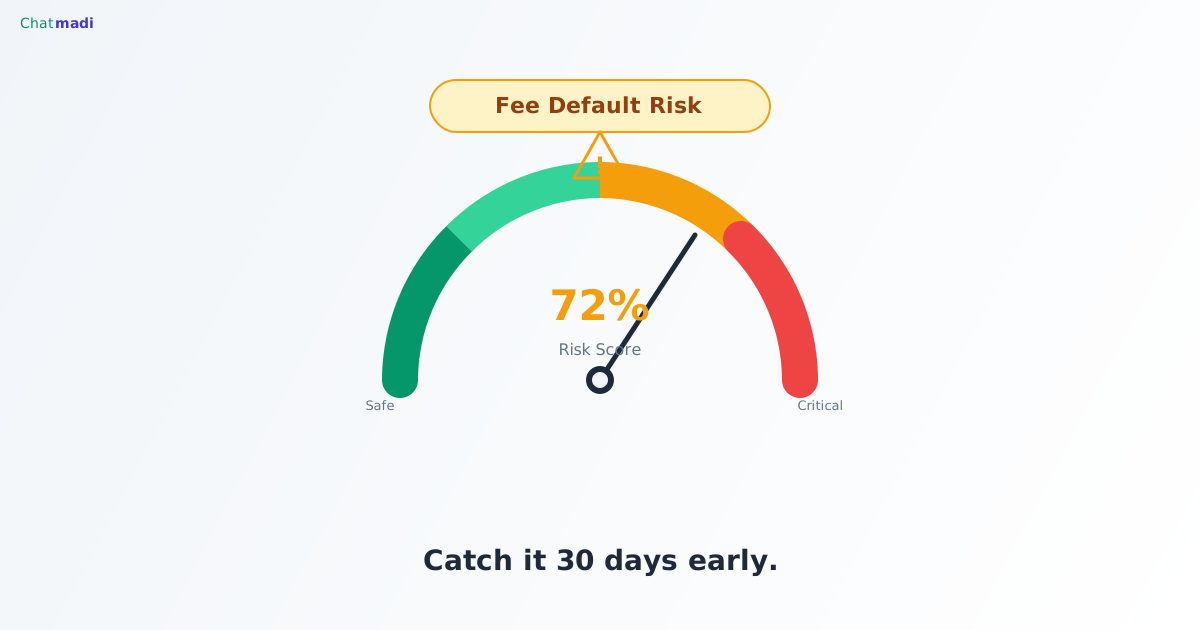
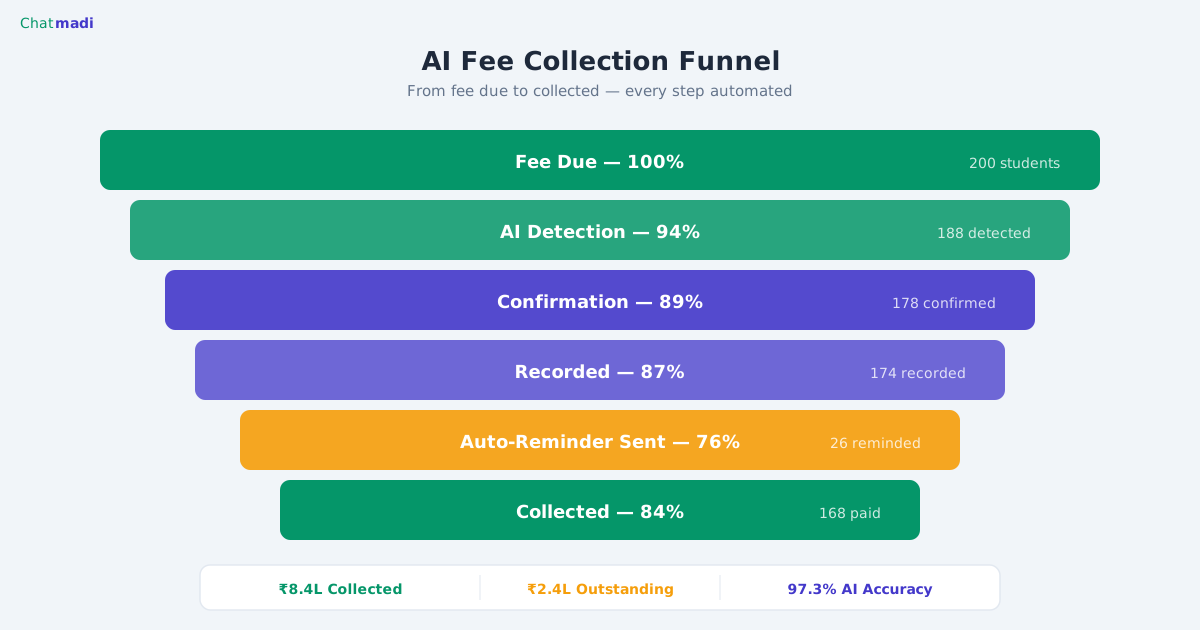
The financial impact of early detection is measurable. Schools that act on fee warning signals 30 days before the deadline report significantly higher collection rates than schools that begin follow-up only after the deadline has passed. The reason is straightforward: parents who are approached with empathy and flexibility before the deadline are more likely to arrange payment than parents who receive an overdue notice after the deadline. A parent who receives a message saying "We noticed you had a question about the fee instalment. We offer flexible payment options. Would you like to discuss?" is far more likely to respond positively than one who receives "Your child's fees are overdue. Please pay immediately to avoid consequences." The tone changes when you act early. The relationship changes. The collection rate changes. Chatmadi enables this shift by giving schools the intelligence to act proactively rather than reactively. The fee defaulter tracking school software does not just track who has defaulted. It predicts who might default and gives the school time to prevent it.
Frequently Asked Questions
Does Chatmadi automatically send fee reminders?
On the Pro and School plans with WhatsApp API connected, schools can send fee reminders directly from the platform using customisable templates. On the Growth and Starter plans, the dashboard flags at-risk students and teachers send reminders through their regular WhatsApp channels.
How early can Chatmadi detect a potential fee default?
The earliest warning signals appear when the AI detects a fee-related query in a conversation, which can happen 15 to 30 days before the due date. Silence-based warnings (no engagement from the parent) require at least 7 to 10 days of inactivity near the due date.
Can Chatmadi track partial payments?
Yes. If a parent confirms paying a portion of the instalment, the AI detects the partial amount. The accounts team confirms the partial payment, and the fee record reflects both the paid amount and the remaining balance.
Does the principal see the fee risk dashboard?
Yes. The principal dashboard includes a school-wide fee collection view showing collection rates by class, total outstanding amounts, and the number of at-risk students across the school.
---
Stop discovering defaults after they happen. Start predicting them 30 days in advance. Start free at chatmadi.com
The Chatmadi team writes about AI-powered parent communication, school management best practices, and WhatsApp intelligence for Indian schools. Built by Eduloom Technologies OPC Pvt Ltd, Mysore.