Student Welfare Beyond Marks: What Schools Need to Track but Usually Don't
In this article
An Indian school report card tells you how a student performed in Mathematics, English, Science, and a handful of other subjects. It might include an attendance percentage and a teacher's remark. What it does not tell you is that the student has missed every Monday for the past month, that their parent has not acknowledged a homework notification in three weeks, that there was a safety alert about bullying last term that was resolved but may be recurring, or that the parent's communication with the school has dropped by 60% since October. These are welfare signals, and they matter as much as academic marks for understanding a student's trajectory. Student welfare tracking software school administrators need must go beyond the report card. Chatmadi builds a 360-degree student profile that combines academic performance with attendance patterns, parent engagement, safety history, homework engagement, and fee status to give schools a complete picture of every child.
What Student Welfare Actually Means and Why Marks Don't Tell the Full Story
Student welfare encompasses everything that affects a child's ability to learn, develop, and thrive at school. Academic marks are one dimension. They tell you about the child's cognitive engagement with the curriculum. But marks alone miss several critical dimensions. Physical welfare: is the child attending school regularly? Are there health patterns that affect attendance? Is the child safe from physical harm at school? Emotional welfare: is the child happy at school? Are there bullying concerns? Are there behavioural changes that suggest emotional distress? Social welfare: is the child integrating with peers? Are there exclusion patterns? Is the child participating in group activities? Family welfare: is the family engaged with the school? Are there financial stresses that might affect the child? Is the parent communicating regularly with the teacher? A student who scores 90% in every subject but is being bullied daily is not thriving. A student who scores 65% but has perfect attendance, engaged parents, and a happy social life may be doing better than the marks suggest. Schools that track only marks are seeing one dimension of a multi-dimensional picture.
The 6 Welfare Signals Every Student Profile Should Contain
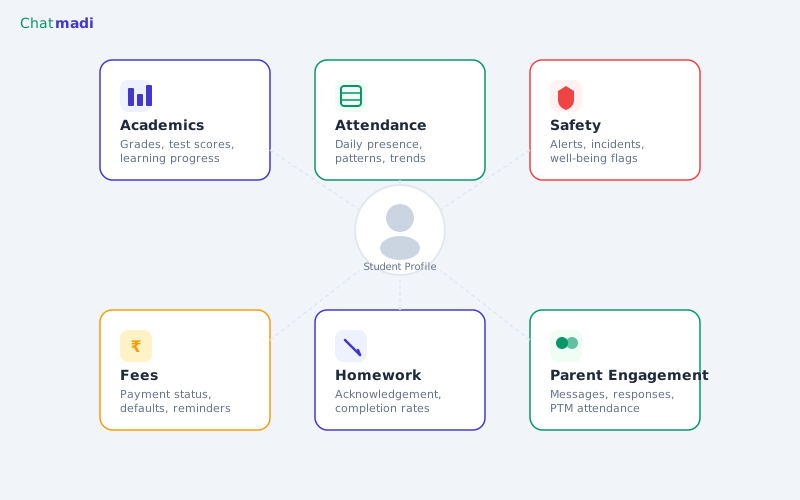
A comprehensive student welfare profile contains six signal categories. Signal one: academic performance. Term-over-term exam scores, subject-wise breakdown, and trend direction. Is the student improving, stable, or declining? Signal two: attendance patterns. Not just the percentage but the pattern. A student at 85% attendance with absences spread randomly is different from a student at 85% attendance with every absence on Monday. The pattern reveals more than the number. Signal three: safety history. Has any safety alert ever been raised for this student? Was it resolved? How long ago? A student with two resolved bullying alerts in the past year may need ongoing monitoring even if no current alert is active. Signal four: fee status. Is the family current on fees? Are there payment delays? Fee patterns can indicate financial stress that may affect the student's wellbeing and the family's engagement with the school. Signal five: homework engagement. What percentage of homework assignments have been acknowledged by the parent? Is the rate stable or declining? Homework engagement correlates with academic outcomes and is an early predictor of performance changes. Signal six: parent engagement score. The composite metric that combines fee timeliness, PTM attendance, homework acknowledgement, and communication frequency. A declining parent engagement score is one of the strongest predictors of student risk. Chatmadi tracks all six signals automatically and presents them in a unified student profile.
How Chatmadi Builds a 360-Degree Student Profile from WhatsApp Data
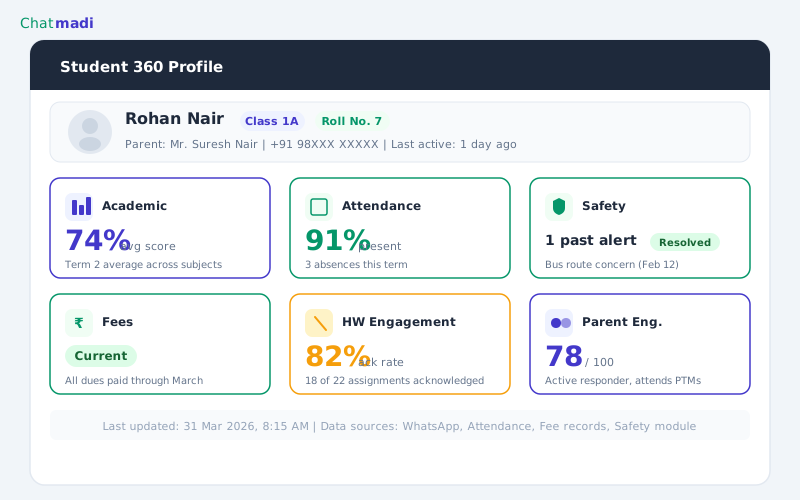
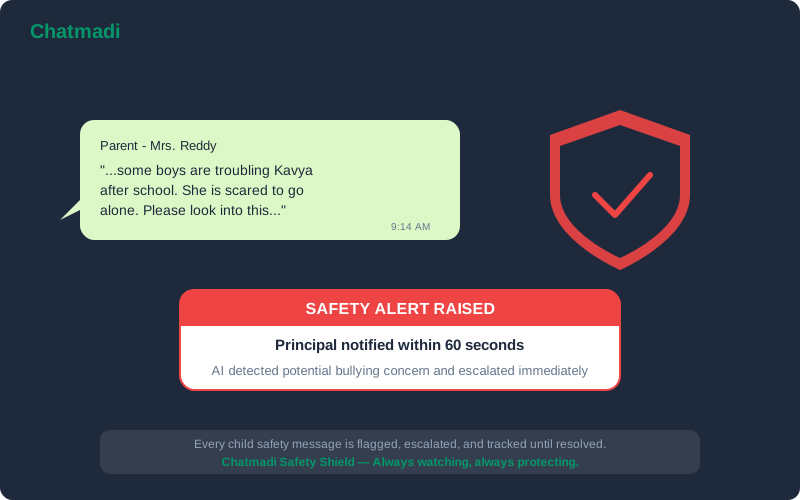
The remarkable thing about Chatmadi's student profile is that most of the data comes from a source the school already has: WhatsApp conversations. When a parent sends an absence notification, the attendance signal updates. When a parent acknowledges homework, the homework engagement signal updates. When a parent mentions a safety concern, the safety signal updates. When a parent sends any message, the communication frequency signal updates. When a fee payment is mentioned or confirmed, the fee signal updates. The only signal that requires separate data entry is academic performance, which comes from exam results entered by teachers. All other signals are derived from the natural flow of parent-school communication on WhatsApp. This means that the 360-degree profile builds itself as the school uses Chatmadi for its regular communication management. There is no additional data entry burden. There is no separate welfare tracking system to maintain. The welfare data emerges from the operational data that the school generates through its daily WhatsApp interactions. The student profile page in Chatmadi displays all six signals in a visual format with colour-coded indicators. Green means the signal is healthy. Amber means it deserves attention. Red means it requires action. A student with five green signals and one red signal has a specific, identifiable issue that the teacher can address directly.
Student 360 profile for Rohan Nair showing six welfare metric cards with academic attendance safety fee homework and engagement data
How-To: Reviewing Student Welfare Profiles in Chatmadi
Integrating welfare profile reviews into the school's routine requires establishing a regular cadence. Weekly review for class teachers: every Friday, spend 10 minutes reviewing the welfare dashboard for your class. Sort by engagement score, lowest first. Check whether any student has moved from green to amber or from amber to red since last week. For any student whose status has worsened, note the specific signal that changed and decide whether to take action this week or monitor for another week. Monthly review for principals: at the end of each month, review the school-wide welfare summary. This shows the distribution of students across welfare categories: Thriving (all signals green), Stable (mostly green, one or two amber), Needs Attention (one or more red signals), and At Risk (multiple red signals). Track how these distributions change month over month. A school where the At Risk category is growing needs systemic intervention. Term review for all staff: at the end of each term, conduct a comprehensive welfare review in the staff meeting. Each class teacher presents the welfare status of their class, highlighting students who improved and students who declined. The principal identifies school-wide patterns and allocates resources for the next term. Chatmadi generates the reports and visualisations for all three review cadences automatically.
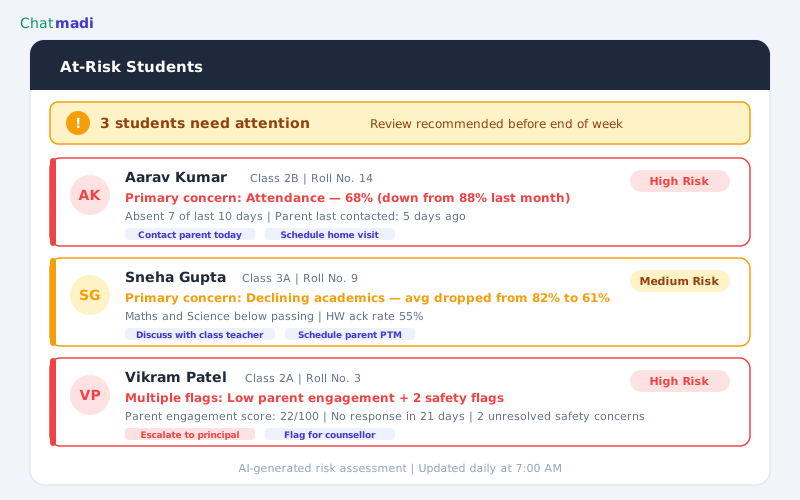
At risk students dashboard showing 3 students needing attention with specific risk factors and recommended actions
Identifying the Students Who Need Attention Before They Fall Through
The students who fall through the cracks in Indian schools are not the ones who fail exams. Failed exams are visible. The students who fall through are the ones whose welfare declines gradually across multiple dimensions simultaneously. A student whose attendance drops from 95% to 85% might not trigger concern. A student whose homework acknowledgement rate drops from 80% to 60% might not trigger concern. A student whose parent engagement score drops from 75 to 55 might not trigger concern. But when all three happen simultaneously to the same student over the same two-month period, it is a clear signal that something is wrong. Chatmadi's at-risk detection combines signals across dimensions. When two or more welfare signals decline simultaneously for the same student, the system generates an at-risk flag. The flag appears on both the class teacher's and the principal's dashboard with a specific description of which signals are declining and by how much. This multi-dimensional detection catches students that single-dimension tracking misses. A student with a 75% exam average is not flagged by academic tracking. A student with 85% attendance is not flagged by attendance tracking. But a student with a 75% exam average, 85% attendance, declining homework engagement, and a parent who has not communicated in three weeks is clearly at risk, and only a system that combines all dimensions will flag them.
Frequently Asked Questions
Does Chatmadi share welfare data with parents?
Welfare profiles are internal tools for school staff. Parents do not see the welfare dashboard or the composite signals. Teachers may share specific, relevant information with parents during PTMs or conversations, but the full welfare profile remains an internal management tool.
How does Chatmadi handle students who transfer to the school mid-year?
New students start with a blank welfare profile. Signals begin accumulating from the date their data enters Chatmadi. Within four to six weeks of regular conversation uploads, the profile has enough data to be meaningful.
Can the welfare profile data be used for board inspections or accreditation?
The welfare data demonstrates that the school has a systematic approach to student welfare monitoring. Schools can export welfare reports for accreditation purposes, though the specific requirements vary by board and accreditation body.
What if a student has excellent marks but poor welfare signals in other areas?
This is precisely the scenario that welfare tracking is designed to catch. A student with 90% marks but declining attendance, a safety alert, and a disengaged parent needs attention despite the strong academic performance. Chatmadi flags these students just as it flags academically struggling ones.
Does Chatmadi track welfare signals for students in every grade?
Yes. Welfare tracking works for all grades from pre-primary to senior secondary. The specific signals and their weights may differ by age group, but the six-dimension framework applies across all grades.
---
Marks tell you one thing. Welfare tells you everything. Chatmadi tracks both so no student falls through the cracks. Start free at chatmadi.com
Tagsstudent welfare tracking software schoolchild safety monitoring school softwareschool data analytics IndiaAI school management software IndiaChatmadi
C
Chatmadi Team
School Communication Intelligence
The Chatmadi team writes about AI-powered parent communication, school management best practices, and WhatsApp intelligence for Indian schools. Built by Eduloom Technologies OPC Pvt Ltd, Mysore.