School Admission Enquiry Management: Stop Losing Prospects in WhatsApp Chats
In this article
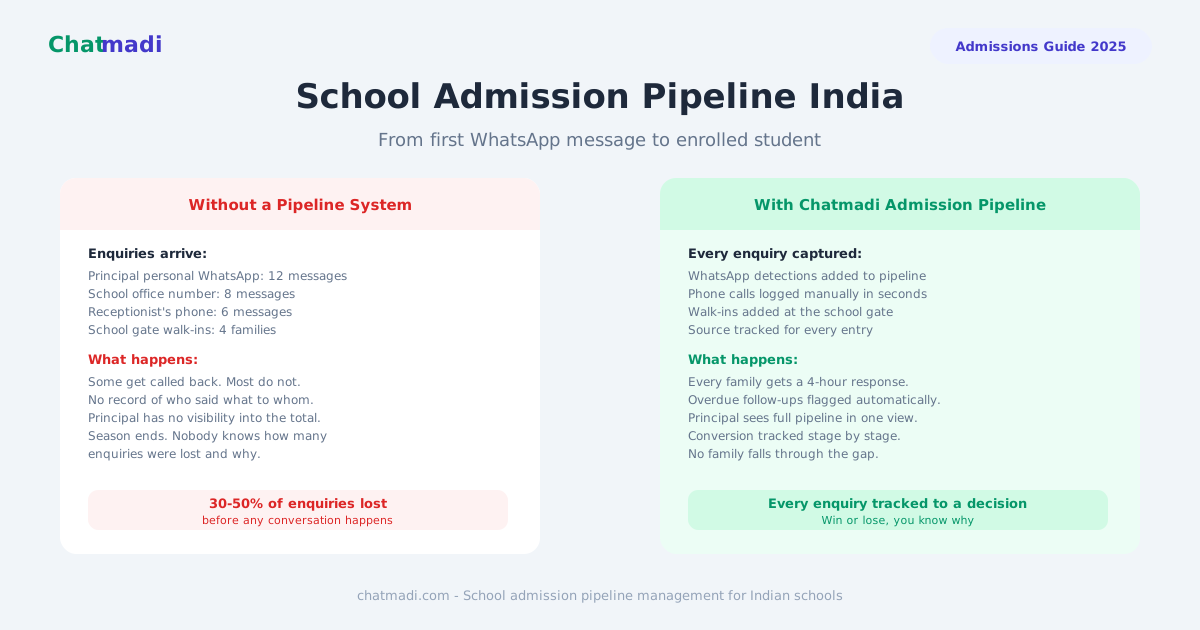
Admission season in India runs from January to April for most schools, with enquiries beginning as early as October for the following academic year. During this period, a school in Bengaluru, Mumbai, or Delhi with a good reputation may receive between 200 and 500 admission enquiries. Parents call the office, send WhatsApp messages to the principal's personal number, message the school's general enquiry contact, and sometimes walk in without an appointment.
Table of Contents
- [The Multiple Channel Problem](#the-multiple-channel-problem)
- [The Personal Phone Problem](#the-personal-phone-problem)
- [The No-Follow-Up-System Problem](#the-no-follow-up-system-problem)
- [The Research Phase](#the-research-phase)
- [The Decision Triggers](#the-decision-triggers)
- [The Competitor Comparison](#the-competitor-comparison)
- [Stage 1: New Enquiry](#stage-1-new-enquiry)
- [Stage 2: Initial Contact Made](#stage-2-initial-contact-made)
- [Stage 3: Visit Scheduled](#stage-3-visit-scheduled)
- [Stage 4: Visit Completed](#stage-4-visit-completed)
- [Stage 5: Application Received](#stage-5-application-received)
- [Stage 6: Offer Made](#stage-6-offer-made)
- [Stage 7: Enrolled](#stage-7-enrolled)
What happens to those enquiries after they arrive? In most Indian schools, the honest answer is: some are followed up, some are forgotten, and nobody knows which is which. There is no system that captures every enquiry as it arrives, tracks where each family is in the decision process, and ensures that a family who expressed interest three weeks ago receives a follow-up call before they choose another school.
This is not a small problem. An admission enquiry that is not followed up within 48 hours has a significantly lower conversion rate than one that receives a prompt response. A family that sent a WhatsApp message asking about Class 1 admission and received no reply for five days has, in all likelihood, already visited two other schools and is close to making a decision that does not involve yours.
Why Admission Enquiries Get Lost in Indian Schools
The root cause is structural. Indian school admission enquiries do not arrive through a single, organised channel. They arrive through every possible channel simultaneously, with no routing system and no tracking mechanism.
The Multiple Channel Problem
A family looking for a school in 2025 contacts multiple schools through multiple channels. They might call the school office on a Tuesday, send a WhatsApp message to the number listed on the school website on Wednesday, and send their child's previous school report card to the principal's personal WhatsApp on Thursday. These three contacts are from the same family, about the same child, and represent a single admission enquiry. But without a system that recognises and links them, they appear as three unrelated contacts to three different people at the school.
The school office receptionist handled the Tuesday call and noted it in a paper register. The person who manages the school website WhatsApp replied to Wednesday's message and considered it done. The principal received Thursday's WhatsApp with the report card, meant to forward it to the admission office, and forgot. The family hears nothing coordinated. They assume the school is disorganised and move on.
The Personal Phone Problem
Admission enquiries that arrive on staff members' personal WhatsApp phones are the hardest to track and the most likely to be lost. A teacher or administrator who receives an admission enquiry on their personal phone has no institutional way to record it, no reminder to follow up, and no ability to hand it over to a colleague if they are absent the next day.
This problem is particularly acute for school principals, whose personal numbers are often shared by well-meaning parents in parent community networks. A principal who receives ten admission enquiries via their personal WhatsApp during admission season faces an impossible choice: spend hours personally managing a recruitment function that should be handled by a system, or let the enquiries go unanswered and lose the families.
The No-Follow-Up-System Problem
Even when admission enquiries are captured, most Indian schools have no system for managing what happens next. Follow-up is ad hoc: whoever has time calls the family back when they remember. There is no record of what was said, no next action assigned, no reminder set for the following week, and no visibility for the principal into how many families are at what stage of the admission process.
The school analytics guide for principals identifies admission pipeline visibility as one of the most significant gaps in how Indian school principals access operational data about their schools. Most principals only discover how many students enrolled versus how many enquired at the end of the admission season, when it is too late to do anything about the families who were lost in the middle of the process.
The Indian School Admission Journey: What Families Actually Do
Understanding how Indian families research and choose schools is essential for building a tracking system that works with real behaviour rather than assumed behaviour.
The Research Phase
Most families begin researching schools three to six months before they want the child to start. In urban India, this typically means asking for recommendations from existing school parents, searching online for schools in their area, visiting the school's website or social media, and making initial enquiries to two or three schools simultaneously.
According to research on Indian education market behaviour, families in metro cities consider an average of three to five schools before making an admission decision. This means every school in a competitive urban market is, on average, one of four or five options being evaluated by each family. The quality of the admission experience, including how quickly enquiries are answered and how organised the follow-up feels, directly influences which school the family ultimately chooses.
Schools in Bengaluru, Mumbai, and other major cities operate in particularly competitive admission environments where the difference between a family choosing your school and a competitor often comes down to responsiveness.
The Decision Triggers
Indian school admission decisions are rarely made on a single factor. Families typically have a set of decision triggers: proximity, fee structure, board affiliation, reputation, sibling preference, and the quality of the interaction with the school during the enquiry phase. The last factor is the one most directly under a school's control and the one most commonly neglected.
A family that received a prompt, detailed, and personalised response to their initial enquiry is significantly more likely to visit the school for a tour and ultimately enrol than a family that received a delayed or generic response. The admission enquiry is the first touchpoint in a relationship that, if successful, lasts twelve years. The quality of that first touchpoint matters.
The Competitor Comparison
Indian school admission decisions are rarely made in isolation. Families are almost always comparing two or three schools simultaneously. When a family sends enquiries to three schools on the same day and one school responds within two hours, one responds within two days, and one responds within a week, the first school has already established a significant advantage in the family's perception of its quality and organisation.
This dynamic makes response time the single most important metric in admission enquiry management. Not the quality of the school's curriculum, not the facilities, not the fee structure: those factors matter later in the process. At the enquiry stage, speed of response is what separates schools that convert enquiries into visits from schools that lose families before a single conversation has happened.
The Seven-Stage Indian School Admission Pipeline
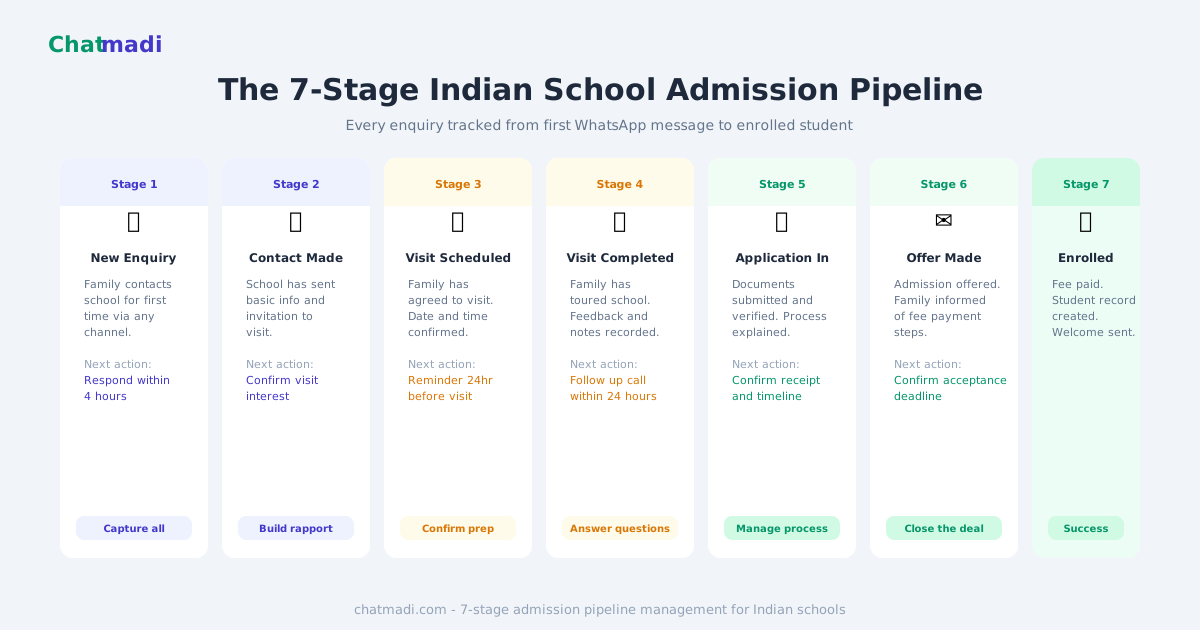
A well-structured admission pipeline for an Indian school has seven distinct stages. Each stage has a specific next action, a specific responsible person, and a specific time window within which that action must be completed.
Stage 1: New Enquiry
A family contacts the school for the first time. The enquiry is captured with the family name, contact number, the class they are enquiring about, and the source of the enquiry (WhatsApp, call, walk-in, referral, online). The next action is a response within four hours during school hours, or first thing the following morning if the enquiry arrives after hours.
Stage 2: Initial Contact Made
The school has responded to the enquiry. The family has received basic information about the school: fee structure, admission criteria, availability for the relevant class, and an invitation to visit. The next action is to confirm whether the family wants to schedule a visit.
Stage 3: Visit Scheduled
The family has agreed to visit the school. The visit is scheduled with a specific date, time, and point of contact. The next action is to send a reminder 24 hours before the scheduled visit and ensure the right staff member is available to conduct it.
Stage 4: Visit Completed
The family has visited the school. Feedback from the visit has been recorded. The family's specific interests and concerns from the visit have been noted. The next action is a follow-up call or message within 24 hours of the visit to answer any remaining questions.
Stage 5: Application Received
The family has submitted an application for admission. Documents have been received and verified. The family is aware of the next steps in the admission process. The next action is to confirm receipt and communicate the timeline for an admission decision.
Stage 6: Offer Made
The school has offered admission to the student. The family has received an offer letter or verbal confirmation. The next action is to confirm acceptance and communicate the fee payment process and enrolment steps.
Stage 7: Enrolled
The family has accepted the offer, paid the admission fee, and the student is enrolled. The student record is created in the school management system. The family is transitioned from the admission pipeline to the active parent communication system.
The school admission pipeline feature manages all seven stages with a Kanban-style visual pipeline, showing the school how many families are at each stage at any point during the admission season.
How AI Detects Admission Enquiries from WhatsApp
The most common source of lost admission enquiries in Indian schools is the school's general WhatsApp contact, which receives a mix of admission queries, general information requests, complaints, and other communication from the community. No single person has the time to read every message in this inbox and correctly categorise each one as an admission enquiry, a general query, or something that requires a different response.
AI-powered conversation analysis changes this. When staff upload WhatsApp conversations from the school's general contact number, the AI reads every message and flags those that contain admission enquiry signals: questions about seat availability, questions about the fee structure for a specific class, requests to schedule a school visit, and messages that include a child's current school or class as context for an admission request.
Each detected admission enquiry creates a new entry in the admission pipeline with the family's contact details, the class they are enquiring about, the date of first contact, and the source marked as WhatsApp. The admission team reviews and confirms each detection, then begins the follow-up process from Stage 2.
This approach, described in detail in the guide to how AI reads school conversations, captures enquiries that would otherwise be missed because they arrived in a high-volume inbox that nobody had time to read carefully.
Building a Response System That Does Not Depend on Any One Person
The most resilient admission enquiry management systems are those that do not depend on a specific person to function. If the admission coordinator is sick, enquiries should still be captured, acknowledged, and queued for follow-up. If the principal's personal WhatsApp receives an enquiry, there should be a process for routing it into the tracked system without it becoming the principal's personal follow-up responsibility.
Designing this system requires four decisions.
Decision 1: Who is the designated admission enquiry contact? This should be a role, not a person. The school's WhatsApp for admission enquiries should be managed by whoever holds the admission coordinator role, with visibility for the principal and a backup for when the primary contact is unavailable. Decision 2: What is the target response time? Most Indian schools that convert well have a target of four hours for initial responses during school hours. This does not mean a complete answer to every question in four hours. It means an acknowledgement that the enquiry was received and a specific time when a full response or call-back will happen. Decision 3: What information does every enquiry response include? Standardising the initial response means every family receives the same quality of initial information regardless of who picks up the enquiry. Fee structure, board affiliation, current availability for the relevant class, and an invitation to schedule a visit should be in every initial response. Decision 4: Who reviews the pipeline weekly? Admission pipeline review should be a standing item in the principal's weekly schedule during admission season. The review should answer three questions: how many new enquiries came in this week, how many families moved forward in the pipeline, and how many families have gone quiet and need a re-engagement effort.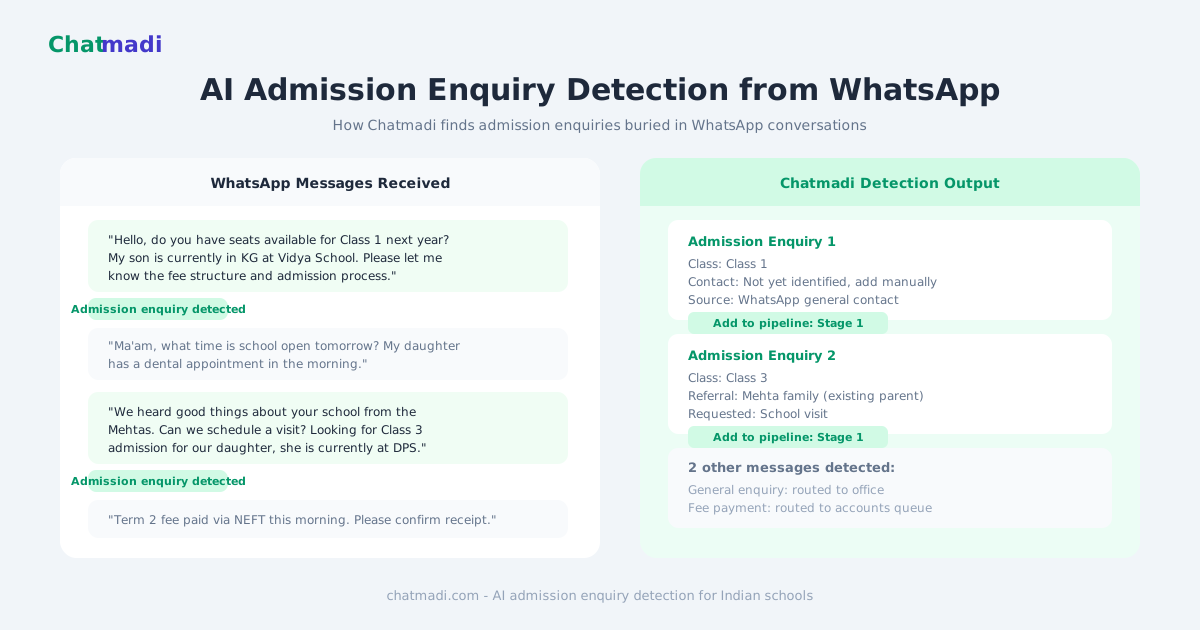
Common Admission Pipeline Mistakes Indian Schools Make
Even schools that have some system for managing admissions make consistent mistakes that reduce their conversion rate.
Mistake 1: Waiting for the family to follow up. An Indian school admission cycle has a defined window. Families are making decisions and the window is typically six to ten weeks from first enquiry to commitment. A school that waits for the family to follow up after an initial exchange is ceding control of the timeline to the family and to competitors who are actively following up. Mistake 2: No record of what was said to which family. When two different staff members speak to the same family at different points in the admission process, consistency requires that the second person knows what the first person said. Without a shared record, families hear inconsistent information, which damages trust before enrolment has even happened. Mistake 3: Treating all enquiries equally. A family whose child currently attends a school that is closing requires a different urgency than a family that is beginning research twelve months ahead of when they want to enrol. Prioritising by timeline and urgency converts more enquiries than treating every enquiry with the same generic follow-up sequence. Mistake 4: No analysis of why families chose other schools. The most valuable data in admission management is exit data: families who went through the enquiry process and chose a different school. Collecting this information, even informally, helps the school understand what factors are decisive in the final choice and whether there are systematic problems in the admission experience that are costing them enrolments.The school communication software buying guide discusses how to evaluate any school technology platform, including admission management features, before committing to a subscription.
Setting Up Admission Pipeline Management
Starting with admission pipeline management in Chatmadi takes under an hour for initial setup. The seven pipeline stages are pre-configured and can be customised to match the school's specific admission process. Staff members are assigned to manage specific pipeline stages, and the system sends reminders when families have been in a stage longer than the configured time window.
The AI detection for WhatsApp admission enquiries begins working from the first conversation upload. Teachers and admin staff upload WhatsApp conversations from the school's general contact, and detected admission enquiries are flagged for the admission team to review and add to the pipeline.
The complete school setup guide covers admission pipeline configuration in detail, including how to set up source tracking so the school knows whether enquiries are coming from walk-ins, WhatsApp, referrals, or online channels.
Start free at chatmadi.com. The admission pipeline is available on the Growth plan and above. Schools can configure the pipeline stages, add initial enquiries manually, and test the conversion tracking before upgrading from the Starter plan.
Frequently Asked Questions
How does Chatmadi detect admission enquiries from WhatsApp conversations?The AI reads uploaded WhatsApp conversation exports and identifies messages that contain admission signals: questions about seat availability for a specific class, requests for fee structure information, enquiries about the school board or curriculum, requests to schedule a visit, and messages that include a child's current school or age as context for an enquiry. Each detected signal creates a pending entry in the admission pipeline for the admission team to review and confirm.
Can the admission pipeline track enquiries that come from multiple channels?Yes. Enquiries can be added to the pipeline from any source: manually entered from phone calls, detected from WhatsApp conversations, or added from walk-in records. Each entry includes a source field (WhatsApp, call, walk-in, referral, online) so the school can track which channels generate the most enquiries and which channels convert best.
Does the system send automatic reminders to follow up with families?The admission pipeline shows which families have been in each stage beyond the configured time window, highlighted in the interface as requiring attention. The system does not send automatic messages to families on their behalf, but it does make it visible to the admission team which families are overdue for follow-up.
How many admission enquiries can the system track at one time?There is no limit on the number of active pipeline entries. A school receiving 500 enquiries during admission season can track all 500 simultaneously across all seven stages. The Kanban view makes it visually clear how many families are at each stage, enabling the principal to see the full admission season picture at a glance.
Can the system identify which staff member is responsible for each enquiry?Yes. Each pipeline entry can be assigned to a specific staff member who is responsible for follow-up. The pipeline view shows assignments across the team, making it clear if one person has too many active enquiries and another has capacity to take more.
Chatmadi Team
School Communication Intelligence
The Chatmadi team writes about AI-powered parent communication, school management best practices, and WhatsApp intelligence for Indian schools. Built by Eduloom Technologies OPC Pvt Ltd, Mysore.
Ready to Try Chatmadi at Your School?
Free to start. Setup in 15 minutes. No new apps for parents.
Set Up My School Free →